There’s Never Just One

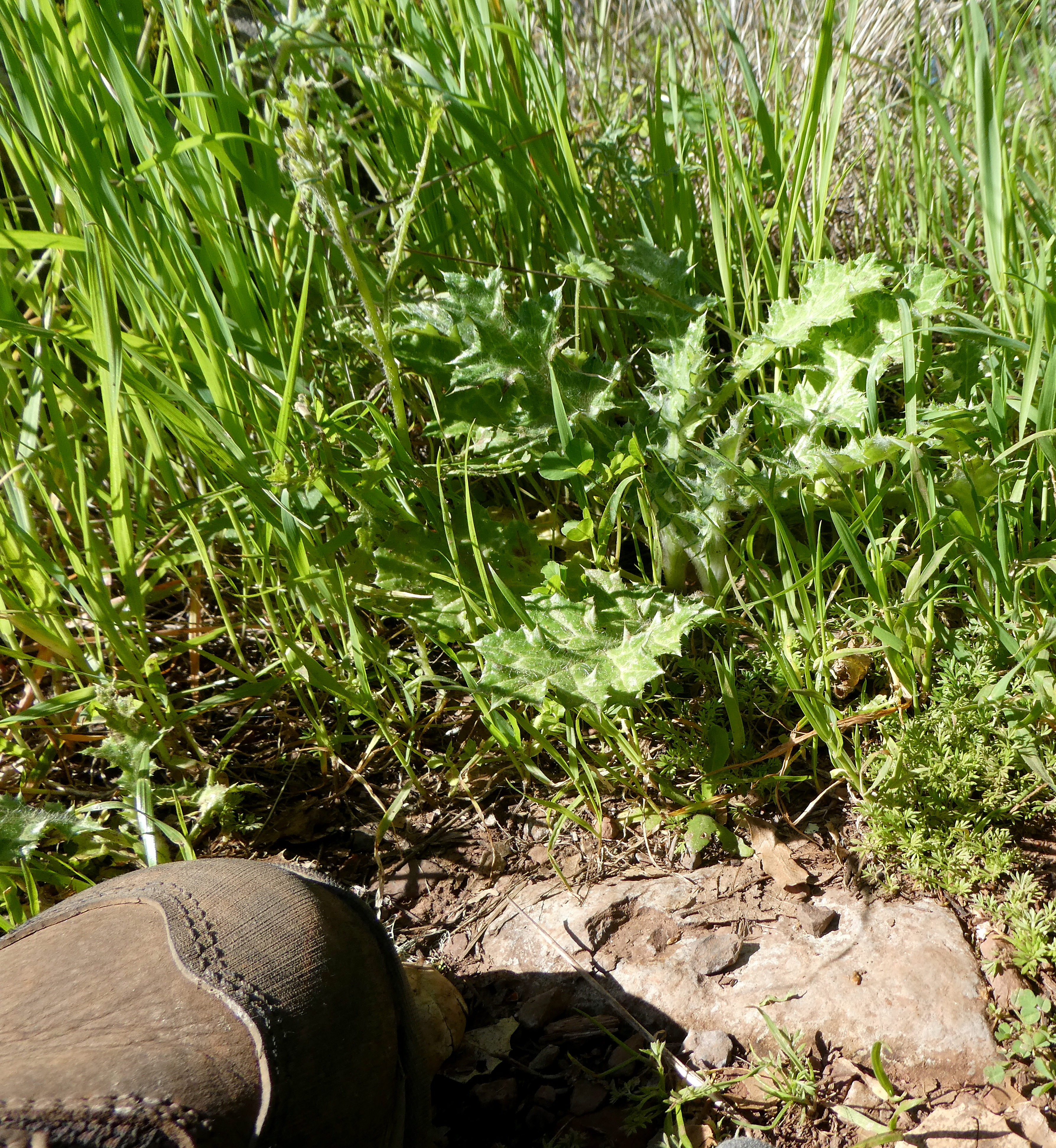
Tripping down the trail today I thought to myself, “Oh, hey, there’s one!” I had spotted an invasive purple thistle plant at the trail’s edge (see pic). I stooped to pull it out.

As volunteer trail stewards, our remit includes not only maintaining the trails, but also helping the City of Sonoma to maintain their property that the trails traverse. This includes removing invasive species such as broom, purple thistle, and yellow  star thistle.

Purple thistle season begins in early Spring, which means we are already working to remove it. Later in the season the yellow star thistle will start to come in. Since we’ve been attacking the yellow star thistle for several years with vigor, we are seeing some real progress on eradicating it from the Overlook and Montini Preserve properties.

However, purple thistle is quite another story. Mostly due to years of cattle grazing, purple thistle has essentially already overrun the Montini Preserve. So at this point we only focus on yellow star thistle there. But on the Overlook, we think we have a chance to knock back the purple thistle so we are working on it as well. Since we only began our work on it last year, there is still quite a bit of it on the trail.

Today, as I stooped to pull the plant I had spotted I thought to myself, “Oh, wait, there’s five — no ten, crap, there’s a lot!”

I had momentarily forgotten that until the day when we reach the point of eradication — years, perhaps even decades from now (if ever), there’s never just one.

Time for Vigilance

In Northern California, despite the current cold snap, we have essentially entered Spring. This means several things. Plants like poison oak are flourishing, sending tendrils out to conquer new areas. We are presently trying to cut this back from the trail.

Soon we will also need to watch out for ticks, which are particularly bad early in the season, from March to mid-May. Ticks can carry Lyme disease, so it’s important to prevent the little buggers from biting you. Wear long pants and inspect yourself after your hike. If you do get bitten, then watch the bite carefully for signs of Lyme disease, as early treatment by a medical professional is essential. Thankfully, we have the Western Fence Lizard to help us out, since when a tick bites that lizard an enzyme is transferred to the tick that cures the Lyme disease. This has led to a much  lower incidence of Lyme disease than in other areas without this helpful lizard. So be kind to the Western Fence Lizard! They are already scurrying across our trails.

Another hazard to watch out for is rattlesnakes. Rattlesnakes emerge from hibernation in the Spring when the days become warm enough for cold-blooded reptiles. I’ve already seen the Western Fence Lizard scurrying across the trail, which means snakes will not be far behind. However, this recent cold snap has sent them to ground. But rattlesnakes are typically around from March to September, so we are entering the time when they will be coming out of hibernation in the lowlands and making their way to their higher hunting grounds. Since they will be on the move, most of my sightings of rattlesnakes tend to happen in the Spring.

So stay alert and safe out there!

The Removal Season Has Begun

Each Spring we enter “removal season” on the Overlook and Montini properties. We begin with cutting back poison oak from the trail, as the runners begin encroaching as early as early February. So I was out today doing just that (see photo).

It was encouraging, though, as it seemed evident that previous years of cutting back the poison oak was reaping dividends. I was able to cover the bulk of the Overlook trail in one two-hour session.

After poison oak we will be on the lookout for Purple Thistle, as this non-native has been a scourge along the trail. We just started tackling this in earnest last year, so this year it will likely still be bad.

Following the Purple Thistle the Yellow Star Thistle will be coming in, by early March. That will likely keep us busy until early August. However, progress is being made on all these fronts and each year it becomes easier and easier, and some major patches are essentially already gone.

Once we get all these species under control, there are others we will need to tackle. Scotch Broom, for example, is one, although it isn’t as big a problem at the moment as the thistles.

If you want to help with this work, let me know! It basically takes a contractor bag (which I can supply you with) and gloves, although I frequently pull the Yellow Star Thistle gloveless.

Earth Abides

abide – to endure without yielding

Readers of this blog and locals probably know that during the recent firestorm Cal Fire bulldozers cut fire breaks on the Montini and Overlook properties. We are happy that they did this, as it was essential to protect the town. But nonetheless we were concerned about these scars as we are entering the rainy season.

Cal Fire and the City of Sonoma worked hard to mitigate the impacts of those scars, and that work is already paying off.

The Stewards had planned to meet this morning to spread seed over the cuts, but we canceled due to rain. I went hiking anyway and spotted a lot of grass starting to poke through the straw that was laid down on some of the cuts. This was surprising to me, as bulldozers moved over those cuts not once, but twice (once to make the cut and again to spread the mounds of soil left from the first time) and grass is already coming up.

That’s a really good sign that Mother Nature is going to heal itself, with little intervention from us. We will monitor the situation, and seed where it looks like it needs it, but for now it might just be enough to let nature take its course.

We’re Done for the Season

Anyone who has been reading this blog knows that we have been fighting a multi-year fight against invasive weeds. One of them that is both prevalent and absolutely ready to take over every meadow it encounters is the Yellow Star Thistle (YST). We have been working to eradicate it from the Overlook (for at least the last five years) and the Montini (for at least the last three) properties.

As of today, I can report that this year’s campaign is over, and we have triumphed. Last year we found three additional areas that we had not previously been pulling. This year we found an additional one. We cleared them all.

But better than that, we saw this year that areas we had been pulling for several years were now either clear or nearly so. So each year it gets easier and easier to fight it. It has now been reduced so far that basically one person working from May thru July can control it. And subsequent years will be even easier.

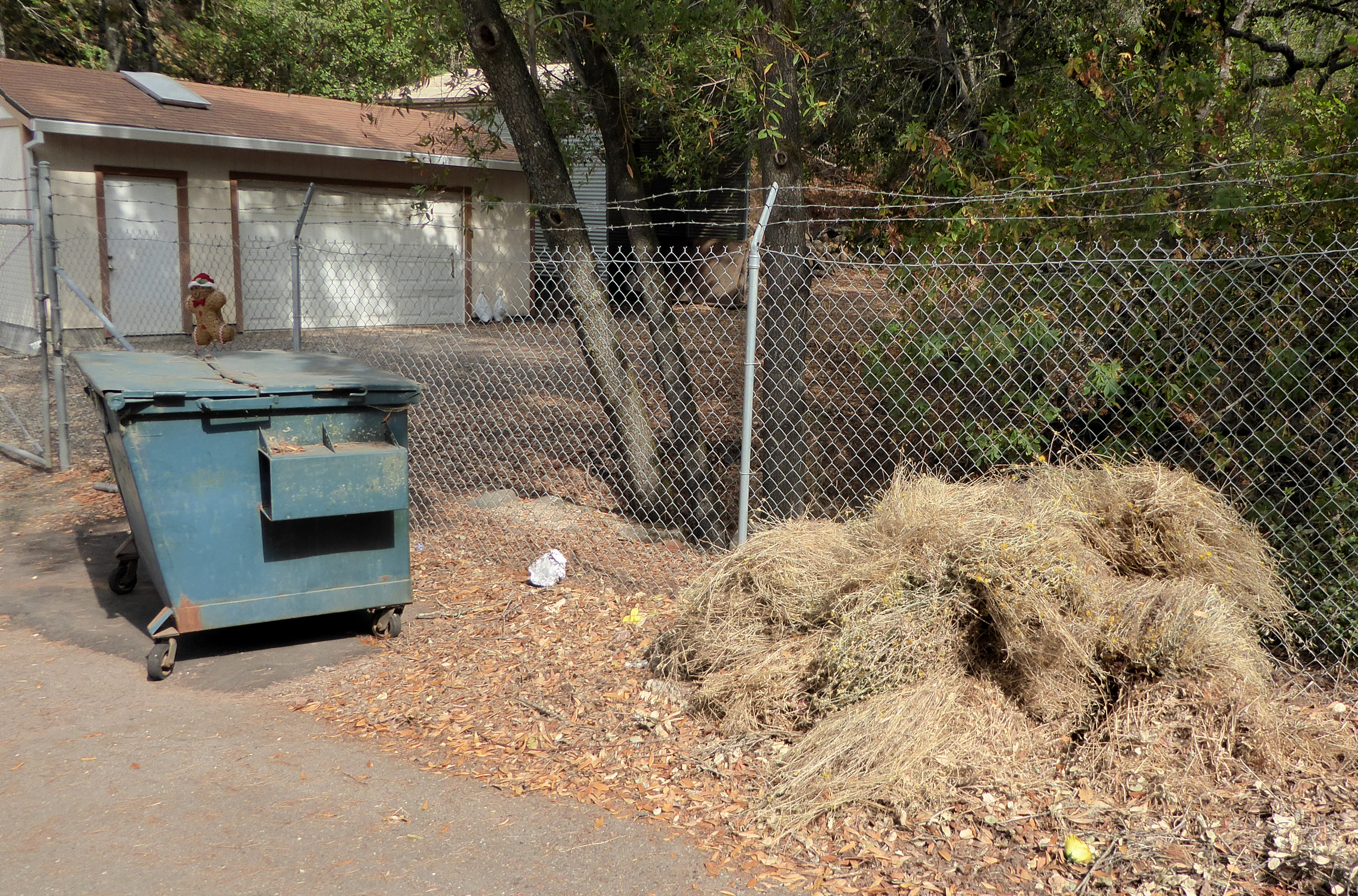
I don’t mean to denigrate the threat. Even the new meadow that was discovered this year on the Overlook property meant an additional 8 1/2 bags (see photo, which isn’t all of it) of YST was dragged off the property. But we are seriously seeing progress, and that is worth noting.

But we are also expanding our scope. This year we started tackling the Italian Thistle, which in this wet year had become rampant along the trail. We focused on the trail, and largely removed it, but it also exists in a lot of places off-trail. It remains a challenge. On the Montini property it is so prevalent that it seems unassailable. This is depressing, especially when you know that it will only get worse.

But if you feel inspired by this post, let me know. You won’t be called upon until next May. I have large contractor’s debris bags to hold the spiny plants, and can give advice on how to pull them without serious danger. The only other thing you might need is a glove. And we can make it a group outing that might even have food and/or drink involved.

But be forewarned — if you start on this path, it can easily lead to an obsession. I know this for a fact.