Sonoma Overlook Trail Chair Jess
Hello there, Karen. Thanks so much for giving me your time. Let’s dig right in….
I’ve known you for several years now, and I’ve always known that you’re very passionate about environmental causes. But when I did some footwork on this interview, I was completely gob smacked at the number of organizations with which you have served. I counted 16 before I just stopped looking. To name a few: Jack London Park Partners, Sonoma Valley Hospital, Ag and Open Space, the Community Center, Sonoma Land Trust, and the Catalyst Fund.
And then you were Sonoma County Woman of the Year and Sonoma’s Alcaldessa, because of course you were. So for me, you pretty much embody the terms intrepid and Renaissance woman, and I really would like to know where your drive and passion comes from. Was it your parents or…?
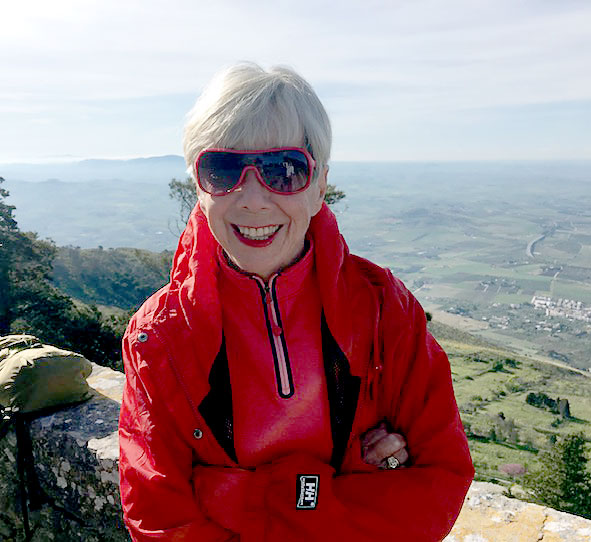
Karen Collins
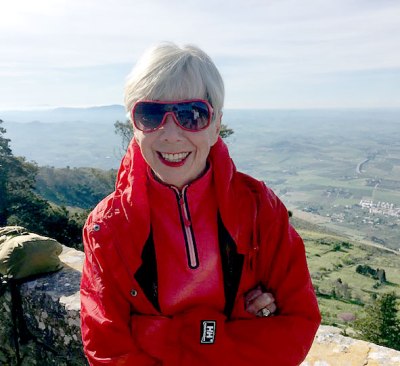 You know, I’ll tell you, I moved to Sonoma, cold. I didn’t know a soul. I was working in Sacramento, and I had like a weekend place here. But after living in San Francisco, and when I finished in Sacramento, I just really liked Sonoma, you know, just from being here weekends. And I thought, why don’t I just try it? I sold San Francisco, period, and moved here full time. And I just thought it was the most welcoming community. It was so easy to meet people and get involved. And what I was really impressed with was people that moved here did it because they wanted to. I mean, they weren’t working for a factory that got stuck here or something like that. And everybody I met wanted to pitch in and make it an even better place for everybody else.
So I just started getting involved in following my passion on things. I did have a company at the time, hiking, but I also had time on my hands. And so I just sort of just got myself involved. As you know, my main interest had been hiking and trails and parks and whatnot. But as to the other things, you know, somebody would come calling and it was hard to say no.
SOT Chair
I bet. I also saw that you worked in the corporate world and then you were appointed Deputy Director of Parks and Rec for the State of California. You always had an interest in the environment and the outdoors.
The other thing that I noticed is that you had at least one travel company. I actually backpacked the Inca Trail, as I understand you did. Hardest thing I ever did. So I admire you for that. It seems to me, from looking at your background, that you just have a mission to wring every drop out of life.
Karen Collins
Yeah, I don’t want to miss anything.
SOT Chair
Well, where did you get that energy? I mean, I know it was there before you came to Sonoma.
Karen Collins
I think I just always sort of look at something and I think, “Oh, this sounds like fun.” I could just have a good time there or if I look at something and I think, “Maybe I have some kind of expertise or small talent or something where I could make something maybe even a little better or help out.”
My dad was always involved. My mother was a stay at home mom, but my dad was out there all the time doing things and a lot of times I tagged along.
SOT Chair
Was he an activist?
Karen Collins
No, he owned a small business. He was in the Elks Club and he was in the Lions Club and he played gin rummy at the Elks Club. We were a sports family ‘cause I had two brothers and so we went to games, especially baseball. And he had a group of guys that he met with on Saturday mornings. It used to be the Seattle Rainiers before they got the major league franchise and became the Mariners. But these guys got together every Saturday morning and they would debrief the baseball games and they called themselves The Manager’s Club.
When my dad was dying, they have these big billboards at the games and it said, “Seattle Mariners thank Jim Saldin for blah, blah, blah.” And then he made me go out and make copies of it and frame them and send them to all his brothers and sisters so they could see it.
Yeah, he was just always involved in things and I guess he was maybe my example.
SOT Chair
He engaged deeply, it sounds like.
Karen Collins
Yeah, he had fun and he did a lot of good. I remember asking him one time, “Is there anything that we can do now that you didn’t get to do?” And he said, “I always wanted to go down to First Avenue and just walk around and hand out some money because I’ve been such a lucky guy.” First Avenue in Seattle was kind of skid row. And that was the way it was.
A few years after the trail was built, my dad died. Several friends had met him and unbeknownst to me collected money for a memorial bench in his honor. There was enough for two benches so we did one for Maggie Salenger’s dad, too. They’re right there together at the upper loop. I go up and sit there on family birthdays, holidays, anniversaries, etc.
SOT Chair
All right, let’s talk about Sonoma Overlook Trail. We are so lucky as well, of course, that you and Maggie Salenger were paying attention when that parcel of land came under threat of development. I’d like to know how difficult it was to redirect it to becoming the trail system that it is now.
Karen Collins
We actually were looking at that trail, looking at that property, before it came under the threat of development. And the reason we were is because I had been doing all these hikes overseas, like the Inca Trail, and going community to community.
We wanted to do something in Sonoma. We went to the county supervisor who at that time was Mike Cale. And he said, “I’m with you, but why don’t you start do something in your own area first, you know, get something started?”
And just about that time, Richard Dale used to run the Overlook Trail and he’d heard about this conversation. He said, “Let me show you this area. You know, I run it on an animal trail and this would be a great place for a trail system. I’ll introduce you to Maggie [Salenger] Haywood.”
He introduced me to Maggie and we decided that we would tackle it and see what we could do. That’s exactly how it started.
SOT Chair
I’ve been focused on getting a permanent conservation easement for the Overlook, a process that is taking years, unfortunately. I just wonder what the bureaucracy was like back then and what your opinion is about the red tape involved in missions like this.
Karen Collins
First of all, when we did it, the trail was, I mean, people would wander up there sometimes and high school kids would go up there–who knows what they did.
I had been in the parks, as you know, and I’d been doing a lot of hiking. And so I knew a little bit about it. First, what we did is to have the State Park people come up and take a look, because I knew the superintendent here. They told us it would cost $250,000 to do it. We had no money. And we thought, well, I’m sure we can do this for less.
And so we started going to the City Council on this idea of a trail. Remember Al Mazza?
SOT Chair
Of course, of course. He was the mayor.
Karen Collins
And they would say, “Oh, that’s just way out there. Nobody would ever go on a trail like that. I mean, nobody would ever use it.” And they would give us a reason why it couldn’t be done. So we would think about it, and then we would go back to City Council and address their issue.
Finally, we were on the verge of, we thought we were anyway, on the verge of getting approval and this development company was looking for a place on a hillside somewhere in Sonoma County to do a hotel. The planning director then who was a guy named Mike Moore and they met with him and apparently they met with the City Council. This was a violation of the Brown Act.
And we found out about it. I can’t tell you who told me about it, because somebody inside City Hall told me about this. I went over–this was a great coup–and I told Bill Lynch. That’s when Bill Lynch had the [Sonoma Index Tribune]. I said, “I think there’s some Brown Act stuff going on up there on that property so you need to investigate it.”
So Bill ended up with stories in the paper and the town had several forums and people would come and say they wanted them on that property. And it ranged from nothing, clean it up but don’t do anything, put a trail on it, put a minor development or a hotel. Everybody voted for the trail system. I mean, it was something like 77%. They said, “We want a trail; we don’t want a hotel.” So we got to go ahead, and there it went.
SOT Chair
And lucky it did. That’s great.
So I serve, as you know, on Sonoma’s Parks, Rec and Open Space Commission and I experience the slow turning of the wheel there, too. Frankly, there are times when I wonder if public comment might be just as effective as serving on a commission because you can address the City Council directly. What avenues do you find work well for getting ideas out of the concept stage and carried on through fruition?
Karen Collins
Well, I’m not afraid to go and talk to individual members of the City Council, and one of the things that I’m very excited about is the fact that we actually have a Parks and Recreation department now with Director Dave Jahns. That was a long time coming, but we did it, via what was then the Parks and Recreation Task Force. I guess we worked on that for about three years, something like that. But now we’ve got it. He’s got a staff. And I’ve been really impressed; I think he’s going to make a big difference.
SOT Chair
I think you’re right. He’s already made a difference. There are more relevant ad hocs now and meetings that seem like they’re headed in some direction. He seems prepared to take City Council goals and make something of them. So it’s much improved.
How often are you on the trail these days?
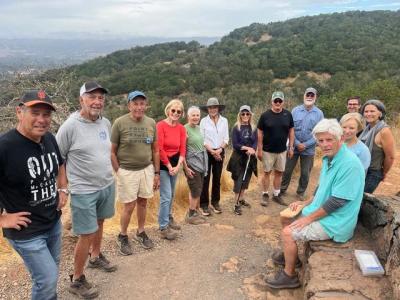
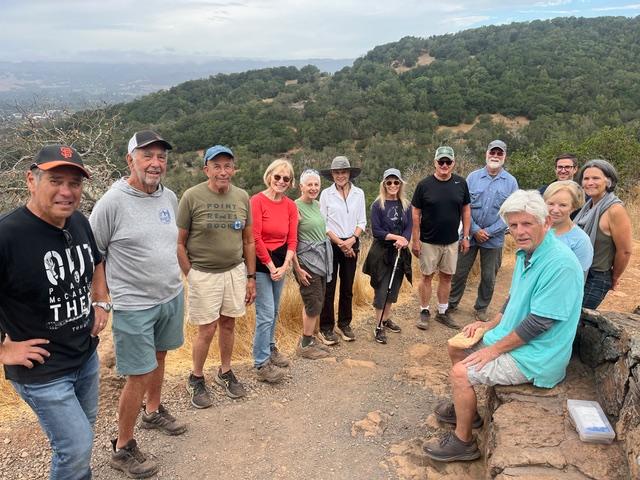
Wednesday Walkers
Karen Collins
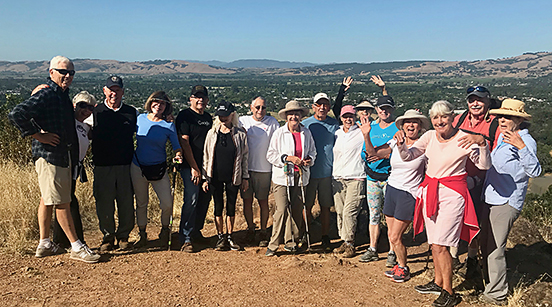
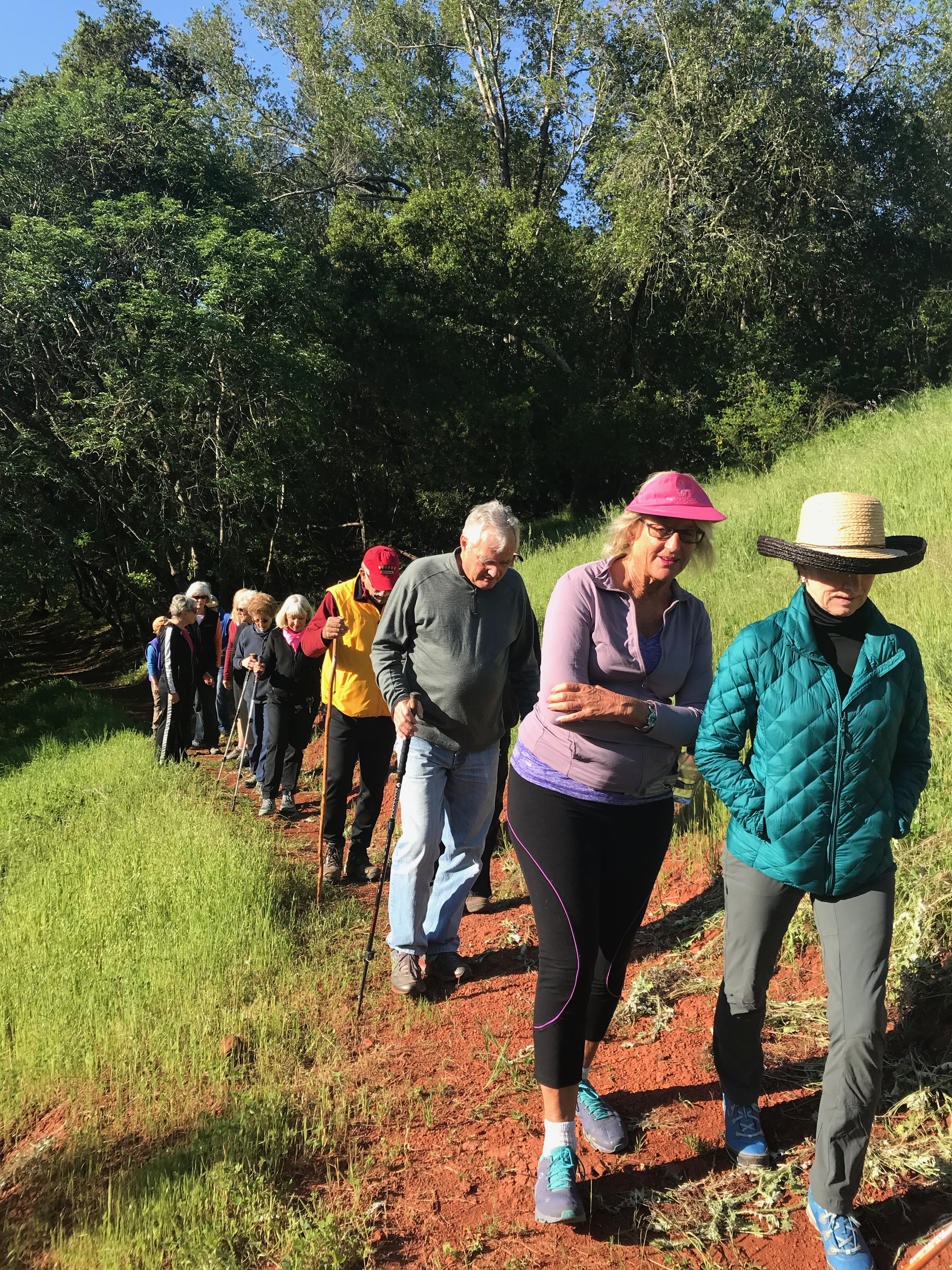
Well, Jeni Nichols has a group that walks each Wednesday morning and I think today there were probably about somewhere between 15 and 20 of us. I don’t know how they heard about it, but there was actually a couple from Seattle visiting in town and that heard about the trail and wanted to come on the walk.
It’s, I would say, maybe 60% women, 40% men, but nobody really leads it. We just take off. The men are usually at the back, I might point out. We don’t know what they’re talking about, but they seem to congregate and talk and we’re all walking up the trail. People go at different paces and we just make sure that there’s somebody at the end to make sure everybody is off the trail.
SOT Chair
I obviously I spent lots and lots of time on the Overlook and yeah, I will say that very often the woman is leading the man.
Karen Collins
Well, I have to confess that my partner Bill runs the Overlook Trail. He gets up three mornings a week at about 7:30 or something like that. And he runs it before anybody else is up there. To him, I’m just sort of this slacker.
SOT Chair
I heard the other night that the Wednesday Walkers have been walking the Overlook every Wednesday for about 10 years and that a lot of the original people are still participating. So it’s quite a phenomenon.
Karen Collins
Jenny and Byron Nichols are kind of the organizers. He has a bunch of Rotary pals that come. Ken Wayne, the former anchor for KRON4 news–somehow he found out about it. Karen Roche, who leads a monthly hiking group on Sunday mornings, she’s there. Scott Murray, when he’s in town. So it’s a real mix. I mean, it’s not all people that know each other. We know each other now though, because of Jeni: it’s nice. It starts right at 8:30 am, and she goes around and everybody says their first name. So if somebody new comes, they’re acquainted right away.
 SOT Chair
That’s fantastic.
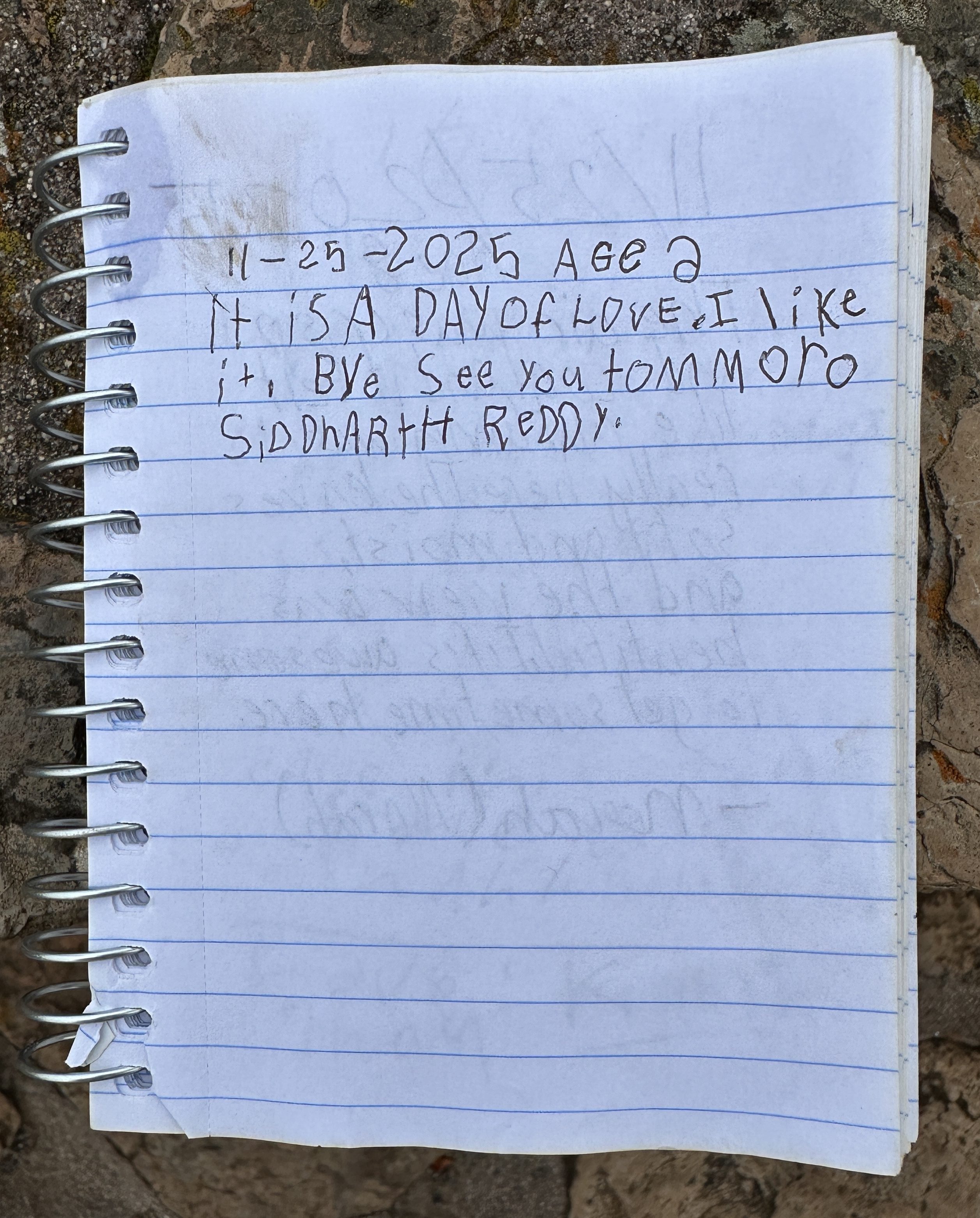
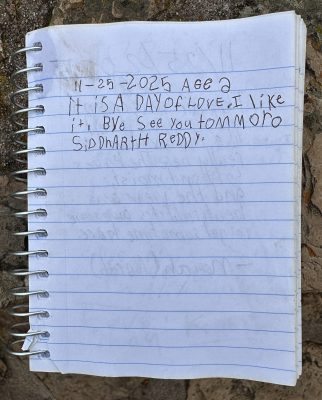
So we have on the Overlook, as you know, a hikers’ notebook at the top, at the view point bench. And through that, we get a lot of insight as to what drives people, why people want to visit the Overlook and what they get out of it. It’s obviously exercise. It’s a social setting. It’s forest bathing. It’s a chance for tourists to hike up and get a view of the Bay. What place does the Overlook hold in your life?
Karen Collins
That’s a good question. Let me just tell you, I have met more people up there, just like you said, that have come up there for specific reasons. It could be a birthday party. It could be a family reunion.
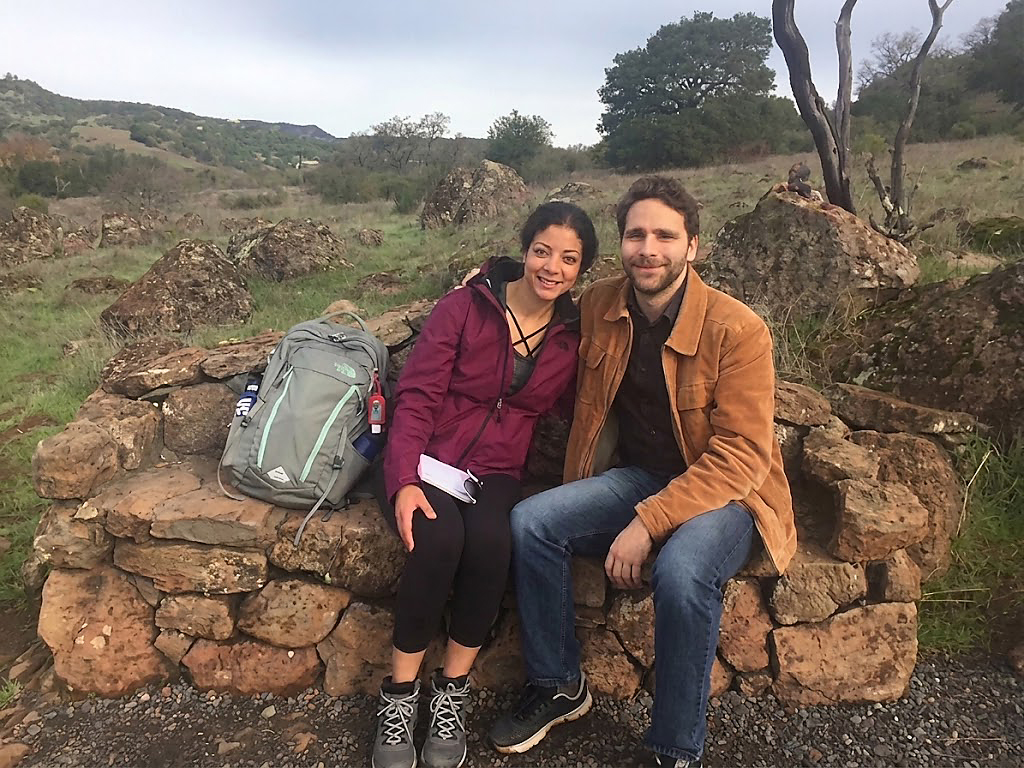
I was walking up there once–it’s kind of my favorite story about meeting people there–and there were a man and a woman there, young. Sitting on the bench right there, you know, overlooking town. She was crying. And I thought, something’s wrong here; I wonder if there’s something happening.
So I said, “Is there anything I can do to help you?” And the guy, he’s got his arm around her, and she said, “He just asked me to marry him.” He said “And she said yes!”
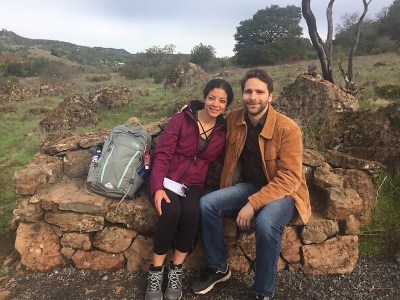
Engaged on the Overlook
SOT Chair
There’s a long history of romance on many levels going on up at the top of the Overlook Trail. We’ve seen it in the notebook for sure and I think it is sometimes kind of the Lover’s Lane spot.
What else are you working on, and what else is ahead for you or would you like to have ahead for you?
Karen Collins
Well, you know, there is money for parks right now. Not a lot of money. Not a lot in terms of what [Dave Jahns] wants to do. I told him that I really think we could do a nonprofit to support Sonoma city parks, that I propose to do it like we did the Overlook Trail, with a fiscal agent.
I’m still involved with Jack London. And I’m a 20-year cancer survivor. I’m on the board of Cancer Support Sonoma and am working on that.
SOT Chair
What do they do exactly?
Karen Collins
Cancer Support Sonoma is the only cancer support organization in the Sonoma Valley. It’s non-medical, so it’s acupuncture and doulas and all kinds of things like that, the ancillary things that you want in addition to your medical treatment. It’s just celebrated its 10th anniversary.
SOT Chair
Fantastic. Did you found that organization?
Karen Collins
No, I’ve just been on the board for a couple of years. I didn’t even know about it. It’s been very quiet, but it’s got some really, I think, good new board members. They’ve got hospital support. They have a fundraiser coming up tomorrow night, actually, the annual one. And that brings in a big chunk of their money.
SOT Chair
Is that group is it affiliated to or does it refer clients to the Ceres Community Project? C-E-R-E-S.
Karen Collins
I don’t know about the Ceres project.
SOT Chair
The Ceres project is based in Santa Rosa and provides meals for folks with cancer and, I think, other major medical issues. They’re all organic, they have their own garden, and they deliver the meals. It’s basically sliding scale. That would be something that you might want to look into.
The other thing I wanted to mention to you is that I and four other Parks and Rec Commission members are terming out at the end of January. I’m doing everything I can to prime the pump for the potential folks who will be replacing us. I’m hoping that folks can spread the word and hopefully refer people who are ecology minded to join the commission.
Anyway, this has been really wonderful and I really appreciate your time. I’m so glad we got to exchange all this information as well.
Karen Collins
Yeah, and I really appreciate all this, you guys keeping all this going. The Overlook is so popular, sometimes it’s hard to find a place in the parking lot.
SOT Chair
Our last count, and this was quite a while ago, was that we receive upwards of 60,000 visits a year. I believe it’s a lot higher than that at this point.
Thank you for your time, Karen.
Karen Collins
Well, thank you.

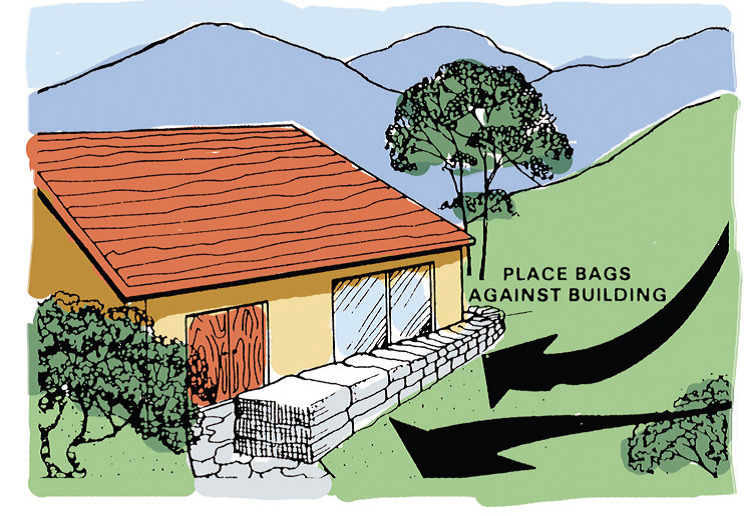 We have no idea what El Niño will bring us this winter, but we’ve been doing everything we can to make sure we’re ready for it. With all of the rain predicted, some of our roads and highways are likely to be flooded, perhaps for days.