Nature Apps for Sonoma Overlook Trail

by Jacqueline Steuer
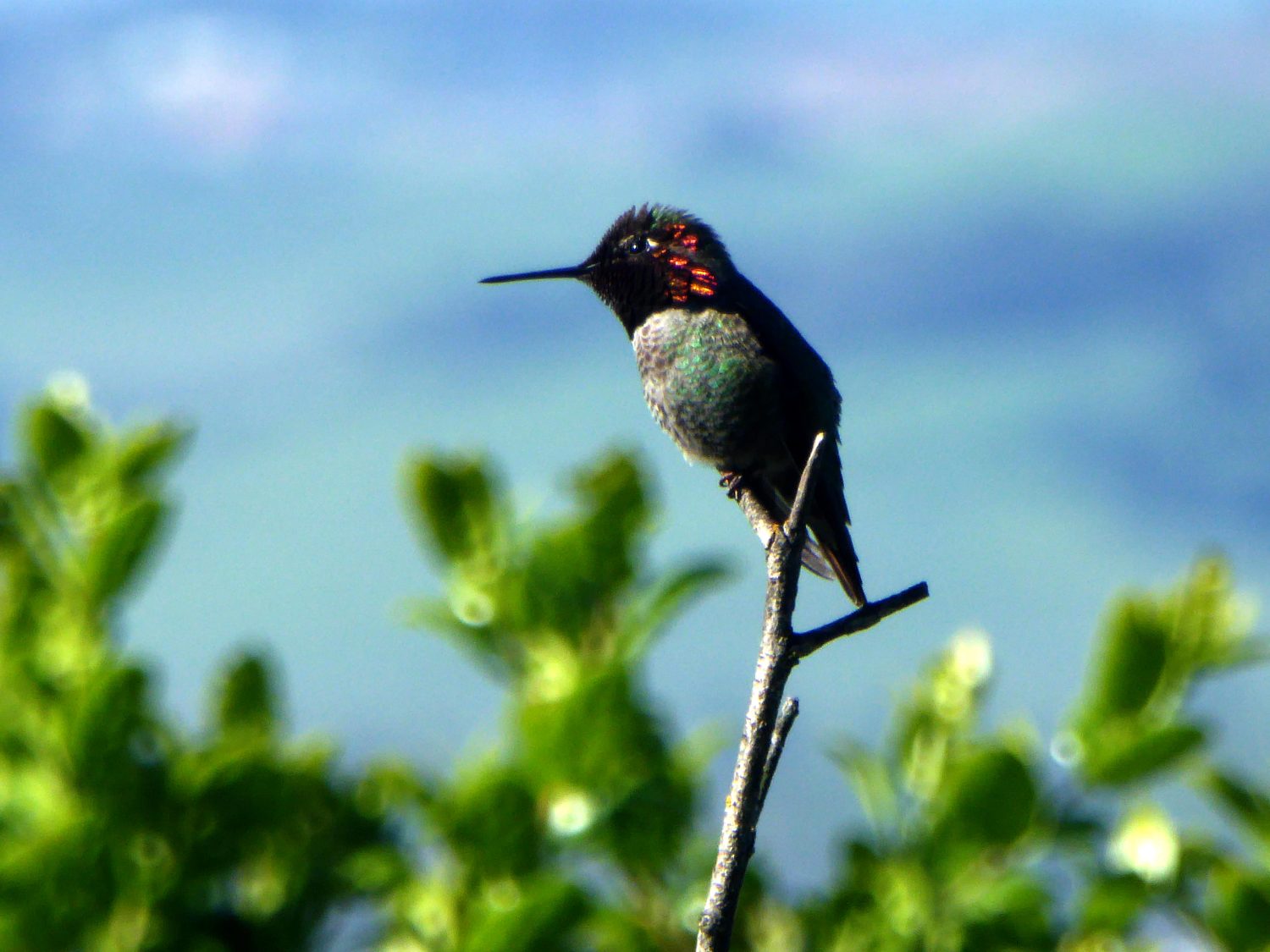
So you are on the trail, and you hear a bird calling. You think it’s a Bewick’s wren, but you aren’t sure. It’s driving you crazy. What do you do? Turn to Merlin Bird ID. Just open the app on your phone, select “sound,” and the app records the bird sounds in your environment. Next thing you know, bird species’ names are popping up. And, as each species calls, its name is highlighted. Yes, it is a Bewick’s wren!

Or, you aren’t sure if that colorful, three-lobed leaf is poison oak or some other plant. Depending on its size, this plant can look like a woody vine, thicket or shrub, or just a bundle of sticks. What do you do? Turn to Pl@ntNet. Open the app, take a photo of the leaf or flower, give your location, and the name of the plant is provided. Now you know–don’t touch those pretty leaves!

Before you hit the trail, decide what apps are of interest to you and take time at home to download the apps to your phone. Or, depend upon built in phone tools that supply some plant IDs listed below. These are some of the best apps to consider:

Merlin Bird ID – provided by Cornell Lab of Ornithology. Identifies bird species by: 1) sound recording you provide, 2) a photo for identification, or 3) use “Step by Step” to give location, date, approximate size, color, and location of bird (i.e., eating at a feeder, swimming or wading, on the ground…) to get an ID. Alternatively, in “Explore Birds,” obtain detailed information about a species, including its likelihood at your location. Creates a personal life list of birds you document. Free app.
Love Lizard StyleEbird – provided by Cornell Lab of Ornithology. Provides a way to document birds seen or heard in a location. Observers must be able to identify the species by sight or sound to create a checklist for the event. Ebird requests observers spend at least five minutes during the event. Provides rare bird alerts. Provides detailed species information through Birds of the World. Allows exploration by Species Maps, Explore Hotspots, Search Photos & Sounds, and Bar Charts. Provides free birding skills courses. Gives eBird science information. Free app.

iNaturalist – A powerful app created by the California Academy of Sciences and the National Geographic Society. Take a photo of an animal, bug, or plant to identify it, and your findings help scientists track global biodiversity. Free app.

Seek – A child-safe, camera-based version of iNaturalist that works offline. It uses image recognition to identify species in real time and lets you earn badges for finding different types of wildlife. Free app.

Wild mushroomsPl@ntNet – identifies native and non-native plants with a photo of a plant. Your profile lists plants you have identified. Can also search for a plant by starting with a family or genus name. Each species is listed with photos of its leaf, flower, fruit, bark, habit and “other” as well as a map of its location based upon observations. Backed by a scientific research consortium. Relies on crowdsourced citizen science. Free app.

Plantora – A good choice for a mix of plant identification, disease symptom checkers, and basic care reminders without being forced into a premium subscription. Free app.

Built-in Phone Tools (No App Required):

  • iPhone: If you have iOS 15 or later, open any photo of a plant in your Photos app and tap the info “i” icon at the bottom. A leaf icon will appear allowing you to select “Look up plant.”
  • Android: Use Google Lens directly through your camera or Google search bar to snap a picture and instantly identify local flora

With these tools in your pocket, you will no longer be left to rack your brain for what bird call that is. And you won’t discover, too late, that the pretty leaves you brought home to decorate with are poison oak! Happy trails!
 

New Trail Video

Sonoma Overlook Trail & Montini Preserve from Roy Tennant on Vimeo.

Why We Fight

I’ve posted a lot about invasive species removal from the Overlook and Montini Preserve properties. Anyone but me would likely say too much, and who could blame them? Not me.

But in reviewing what I’ve written over the years about it, I realized I’ve never explained why we fight this fight. So now I rush to make good this oversight, and try to explain why I go out, nearly every day I can from January through July or beyond, and fight something that will very likely never be defeated.

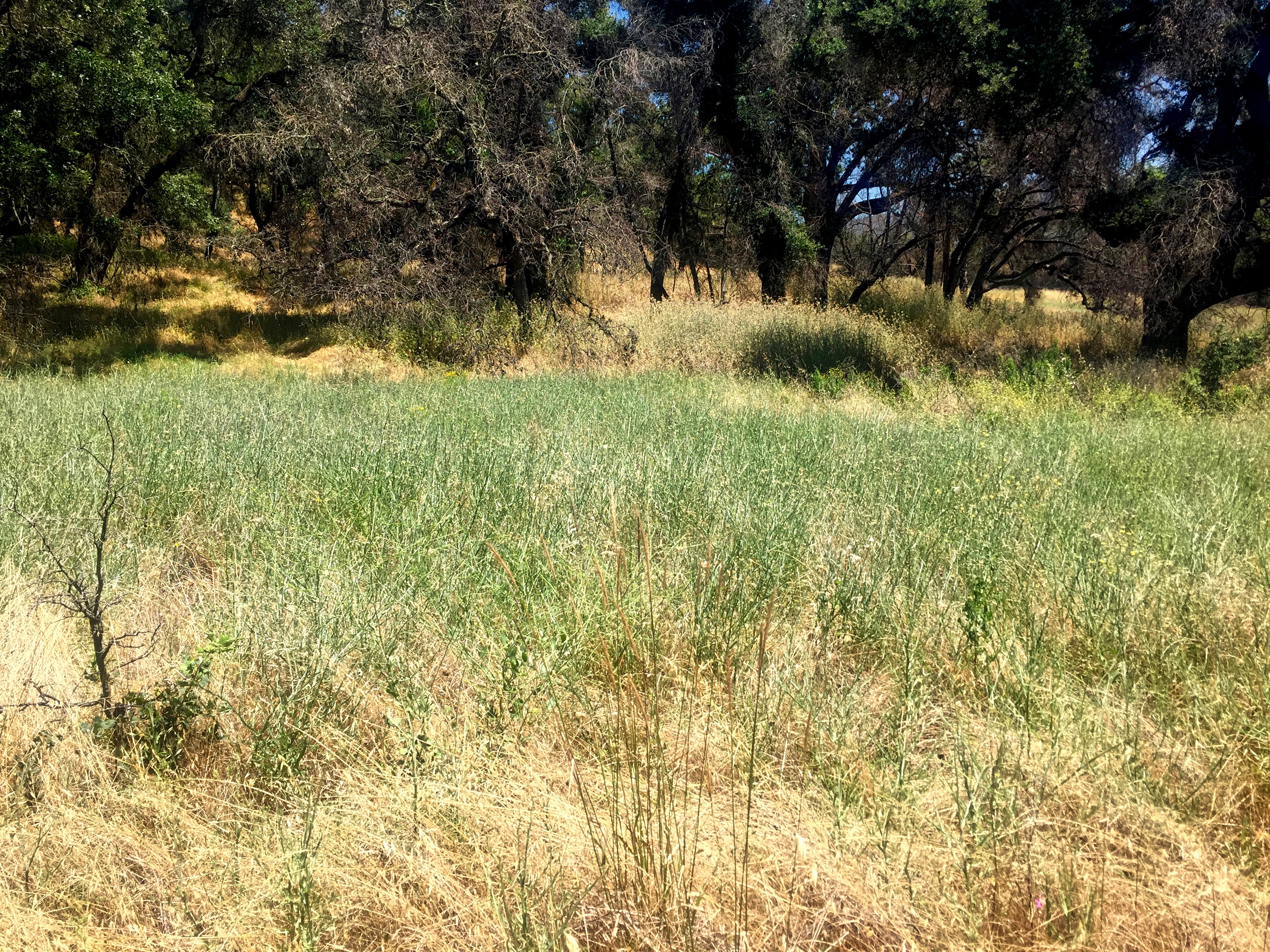
First and foremost, it’s necessary to highlight the fact that species such as Italian and yellow star thistle will completely take over an ecosystem. You don’t need to go far to see this happening. The picture here was taken at the Sonoma Valley Regional Park, and shows how Yellow star thistle in the foreground, and Italian thistle in the background, have essentially taken over a meadow. This crowds out native plant species and even mammals.

Thistle creates a “no-go” area for wildlife, who avoid such patches until they can’t be avoided at all, and then they move elsewhere. This of course leads to a an ever-increasing monoculture and “dead zone” where only the invasive species thrive. “Invasive species are among the leading threats to native wildlife,” states the National Wildlife Federation, “Approximately 42 percent of threatened or endangered species are at risk due to invasive species.” This is clearly a serious threat that must be addressed.

The impacts of this monoculture are many. Wildlife doesn’t have the food sources they should. The lack of diversity in plant life affects the diversity of everything else — insects, reptiles, birds, and mammals.

Invasive species can also affect the chemistry of the soil, as well as the intensity of wildfires.

There are, then, many reasons why we fight this fight.

Recently as I walked along the main path in the Sonoma Valley Regional Park, I was in despair seeing the extent of Italian and Yellow star thistle invasion. It was heartbreaking to see. But I had to turn away, knowing that I have my own battle to fight on the Overlook and Montini Preserve properties. Thankfully, the Yellow star thistle is nearly eradicated on those properties except right along, and next to, Norrbom Road. But we have a long, long way to go against the Italian thistle, let alone Scotch and/or French broom and other invasive species that we have yet to assess, let alone seriously address.

In the end, we fight this fight because the alternative is so much worse. We fight because we love the native ecosystem and we believe deeply in saving it. We fight because we have no choice but to do so, loving these properties and trails as we do. Frankly, that’s the absolute best reason ever to fight for something — for love. So if you see me or my comrades out there, with a large bag and a glove, you’ll know what we are doing. We are fighting for something we love.

That’s why we fight.

The Remains of the Day

For a while now on Facebook (friend me, maybe?), I will occasionally post a “Remains of the day” post, with a picture captured on the trail of some remains of an animal that I encounter while hiking. So if you are squeamish about such things, now would be a great time to bail, as I’m about to discuss these. Just sayin’.

For those of you still here, here we go as I recap some of those encounters — never sought, but not avoided either. Every living being deserves to have their lives (and deaths, witnessed).

American shrew mole

American shrew mole (I think).

Almost always the method of demise is mysterious, as it was to me when I encountered this American shrew mole (I think that’s what it is, but I’m open to be corrected on that) in the middle of the Holstein Hill Trail on the Montini Preserve. Why had it died? It didn’t appear to have any trauma, or other obvious signs of why it had expired. So…why? I’ll never know, but there it was. I never saw it again, although I’m up on the trail almost every day.

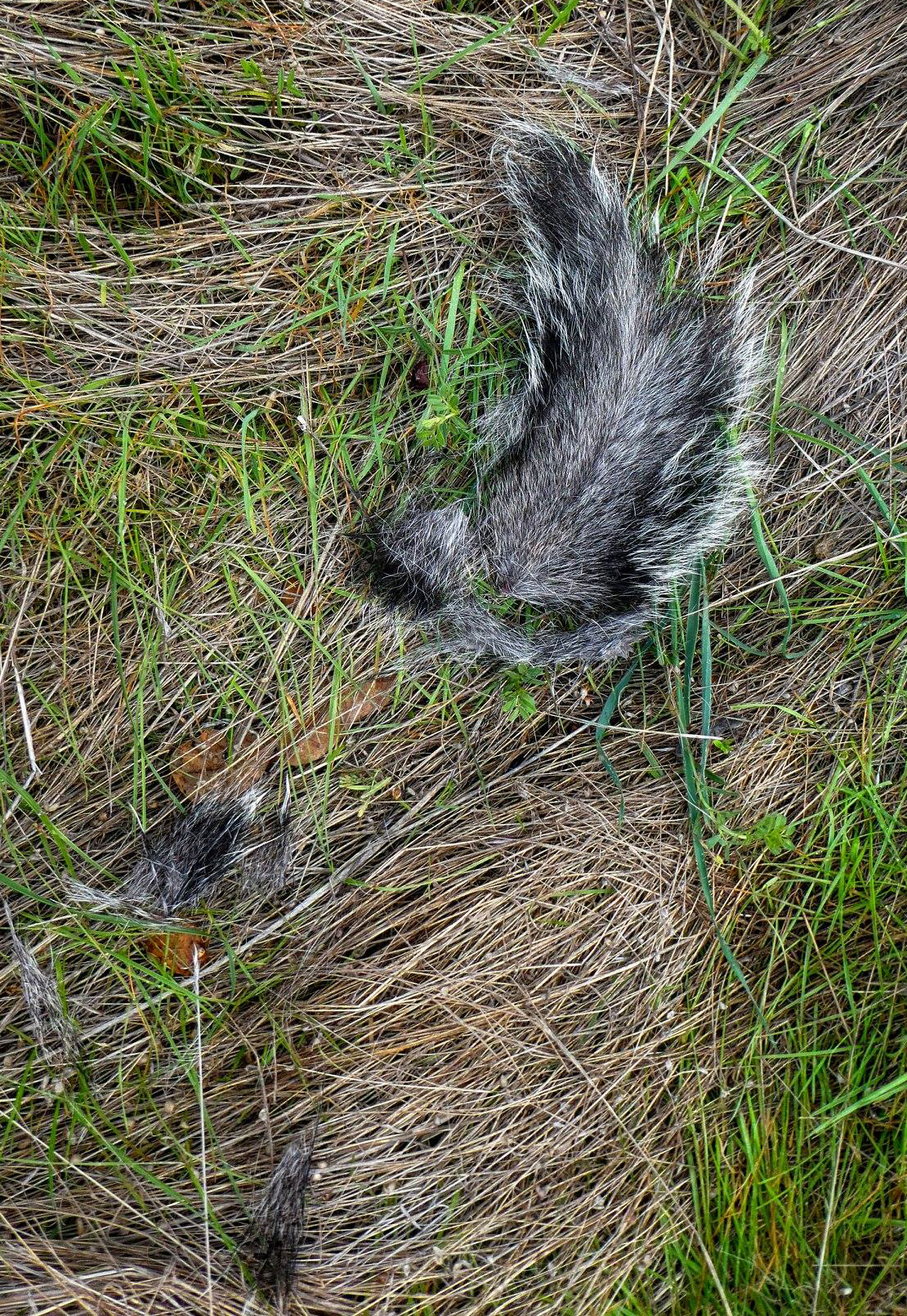
Perhaps more easy to interpret is this scene of a squirrel pulled apart. I would guess a coyote was the predator, but it could be a fox, or a bobcat, or even a mountain lion. But as I came upon it on the Montini Preserve (isn’t it interesting that I can remember exactly where I found these remains even years later?), my guess is a coyote. Coyotes are frequently evident on the Montini, whereas it may be a bit close to civilization for a mountain lion. I wouldn’t rule out a fox or bobcat, though.

It frankly surprises me that a predator was able to catch a squirrel, as I’ve seen them scamper up trees with a rapidity that puts my sorry running speed to shame. Either it was sickly, or a predator was really skilled or lucky. I will never know which.

Then comes this mystery, but one that clearly happened not long before I happened upon the evidence. The blood hadn’t yet dried. Bright red and still very liquid, with a few feathers, clearly some bird had only recently fallen to a hawk or owl, or? Again, I will never know. But the evidence was clear — a bird of some kind was no more, felled in a moment by something hurtling unexpectedly from the sky.

When I discover tiny dioramas like this, I can’t help but pause in my determined hike up the trail and ponder on the uncertainties of life. Not one of us owns a guarantee on life, although we may fancy that we do, or at least delude ourselves toward that end. This bird no doubt thought it was doggedly in pursuit of food, or water, or nest materials, or whatever, and it was cut down in the process out of the blue. Can any one of us have more surety than that bird? Maybe. But perhaps not. Actually, I know not.

Sadly, I think I know who this next predator is. Since this gopher snake was killed, but not eaten, I suspect a misguided hiker who believed that he (almost undoubtedly a male, sorry guys, I know my gender) had encountered a rattlesnake and chose to kill it. Rattlesnakes, should they be encountered, should never be killed, just avoided. And they make it easy, since they frequently (almost always, in my experience) warn before they try to strike. They don’t want to mix it up with you any more than you do. Just take a wide berth and both get on with your lives. We don’t need more death in this world.

In the universe into which we’ve all been born — humans, cockroaches, elephants, what have you — death is the price we pay for life. Having said that, I don’t think many of us forsee our own death before being faced with the reality, whether it is a creeping but vicious disease like cancer (FUCK CANCER!), or something more immediate, like a heart attack or a violent accident of some kind.

Like you, I don’t know how I will end. Neither did any of the animals depicted on this page. It happens, and mostly it isn’t in our control, and we must accept that as part of our bargain for existing in this reality.

I just know that every time I bear witness to remains like those depicted on this page I pause, look up, scan the horizon, and try to really take in the world in which I’m still alive. I enjoy the breath filling my lungs, the heart that still beats in my chest, and the eyes that can still enjoy the light the sun brings to our planet. It is, in the end, all that any of us can do, day by gorgeous day.

The Other Dogs

coyoteIf you’re a reader of this blog you likely know that dogs are not allowed on the Montini and Overlook properties. However, there is one type of canine that is definitely allowed, Canis latrans, or coyotes. I happened to spot one today out in the meadow below the Holstein Hill trail on the Montini Preserve (see photo).

Even if you don’t see a coyote you can often hear them. The other day I was hiking on the Montini Preserve and sirens started going off below me in the town of Sonoma. They were met by howls from above me by a coyote responding to the sirens. They also bark (see the video below of a coyote barking on the Montini Preserve).

Coyotes are abundant throughout North America, and they thrive in the kinds of mixed meadows and woodlands we have here in Sonoma Valley. They eat small game such as rabbits, rodents, fish and frogs, and deer. They can also consume snakes, insects, and even fruit or grass (but most of their diet consists of mammals). Near humans, they have been known to eat garbage and pet food.

Canis familiaris, the domestic dog, is descended from the coyote. So you could say that we owe coyotes quite a bit.

Keep your eyes peeled the next time you’re out on the trail, and maybe you’ll be lucky enough to spot one (or hear one).