Thanks to recent rains, trails on Montini Preserve and the Sonoma Overlook Trail are undergoing some remarkable transformations. The dusty browns and golds of late fall have been replaced by winter’s verdant palette – dormant ferns are reappearing and mosses now adorn tree trunks and boulders like festive green boas while the pungent scent of decomposing bay leaves permeates the mixed evergreen forest.

Coffee Fern

Lichens • Upper Meadow
When we first started the SOT Facebook page five years back, local photographer Ryan Lely captured these beautiful images after a period of heavy rain.

Cascading creek

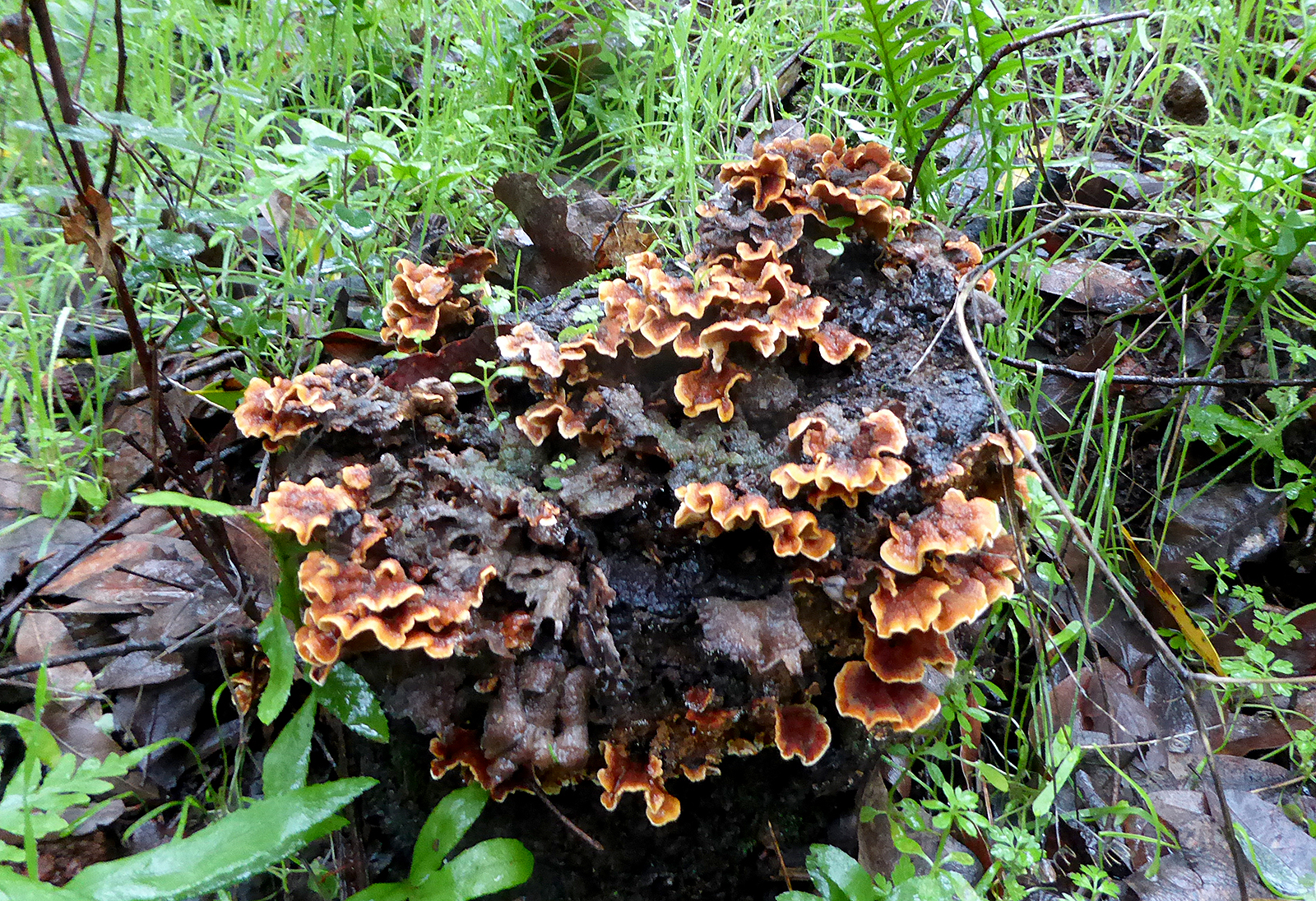
Turkey Tails
When was the last time anyone saw so much water running off the hillside? Or turkey tails in such psychedelic colors? Fortunately we’re in store for more rain this coming week. Make sure to do a little rain dance when you get to the top!
“Tis the season for gratitude, and I’d like to say a huge thank you to the stewards and volunteers (Rich, Lynn, John, Fred, Joanna, Roy and anyone else I’ve forgotten) who take such meticulous care of these trails, and to the dedicated docents led by Rosemarie Marks. Let’s not forget Joanna Kemper (what doesn’t she do?), Laurie Friedeman, our new fundraising chair, and Linda Felt who has donated upwards of 100 hours of her time to the SOT Stewards.
Speaking of group hugs, experts now attest to the health benefits of hugging trees, so hikers need not feel self-conscious about the urge to wrap their arms around a favorite trunk along the trail – just mind the poison oak! Read more about the health benefits of tree hugging in Matthew Silverstone’s new book Blinded by Science where he explores a theory that suggests “When one touches a tree, its different vibrational pattern will affect various biological behaviors within the body….[a theory] backed up by hundreds of scientifically validated studies, providing overwhelming proof that tree hugging is not just for hippies, it’s for everyone.”
REI made a landmark decision this year to close their stores on Black Friday. CA State Parks partnered with Save the Redwoods League to make entrance to 49 state parks free to visitors on a day traditionally spent trampling over the good will of one’s fellow man for the best deal on a Play Station 4. In honor of spending quality time with friends and loved ones outside (who needs a flatscreen when you can see clear down to the SF skyline from the top of Schocken Hill?) perhaps a few of you have put off shopping for that perfect holiday gift, the one you didn’t buy on Black Friday? Or perhaps your New Year’s resolution is to connect more with the natural world, be a more informed observer, or maybe just share your outdoor experience with young hikers.
Whether you’d like to learn more about historic Native American land management practices in California, the fabulous world of fungi, the life cycle of an oak, or find out what the soundscape has to tell us about the fragile state of our planet, there’s a book for you. In celebration of 2015, I put together a very short list of a few of my favorite books with a brief (and borrowed) synopsis. I’d love to hear your recommendations!
 The Great Animal Orchestra by Bernie Krause (Little, Brown and Company)
“Musician and naturalist Bernie Krause is one of the world’s leading experts in natural sound, and he’s spent his life discovering and recording nature’s rich chorus. Searching far beyond our modern world’s honking horns and buzzing machinery, he has sought out the truly wild places that remain, where natural soundscapes exist virtually unchanged from when the earliest humans first inhabited the earth.”
(Plus, he lives in Glen Ellen!)
 The Life of An Oak: An Intimate Portrait by Glenn Keator (Heyday Books)
“The Life of an Oak takes an intimate look at all aspects of the oak tree, from a microscopic examination of its cellular processes to a survey of the grand Diaspora by which members of this remarkable family have spread around the world and diversified. The separate yet exquisitely coordinated development of male and female flowers, the bursting of buds, the outpouring of leaves, and the groping of roots are described in language and art that will enchant the professional and armchair botanist alike.”

Last Child in the Woods by Richard Louv
“In this influential work about the staggering divide between children and the outdoors, child advocacy expert Richard Louv directly links the lack of nature in the lives of today’s wired generation—he calls it nature-deficit—to some of the most disturbing childhood trends, such as the rises in obesity, attention disorders, and depression.
Last Child in the Woods is the first book to bring together a new and growing body of research indicating that direct exposure to nature is essential for healthy childhood development and for the physical and emotional health of children and adults. More than just raising an alarm, Louv offers practical solutions and simple ways to heal the broken bond—and many are right in our own backyard.”
 Coyote’s Guide to Connecting With Nature by Jon Young
Connection, Awareness, Belonging. For children and adults alike, Coyote’s Guide to Connecting with Nature sparks the excitement of discovery, real connection with animals and plants, and a sense of belonging through knowing our place on the planet. With this manual in one hand and someone we care about in the other, Coyote inspires us to follow curiosity s magic. Coyote’s Guide lifts the lid off the mind of a mentor to reveal how you can design invisible learning experiences. Offering dozens of activities, stories, and games, so mentors, educators, and parents can lead in ways that fit your people, your place, and your plans. Coyote’s Guide sets fresh standards for environmental literacy that engages body, mind and spirit.”
 Assembling California by John McPhee (Macmillan)
“At various times in a span of fifteen years, John McPhee made geological field surveys in the company of Eldridge Moores, a tectonicist at the University of California at Davis. The result of these trips is Assembling California, a cross-section in human and geologic time, from Donner Pass in the Sierra Nevada through the golden foothills of the Mother Lode and across the Great Central Valley to the wine country of the Coast Ranges, the rock of San Francisco, and the San Andreas family of faults. The two disparate time scales occasionally intersect–in the gold disruptions of the nineteenth century no less than in the earthquakes of the twentieth–and always with relevance to a newly understood geologic history in which half a dozen large and separate pieces of country are seen to have drifted in from far and near to coalesce as California. McPhee and Moores also journeyed to remote mountains of Arizona and to Cyprus and northern Greece, where rock of the deep-ocean floor has been transported into continental settings, as it has in California. Global in scope and a delight to read, Assembling California is a sweeping narrative of maps in motion, of evolving and dissolving lands.”
 All That the Rain Promises and More: A Hip Pocket Guide to Western Mushrooms by David Arora (Ten Speed Press)
“Full-color illustrated guide to identifying 200 Western mushrooms by their key features.” Arora’s book Mushrooms Demystified takes you deeper into the world of mycology. But it’s not portable!
 Tending the Wild by M. Cat Anderson
“M. Kat Anderson presents a wealth of information on native land management practices gleaned in part from interviews and correspondence with Native Americans who recall what their grandparents told them about how and when areas were burned, which plants were eaten and which were used for basketry, and how plants were tended. The complex picture that emerges from this and other historical source material dispels the hunter-gatherer stereotype long perpetuated in anthropological and historical literature. We come to see California’s indigenous people as active agents of environmental change and stewardship. Tending the Wild persuasively argues that this traditional ecological knowledge is essential if we are to successfully meet the challenge of living sustainably.”
 Secrets of the Oak Woodlands: Plants and Animals Among California’s Oaks by Kate Marianchild (Heyday Books)
“A Californian may vacation in Yosemite, Big Sur, or Death Valley, but many of us come home to an oak woodland. Yet, while common, oak woodlands are anything but ordinary. In a book rich in illustration and suffused with wonder, author Kate Marianchild combines extensive research and years of personal experience to explore some of the marvelous plants and animals that the oak woodlands nurture. Acorn woodpeckers unite in marriages of up to ten mates and raise their young cooperatively. Ground squirrels roll in rattlesnake skins to hide their scent from hungry snakes. Manzanita’s rust-colored, paper-thin bark peels away in time for the summer solstice, exposing sinuous contours that are cool to the touch even on the hottest day. Conveying up-to-the-minute scientific findings with a storyteller’s skill, Marianchild introduces us to a host of remarkable creatures in a world close by, a world that ‘rustles, hums, and sings with the sounds of wild things.’”
 The Stories Behind Sonoma Valley Place Names by Arthur Dawson
“A wonderful local history book that provides rich layers of Sonoma Valley’s past. Along with dozens of tales there are 120 Place Names and their origins.” I’ve seen this book at the Visitors Center on the Plaza. Arthur has done several training on the SOT for docents, is extremely knowledgable about both natural and cultural local history, and a wonderful story teller.
 From the Forest by Sara Maitland (Counterpoint)
“Fairy tales are one of our earliest cultural forms, and forests one of our most ancient landscapes. Both evoke similar sensations: At times they are beautiful and magical, at others spooky and sometimes horrifying. Maitland argues that the terrain of these fairy tales are intimately connected to the mysterious secrets and silences, gifts and perils.”
And everything on John Muir Law’s website! http://www.johnmuirlaws.com/
Happy hiking!
Lisa Summers

 To celebrate National Arbor Day, volunteer Steward Rich Gibson, a retired biologist, will lead a 3-mile hike of moderate difficulty on the Sonoma Overlook Trail while telling hikers about the trees and shrubs along the trail. This is not to be missed, as you will emerge from the experience with a much greater appreciation of the trees and shrubs you see not just beside the trail, but everywhere in Sonoma Valley.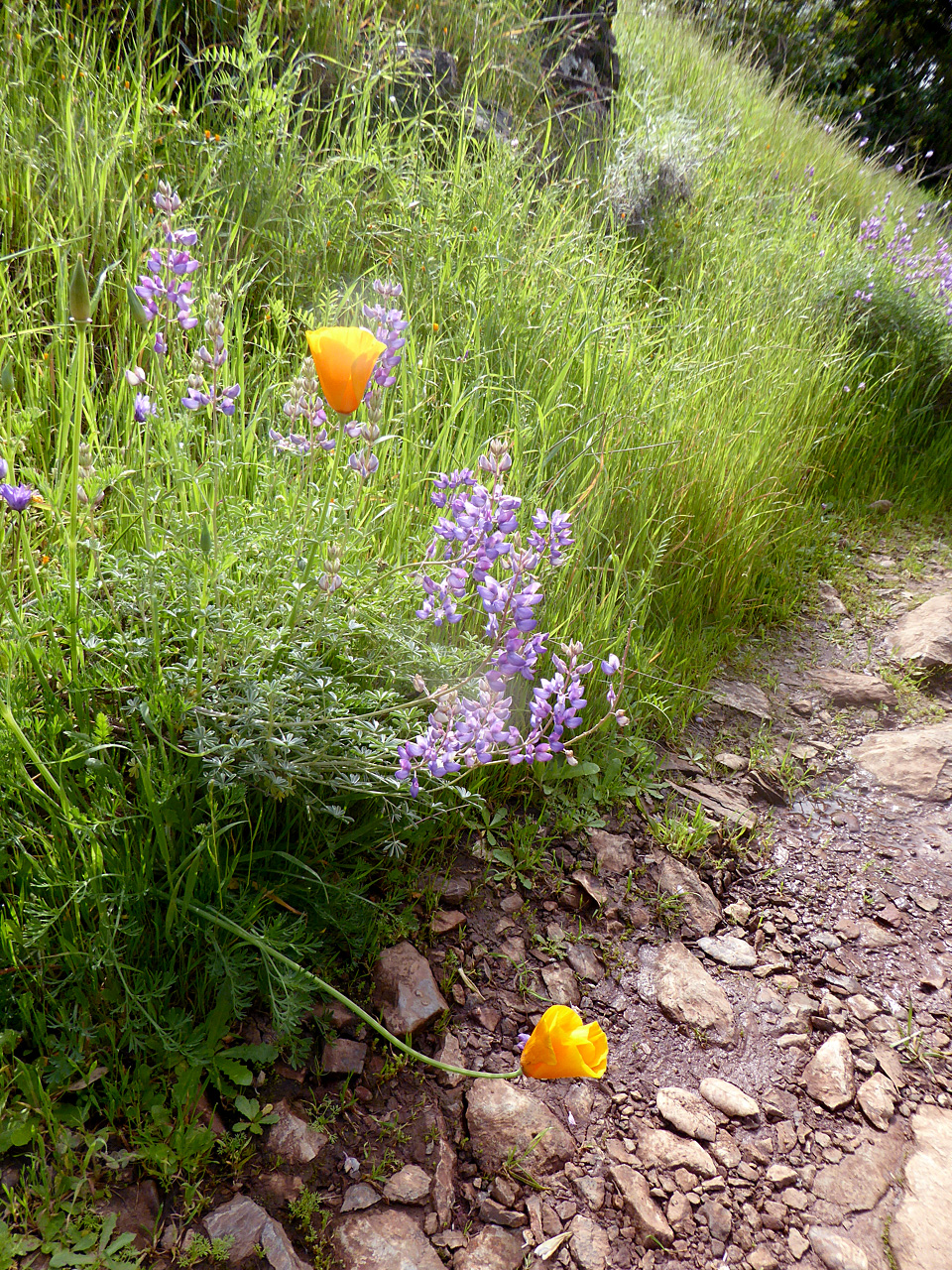

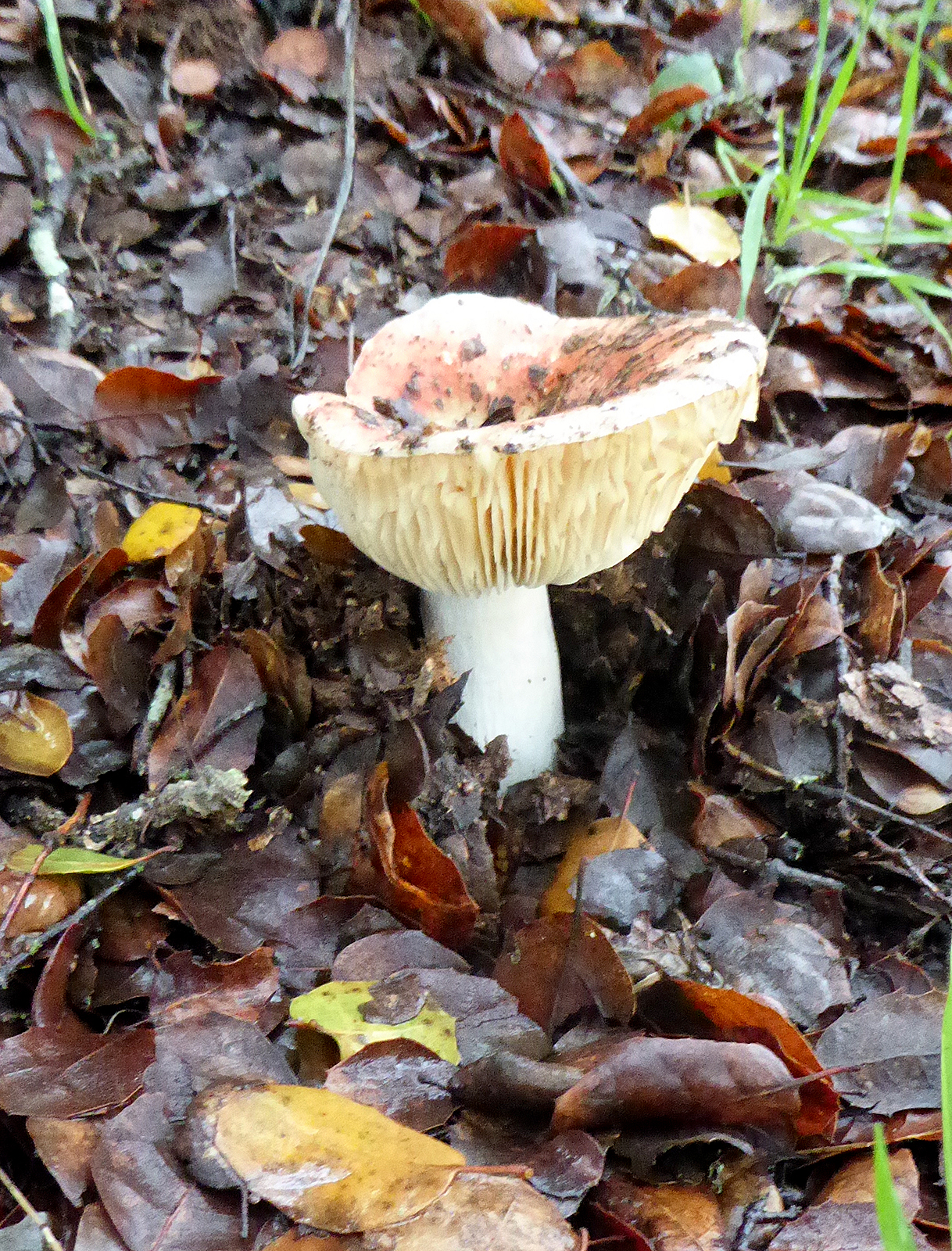
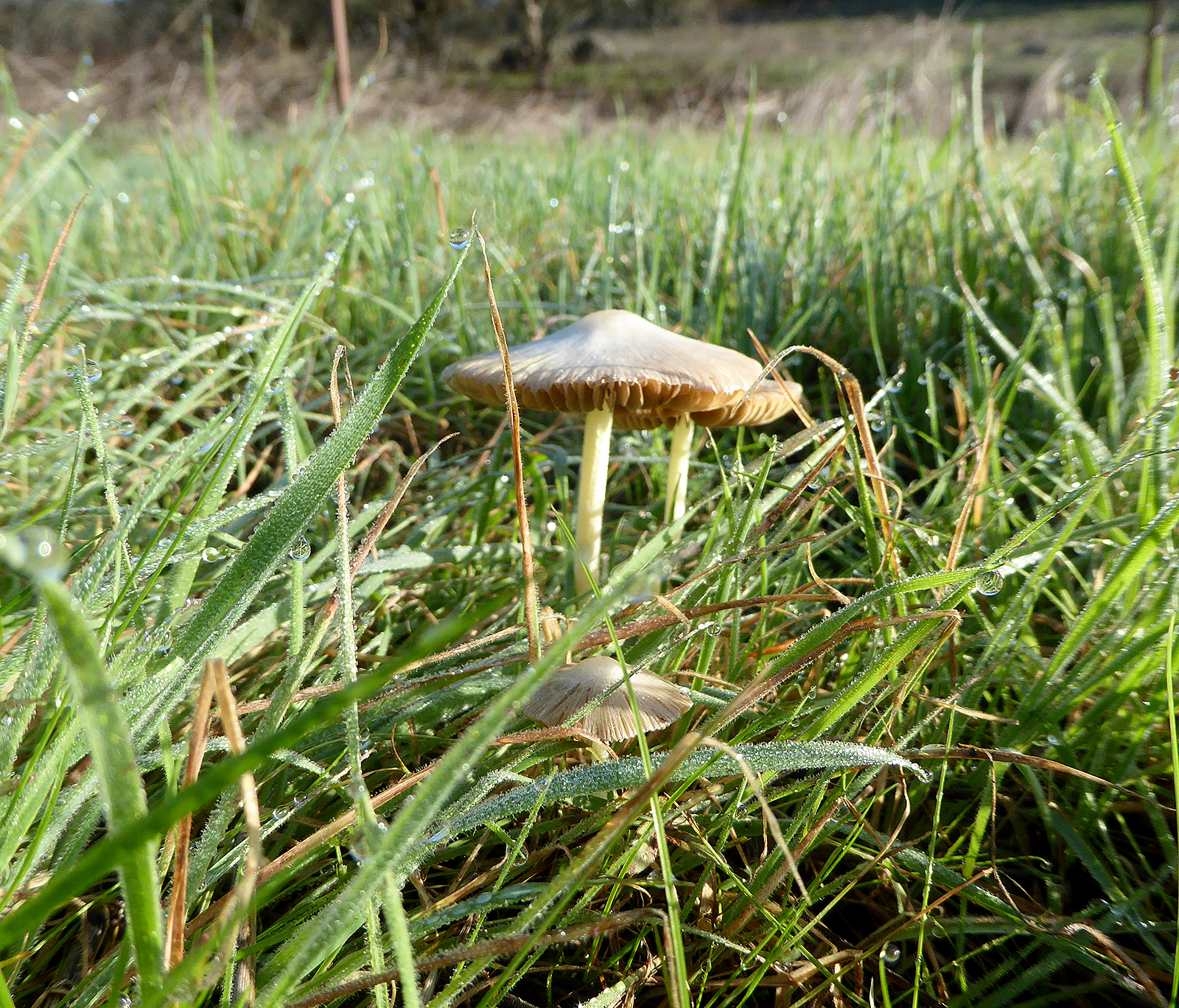

 Sonoma Overlook Trail • Montini Open Space Preserve