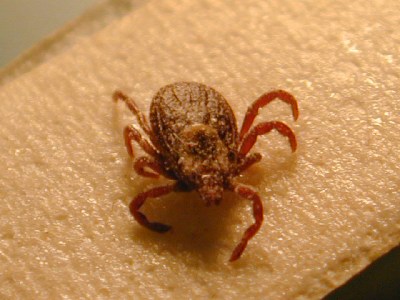
 Yesterday, likely due to my work in cutting back poison oak on the trails, I found a tick on me. Freaked out by the possibility of contracting Lyme disease, I quickly found a pair of tweezers and pulled the tick out, trying carefully to grab it from the head rather than squeezing the body. It was difficult, as it was quite tiny. The bite spot is still red and sore. But the important piece of information is this: save the tick, so it can be tested for Lyme Disease.
But as this Press Democrat article points out (helpfully published the day I found the tick), the actual incidence of Lyme disease in Sonoma County is not high, despite the fact that we have had the most reported cases in California in recent years.
To prevent tick bites, the Sonoma County Department of Health Services recommends:
- Walk in the center of trails.
- Use repellents that contain 20 to 30 percent DEET on exposed skin and clothing for protection that lasts up to several hours. Treat clothing and gear (boots, socks, pants, tents, etc.) with products containing 0.5 percent permethrin.
- Bathe or shower as soon as possible after coming indoors, preferably within two hours.
- Conduct a full-body tick check; parents should check children under arms, in and around ears, inside belly button, behind knees, between legs, around waist, especially in hair.
- Examine gear and pets, which can bring home ticks that will then attach to a person.
- Tumble clothes in a dryer on high heat for up to an hour to kill remaining ticks.
Remember that ticks that carry Lyme disease can be very small — about the size of a poppy seed. The biggest danger comes when the tick bite goes undetected and the disease is allowed to fester without antibiotics to fight it. Long-term effects are possible in these cases.
Therefore, it’s wise to know what the symptoms of Lyme disease are so if you have any of these you can contact your doctor immediately (from the Mayo Clinic):
“These signs and symptoms may occur within a month after you’ve been infected:
- Rash. From 3 to 30 days after an infected tick bite, an expanding red area might appear that sometimes clears in the center, forming a bull’s-eye pattern. The rash (erythema migrans) expands slowly over days and can spread to 12 inches (30 centimeters) across. It is typically not itchy or painful.Erythema migrans is one of the hallmarks of Lyme disease. Some people develop this rash at more than one place on their bodies.
- Flu-like symptoms. Fever, chills, fatigue, body aches and a headache may accompany the rash.”
If these symptoms are not spotted or recognized, later signs may appear in the following weeks and months. See the Mayo Clinic web site for more information.
So stay safe out there, and be vigilant!
Photo by wahoowins, Creative Commons License CC BY-ND 2.0

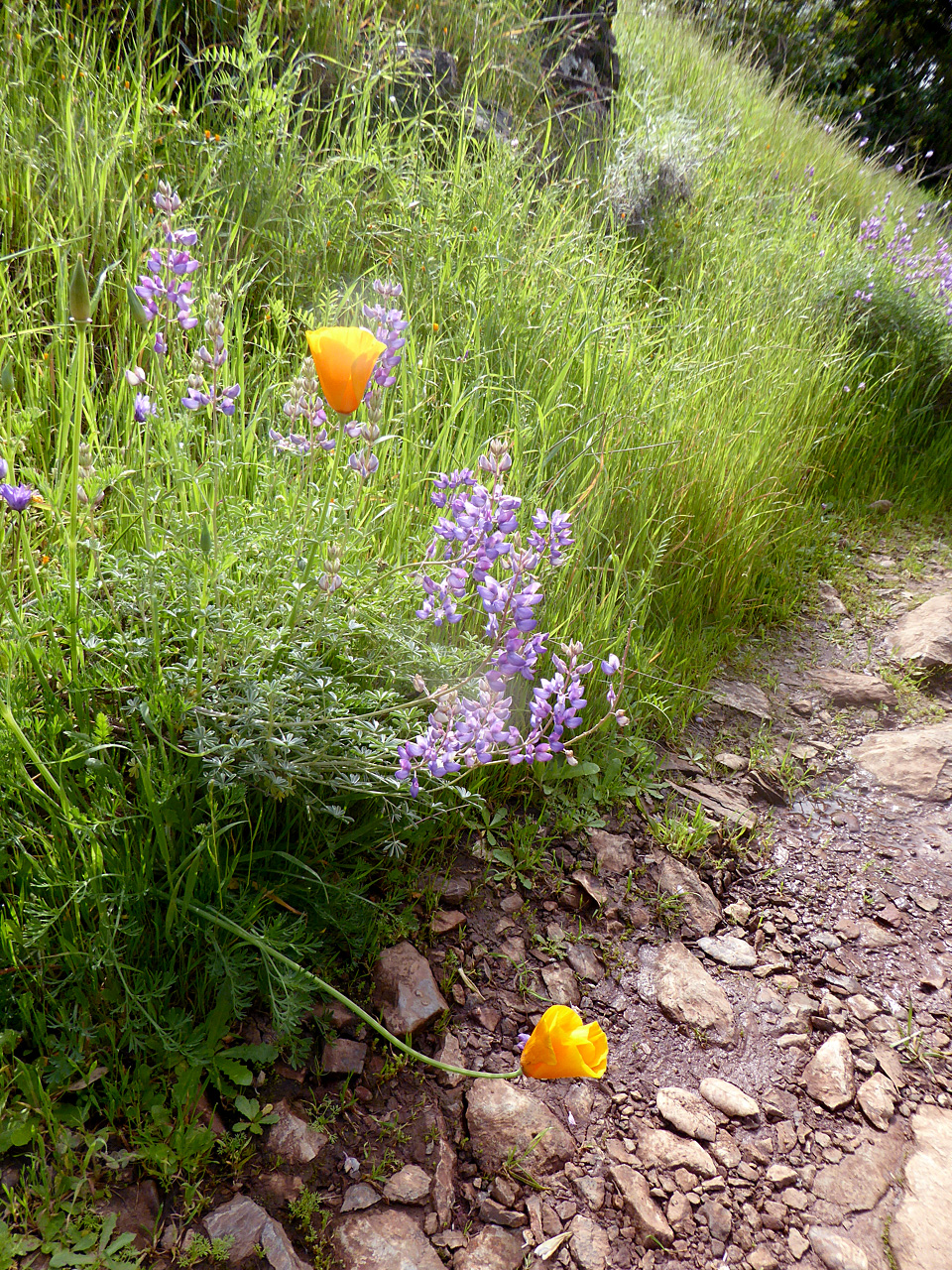 If you like flowers, then now is the time to hike the Overlook and Montini trails, as they are going nuts. From California poppies, to Lupine, to you name it, they are out in great profusion. The picture to the right was taken just a few days ago on the Overlook Trail, where you can see both Lupine and Poppies hanging over the trail.


 Sonoma Overlook Trail • Montini Open Space Preserve