Battle Has Been Joined, The War Has Begun Anew

6040450340_0ab8cc17bc_m

Photo by Philip, https://www.flickr.com/photos/21202718@N00/, CC BY-NC-SA 2.0

And so it goes.

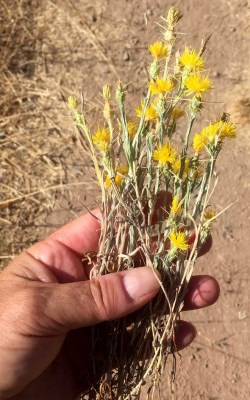
Today Steward Linda Felt found a patch of the invasive weed Yellow Star Thistle on the Overlook Trail. I had been watching for it, but eagle-eyed Linda gets the prize for First Sighting of the Season (there is no prize, actually, merely recocgnition). With this new information, I redoubled my efforts to find it and indeed found some small, not yet flowering, plants on the upper meadow.

Thus begins the 2015 campaign to rid the Overlook Trail of this non-native plant, an effort that has been going on for years. Steward Rich Gibson, a Biologist and retired Ranger, ably leads the effort. He schedules group work days to tackle it, bringing snacks, gloves, sacks, and camaraderie. We also pull the weed individually, since group work days are insufficient to completely eradicate it.

thistlepull1

Photo by Roy Tennant, Stewards Joanna Kemper and Rich Gibson pictured.

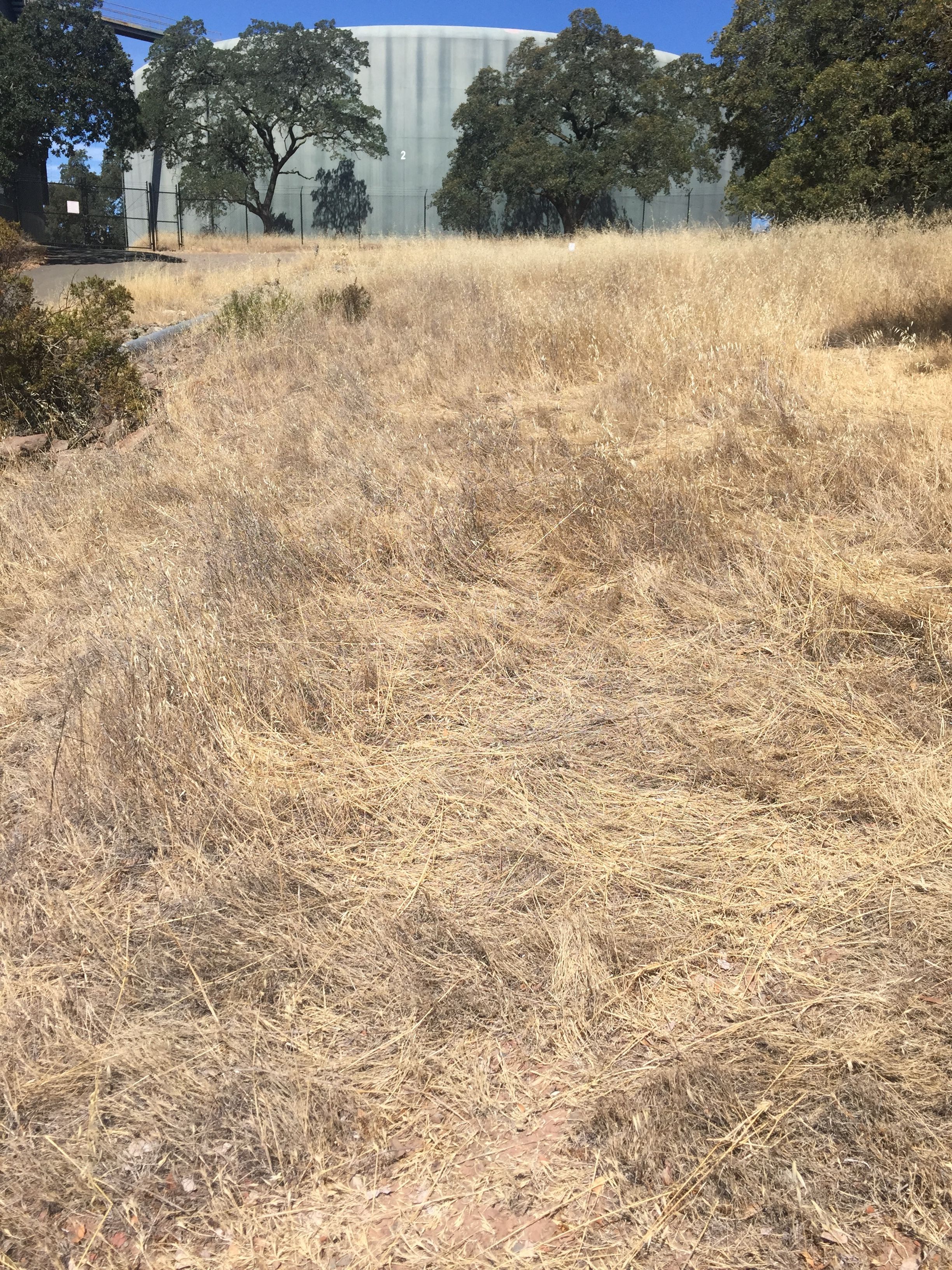
Last year we likely had our best year yet, as we continued to pull throughout late Spring, Summer, and into early Fall until none could be found on the main trail. However, we had to leave some very infested patches near Norrbom Road (around the water tank and on up to nearly the Rattlesnake Cutoff trail). We’re aiming to knock those back this year, as well as keep the main trail thistle-free.

Word is that to eradicate it completely takes up to five years of concerted, thorough, eradication efforts. Then vigilance is required, as it could try to re-establish at any time.

Linda Felt is active in the effort to eradicate Jack London State Park of Yellow Star Thistle and she reports that it is already well engaged this season there. So lock and load, people. The battle has begun.

Watch for flyers at the trailhead for group work days. We’d love to see you there.

Dragonflies Aplenty

I’ve always been fascinated with dragonflies — their often bright coloration, their way of darting about when flying, their large size for an insect. So I was delighted to get photos of two specimens on today’s hike — one on the Overlook Trail and another on the Montini Preserve.

dragonfly1The first one I saw was this Flame Skimmer (Libellula saturata), perched in a dead bush. I stayed on the trail and used my 30x camera zoom to get in close. The lacy wings are particularly beautiful in full size (click on the image).

Dragonflies are actually quite ancient. According to Wikipedia, fossils have been found from 325 million years ago. They were much, much bigger back then, with wingspans of up to nearly 30 inches. They are capable of four different styles of flight, which allows them to fly in six directions: upward, downward, forward, backward, to the left, and to the right.

dragonfly2I then encountered this Bison snaketail (Ophiogomphus bison) sitting on the Holstein Hill trail on the Montini Preserve, where it crossses the meadow at the top of the hill.

Dragonfly feeding habits? According to Wikipedia: “They are almost exclusively carnivorous, eating a wide variety of insects ranging from small midges and mosquitoes to butterflies, moths, damselflies and smaller dragonflies. A large prey item is subdued by being bitten on the head and is carried by the legs to a perch. Here the wings are discarded and the prey usually ingested head first. A dragonfly may consume as much as a fifth of its body weight in prey per day.”

Dragonflies have inspired a lot of art, from Tiffany stained glass lamp designs to Haiku, such as this poem by Matsuo Basho:

Crimson pepper pod
add two pairs of wings, and look
darting dragonfly

May you see a dragonfly or two the next time you hike the trails. You will be glad you did.

How to Make Friends and Stay Healthy

star thistle removal

Stewards pulling the invasive Yellow Star Thistle.

Being a volunteer trail steward is not nearly as glamorous and high-paying as it sounds. It clearly isn’t all wine and roses. Or even giggles and grins. But it is nonetheless very rewarding to those who volunteer to maintain these beautiful trails and properties we are blessed with in Sonoma Valley.

The Overlook Trail Stewards are a group of about a dozen people who meet four times a year but who also keep in fairly constant email communication about the needs of the trails and the properties they traverse. There is also a group of volunteers (some who are also Overlook Trail stewards), who help out on the contiguous Montini Open Space Preserve. Here are just some of the jobs we do for the Overlook:

  • Lead informational hikes. Some of us are trained as docents and lead groups from local schools on trail hikes to learn about the local ecology and related issues such as land stewardship. Also, we have name tags so when we are hiking the trail hikers will know our role and feel free to ask us questions about the trail or the plant and animal life they see.
  • Install and maintain signs. Proper signage is important for hikers to know their options as they reach junctions. Signs are also used to prevent hikers from using cutoffs that can be unsightly and create erosion problems. On the Overlook Trail, we also have signs that identify significant trees and plants of the area.
  • Maintain the integrity of the trail and the property. We put a lot of effort into preventing hikers from taking shortcuts which can lead to erosion and unsightly degradation of the property. We may also at times need to fix portions of the trail that are washing away or otherwise deteriorating.
  • Assure appropriate water drainage. As the trail is used over time, it tends to create a creek-like impression that rain happily uses to run downhill. To prevent serious erosion, it’s necessary to cut drainage paths on the downhill side of the trail to drain the water from the trail. These cuts need to be cleared out each Fall as rocks and debris tend to collect in them.
  • Reduce and eradicate non-native plants. Invasive species such as Scotch Broom and Star Thistle are found on the Overlook and Montini properties, and must be pulled from the ground by hand. In the Spring and Summer we often will have a work party that goes out with large grain sacks and gloves and pulls these invasive plants to provide a better habitat for our native flora. Individual stewards also go out independently to work to eradicate these plants from the properties. Eradication is only possible over a span of years of such focused activity.
  • Coordinate with local agencies. The City of Sonoma owns these properties, and has contracted with the Sonoma Ecology Center to maintain the Montini Open Space property as well as to serve as the fiscal agent for the Sonoma Overlook Trail. The Chair of the Stewards as well as others communicate with these agencies on a regular basis — for example, if a tree falls across the trail, the City Public Works department needs to be informed so they can come out and cut it. We also communicate with the Chief of Police about violations of the law on the trail (for example, dogs and bikes).
  • Raise money. Maintaining the trails as well as creating such things as stone benches for hikers requires money. We solicit donations from hikers for general maintenance needs and larger donations to sponsor benches.
  • Advocate for appropriate management rules and laws. The trails are governed by City ordinances that are, at least in part, grounded in official agreements with agencies such as the Sonoma County Open Space District. At times these ordinances are challenged by those who wish to change the rules (for example, the prohibition against dogs on the trails is now being called into question). It is our role as stewards to protect the values for which the land was originally set aside and the trails created.

Although that sounds like a lot, and some days it sure feels like it is, many of these activities get us out on the trails and working, which keeps us healthy and happy.  Meanwhile, we get to know each other and form lasting friendships with others who are committed to improving this valley and the lives of the people who live here. And what’s not to like about that? As a volunteer organization, there are no job requirements, no test to take, no application process. If you like what we’re about and want to help, join us!

Earth Day Work Crew on the SOT

11169606_10205652034294400_8507425053353294221_o

Volunteers (we love you!) Rich, Roy, Priscilla and Joanna (not shown)


DSCN7368

Before

DSCN7385

After

Thanks to Joanna, Pricilla and Roy for helping out in doing tree maintenance at the entry of the Overlook Trail. In all, we released most of the Coast Live Oaks from their constrictive and ugly tree cages and pulled weeds around these. We weeded out the “Wire Grass ‘ and mulched the two larger trees with natural leaf mulch which we gathered. Among the four of us I totaled out 16 hours of good hard Earth Day Volunteer Time! We did not get to the broom pulling, and covering up the renegade trail near the first creek crossing. I may try to do this myself soon but call me if you wish to join in. Upcoming will be Yellow-Star Thistle around late May until September- Roy and I were finding YST blooming for quite a while…. I may try to get a group together to pick up the litter on Norrbom Rd for Coastal Cleanup in September. Thanks again to Roy for his Poison Oak Removal!!

– Rich Gibson

Protecting the Western Access to Montini Preserve

deer2

According to the Biological Resources Study, dogs “represented a potential significant impact to the rare plant habitat and fawning beds on the Preserve. As a result, the trail was designed specifically for hikers only. Dogs and bikes were not contemplated in the design and would not easily be collocated with hikers on many stretches of the trail.”

(The following is a summary of a letter sent to the City Council on April 13 behalf of many members of the SOT and MP Trails community.)

On April 20, the Sonoma City Council will consider whether to press forward with attempts to win an amendment to the Montini Open Space Preserve (MP) Management Plan to permit dogs.  This is a great opportunity for council, with three new members, to listen to the voices of the actual trail users, to study the background closely and take more care with the decision than did their predecessors. Council made a hasty and premature decision last year to seek an amendment to the Management Plan long before the Preserve was even open and the public had a chance to provide input based on first hand experience.  Few understood how the trail was designed  – narrow and steep in many places – to minimize impact to natural resources while simultaneously protecting the agricultural heritage and spectacular views afforded by MP, not to mention how leashed dogs would impact wildlife and hikers. Now, after months of heavy use, people get the picture.

Initially, expectation for use was light – six visitors per day in winter months. In fact, with warm weather and the popularity of this newly connected trail system, this winter the average daily visits were about 50 during the week, and 200 on the average weekends. These are visitors of all ages and fitness levels, and many families hiking with small children.

Since mid-January, more than 1,000 people signed a petition to keep Montini as-is, without dogs. More than 750 signatures were collected on the trail because it was important to speak with people actually using and experiencing it. Many signers are dog-owners, former dog-owners and people who like dogs. All feel strongly about protecting this special place – a wildlife preserve within short walking distance of the city center. There are already miles and miles of paths and trails, flat and hilly, in the city or near it, where leashed dogs and their owners can stroll, jog or get exercise in pleasant, scenic surroundings.

Among the many reasons to keep Montini, like the Sonoma Overlook Trail, just the way it is, one of the most important reasons is access.  If the City Council forges ahead with the amendment to introduce dogs, it is likely that State Parks will revoke the license it gave the City to use State Parks land for 4th St. W. access to the Montini trail. Per the SCAPOSD’s Recreation Covenant, the City is then legally obliged to provide western access via 5th St. W.

If this seems like déjà vu, it is.

From 2007-2009, there were public consultations and meetings, and interventions from County and State politicians concerning the issue of western access. There was even professional mediation.

The Open Space District initially proposed  5th Street access, but residents and neighbors provided compelling evidence about why that was a bad idea – busy traffic and parking issues at Verano and 5th, impact on the viewshed of a trail that bisects the Montini pasture, additional fencing that impedes wildlife movement and is visually distracting, interruption of grazing and wetland disruption, to name just a few issues.  State Parks generously saved the day by agreeing to the use of its land at 4th Street, with the clear understanding dogs could not be permitted.

How many more times do residents have to point out the folly of 5th Street?

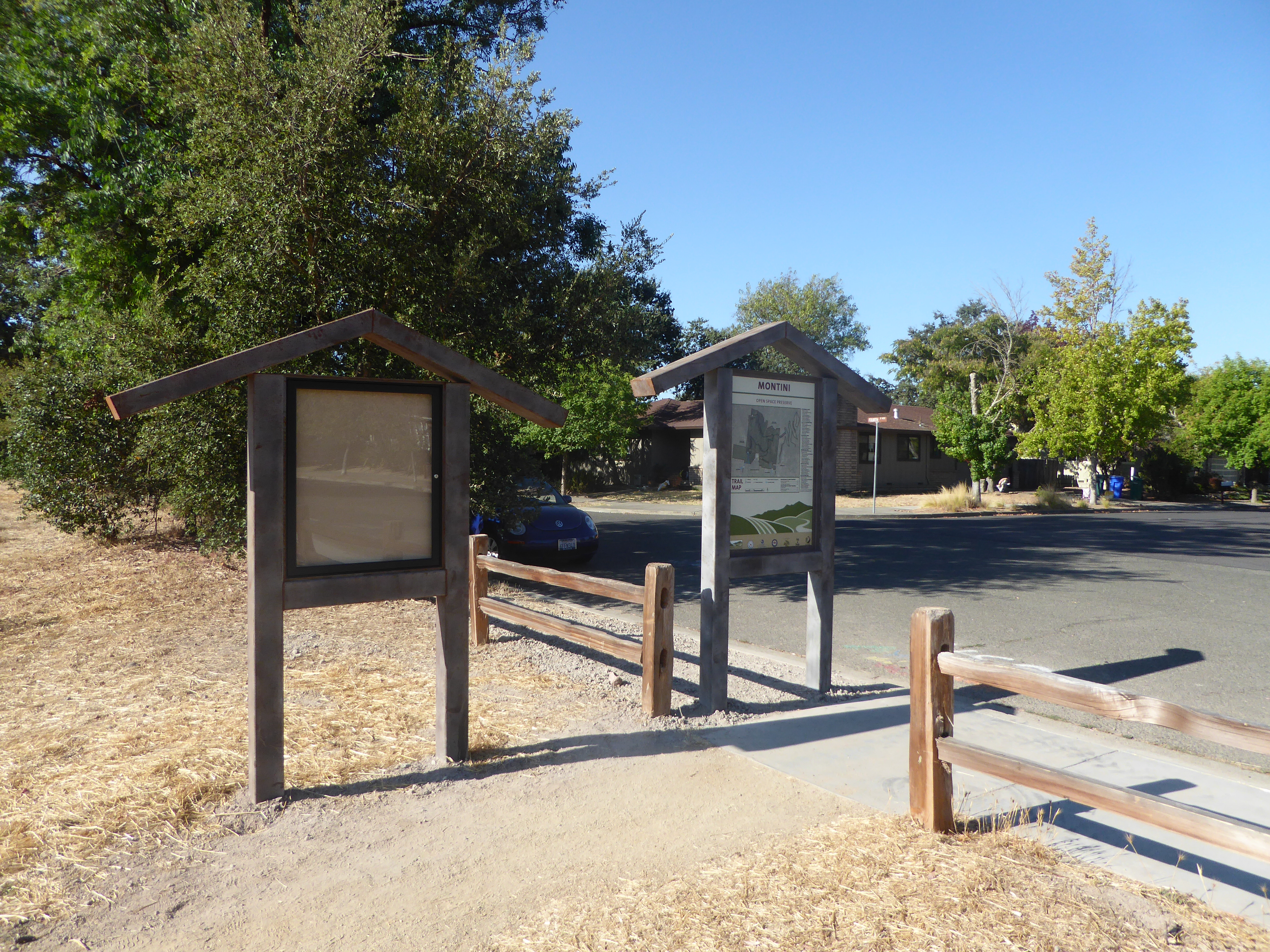
The access via 4th Street is well-used, safe and quick. Within a few minutes, hikers ascend the western slope and are enjoying the wonderful vistas afforded by the trails.  The access is not visually intrusive, and the path is close to existing fence lines.  Trail users like it a lot because it is both convenient to the Bike Path and in a low vehicular traffic area.  It does not disrupt the neighborhood. ADA parking and access was installed at considerable cost.

Per the Open Space District letter, all of this would have to be closed and the area restored to previous natural condition. The City would need to spend a substantial amount of money to build the 5th Street access that was soundly rejected five years ago. This is neither a good use of public money, nor respectful of the lengthy public consultation that created a solution that works well today.