All Clear, For Now

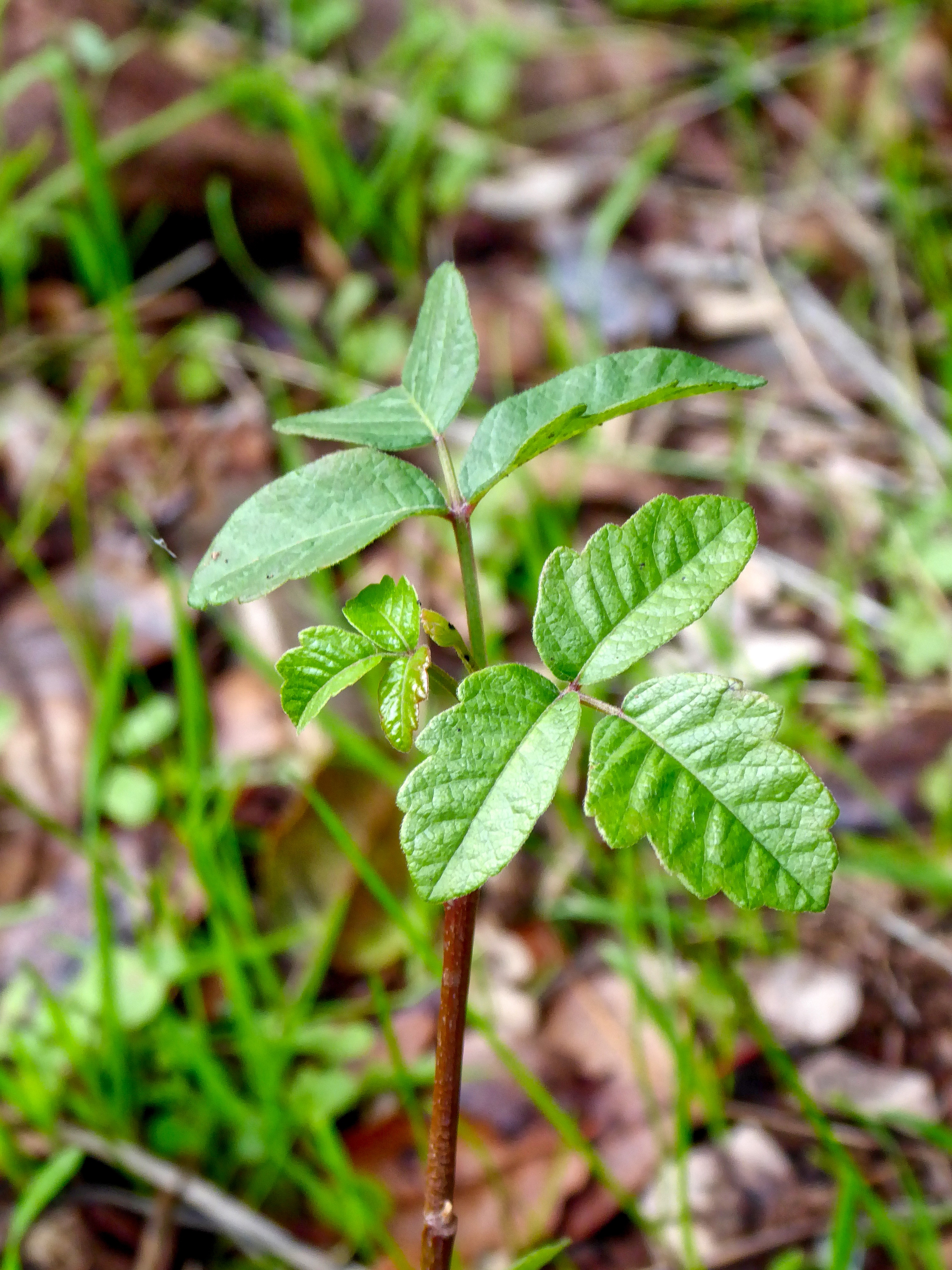
Poison oak.

Today I finished inspecting all of the maintained trails of the Sonoma Overlook Trail and Montini Preserve properties. As of today, the trails are clear of Italian thistle and poison oak to about three feet away from the trail. We achieved this milestone more than two months earlier than last season, which now means we can move on to other tasks and goals in our Vegetation Management Program. Trailside can now be moved to “maintenance” status from “attack,” which means we will need to continually check and monitor the trails, as new thistle comes in all the time, and poison oak keeps growing, of course, but we will now begin attacking other areas.

This essentially means a couple tasks: 1) continuing to push Italian thistle away from the trail, and perhaps eradicating it completely in some areas, and 2) being opportunistic in attacking patches that are in danger of furthering the spread of thistle on both properties. In general, the Overlook is in better shape than the Montini, so typically I spend more time on the Montini, although my goal this year is to eradicate thistle from some specific areas on the Overlook where it appears we have a chance to completely eradicate it.

Be sure to let me know if you want to help with this exciting (haha) work!
February 1 is Roy Tennant Day in Sonoma

Roy Tennant receives the Celebrate Sonoma Award in recognition of his uncommon dedication and hard work on the Sonoma Overlook Trail.

Roy Tennant is a stalwart member of the Sonoma Overlook Trail Stewards. For over 10 years, Roy has spent literally thousands of hours in his goal to remove invasive species not only on the Overlook Trail and surrounds but also on the Montini Preserve.  He is dedicated, he is persistent and he is absolutely relentless in his efforts. 

Invasive species threaten our ecosystem. They take hold and grow quickly, crowding out native plants that are the source of food and shelter for birds, mammals, insects, and reptiles. Roy intelligently, methodically and organically pursues Italian Thistle, Yellow Star Thistle and Broom not only within 6 feet of the trail but also in meadow areas where these species threaten to take hold. 

Trail walkers and runners are very familiar with Roy, as they see him at work practically every day between January and August removing poison oak that encroaches the trail or attacking his targets and hauling off his thistle and broom winnings.

Roy serves in many capacities as an active Overlook Trail Steward volunteer including trail repair, downed tree removal, answering questions from walkers, and participation on the map and signs committee.  Yet, his passion is the removal of invasive species. Through the website he manages, “overlookmontini.org”, Roy also educates the public about the problems of invasive species and encourages active participation from the public. His work is truly exceptional.

A “Celebrate Sonoma” Certificate of Recognition in honor of Roy Tennant, an outstanding City Volunteer and Overlook Steward extraordinaire will be presented at the City Council meeting February 1 by Vice Mayor Harvey.

Building an Armored Swale

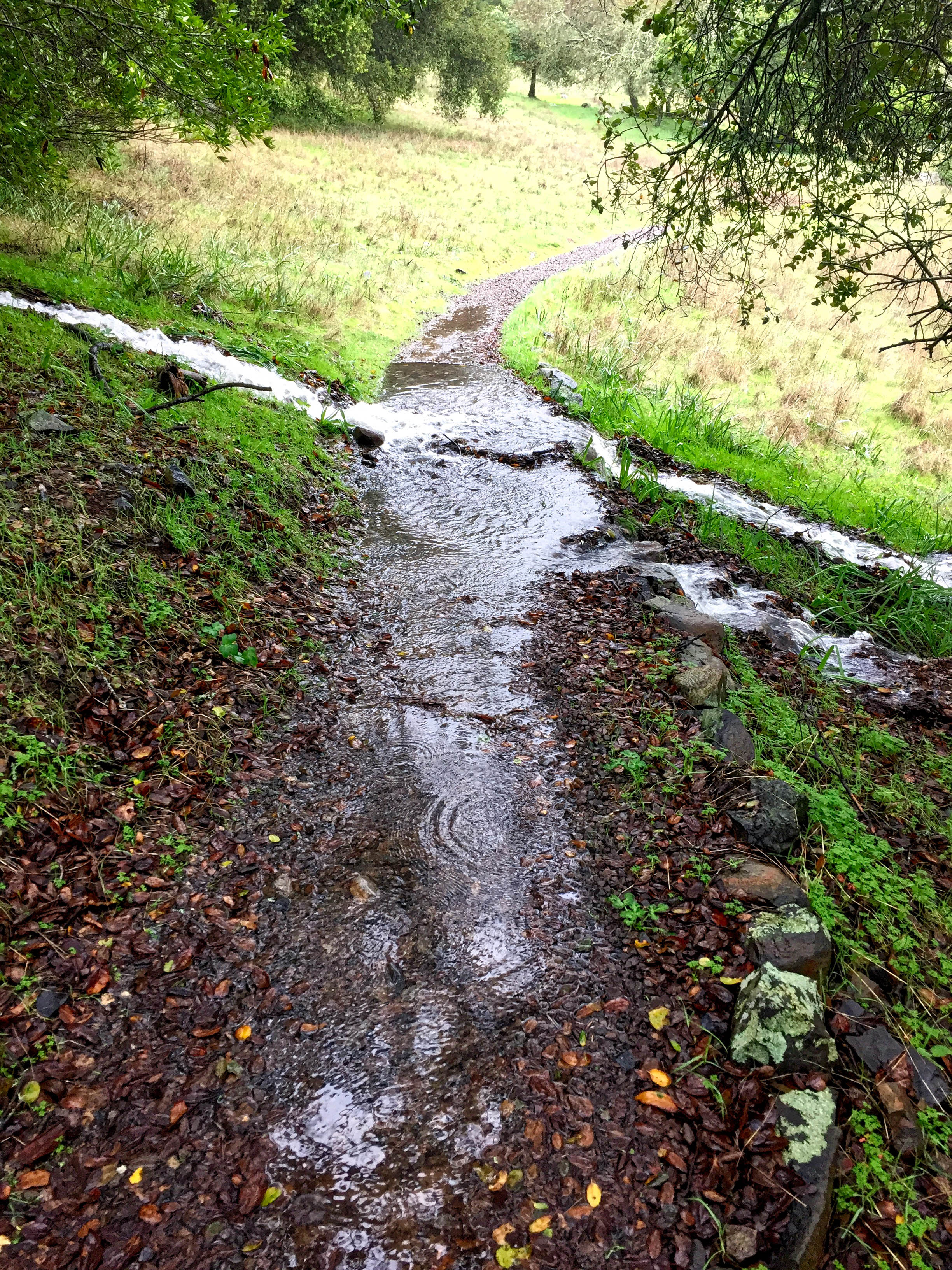
Today Jess and I (both volunteer stewards) tackled a Montini trail project that I had long planned. There was a place on the Rattlesnake Cutoff Trail where water, during heavy storms, would flow across the trail. Since the initial construction of the trail didn’t take this into account, the water would pool on the trail, leading to a long trail segment that would essentially turn into a tiny lake (see photo).

The Montini Preserve was heavily mined in the early 1900s (this property and adjoining Schocken Hill, now the Sonoma Overlook Trail, essentially paved the streets of San Francisco at the time), and there is a quarry “divot” in the hill above that collects rainwater and funnels it out to the trail. Being essentially bedrock, the water has nowhere to go but out and down. 

What the trail needed is what’s called an “armored swale,” which is essentially a channel cut into the trail that is protected by a floor of rocks to prevent erosion. I had been waiting for rain to soften the soil, as we would first need to excavate the existing rocks and in summer the ground is like concrete. It rained yesterday, so the soil was going to be about as soft as it was going to get. Also, since I knew that an “atmospheric river” was set to dump several inches of rain in a matter of a few days, now was the time to act.

So Jess and I went out today and built it. We first needed to excavate a channel across the trail, then place stones to protect from erosion, and fill in gravel and soil around the stones. Do your worst, atmospheric river; we’re ready for you!

Ten Plants a Hike

A young Italian thistle plant.

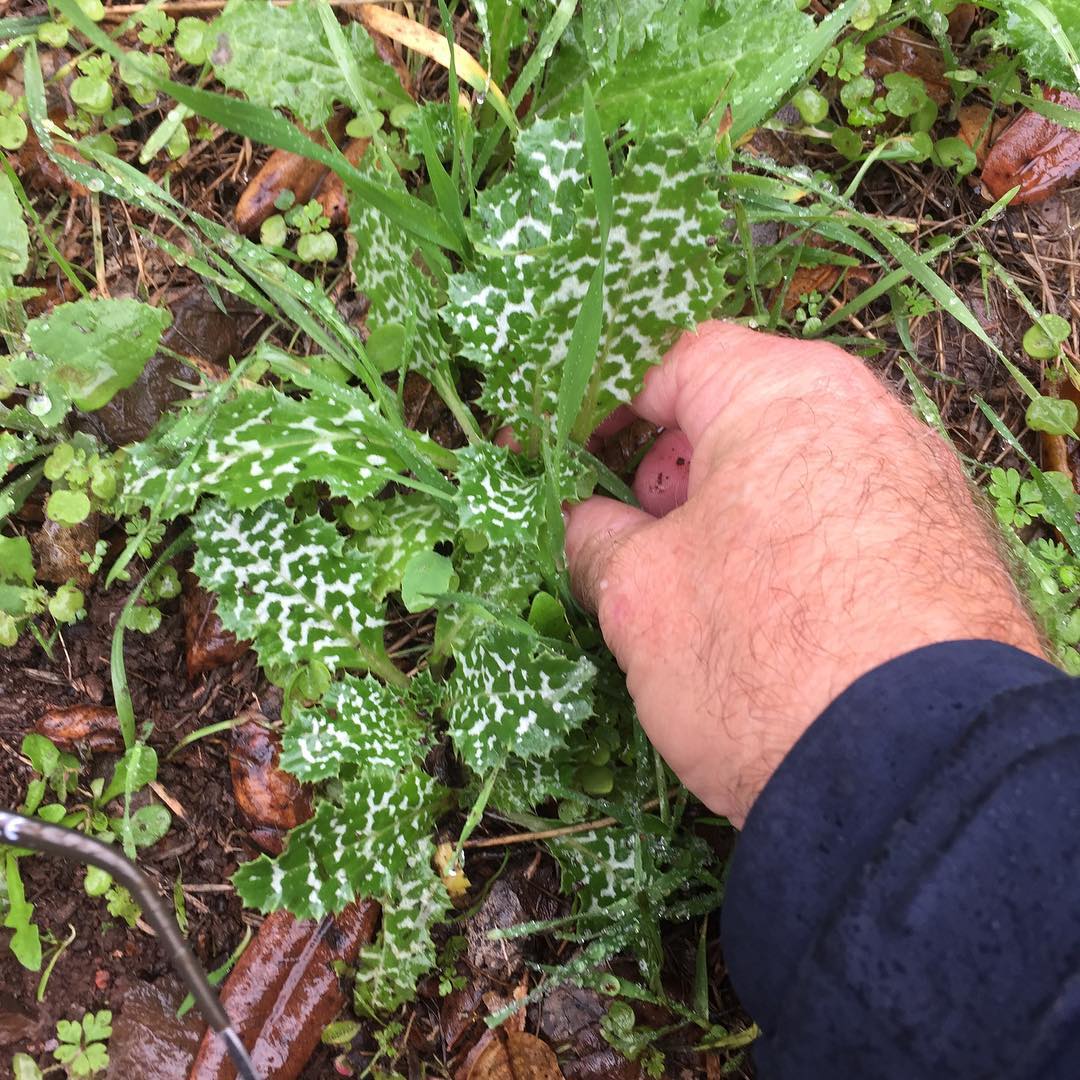
January (and sometimes even December) is the beginning of what is essentially an eight-month season of invasive species removal work. Beginning with Italian thistle (pictured), work proceeds against a variety of non-native plants that threaten our trails and the lands they traverse. Although we’ve made great progress against Yellow Star thistle, Italian thistle is much more prevalent and dispersed, and it is now the primary species we are working to control.

The problem is that it has a big head start. It can be found in many areas of both the Sonoma Overlook Trail and the Montini Preserve, and is especially prevalent along the trails on the Montini. Meanwhile, we have little person power to throw at it. Until now.

I have a simple ask. Every time you hike the trails, do us all a favor and pull ten plants. That’s all I ask. Ten plants. Anyone can do that. You can do that. Imagine this: if ten hikers do this for ten days they will have collectively pulled one thousand plants. That represents substantial progress.

And now is the perfect time to do it – the soil is damp and soft, the plants are small and can be just pulled and tossed aside, and their roots are not yet well developed. They are easy to spot, as they are bright green, and they have spiny leaves, whereas most other plants do not (see photo).

Tell you what, you can even tell it that it’s days are numbered as you pull, or “We’re coming for you!” Whatever floats your boat. Plus, I won’t actually make you count. I trust you. Just do what you think is likely ten plants and we’re good. But if you do what I think you might, soon you’ll find yourself drifting past ten with nary a second thought. And that’s just fine too.

Ten plants a hike, that’s all I ask.

A Long Day’s Journey Into the Fight

Those of you who read this blog regularly (thank you both!) know that I have, well, an obsession about ridding these properties of invasive species — particularly invasive thistle, as it can create entire “no go zones” for wildlife, and completely up-end the natural ecosystem. If you want to know more about why we fight it so hard, here is the chapter and verse about why we do what we do.

But at the moment, in December, we are still in the “down period,” when we can rest, and recuperate from the long removal season. You see, the thistle season begins in January — or even the end of December — and it extends well into August. Thus, we have eight months on, essentially, and four off.

So perhaps you can understand what I’m feeling as I spend my last few weeks as a free person before buckling down in January for another eight months. I’ve enjoyed hiking the last several months a lot. I’ll still hike during thistle season, but usually just when a friend can come along. Otherwise, I’ll be out there, pulling like always. I rush to say, however, that every year it gets better, and there may come a time when there is even no thistle at all. But we’re not there yet.

That’s why, if you see me out there in January, pulling Italian Thistle (pictured), you’ll know it’s a long game, fought over years and decades, and at least I’ve had four months off to simply enjoy the properties that we are fighting to save. And like I said, every year it gets better. Before very long, I believe, I will have 12 months to hike. I can’t wait.