Once More Unto the Breach

IMG_1263Lately I’ve been too busy with a more important project to get my daily hike in on the Overlook and Montini trails. But yesterday I cleared some time and made my way there. I knew that we were well into the season of the invasive Yellow Star Thistle, so I took along a feed sack to pull what I could.

Those of you keeping score at home likely know that the Overlook Trail Stewards have been waging war against this pest, and that war has been stepped up in recent years. Last year we were successful in eradicating it from the main Overlook and Montini properties. We knew it would be back this year, but we also figured that given how we beat it back last year it likely wouldn’t be as bad.

Having inspected a couple locations where it was bad last year I’m happy to say that it isn’t nearly as bad this year. We are indeed making progress, but we also know that this is a multi-year war and that it will require us to be vigilant and relentless.

This war is led by volunteer Steward Rich Gibson, who has called work days for groups to get together and take out both Yellow Star Thistle and Scotch Broom – another non-native that has a tendency to take over the landscape. Without efforts such as these our landscape would look very different than what it should be, and has been for centuries.

Here Be Snakes

rattlesnakeAs I set out on my hike in the warm morning air, I realized that today would be a likely day to see a snake. Today was predicted to be a hot day following on a warming trend over the last several days. It proved to be prophetic, as a group of us who converged on the Overlook upper meadow at about the same time were treated to spotting a gopher snake (see picture from a previous sighting).

Gopher snakes have similar markings to a rattlesnake, so they are often mis-identified. The simplest way to tell is to look for rattles — if the snake has rattles, it’s a rattlesnake, if it doesn’t, it’s a gopher snake. The gopher’s head is also not as spade-shaped as a rattlesnake.

Although many people are afraid of snakes — and especially the poisonous rattlesnake — snakes are a necessary part of our ecosystem. Without predators, ecosystems can fall tragically out of balance and perhaps damage an ecosystem irreparably. They also tend to avoid humans if they can, and it’s usually only when they are surprised or cornered do they strike.

In a conversation later the same day, a man recounted the story of a relative running the trail just last week who was nearly bitten by a rattler as she ran past. It missed because she was in rapid motion, but it was likely because she was in rapid motion and going past the snake in close proximity that it chose to strike. This is why it is very important to watch the ground ahead of you, especially when running. When hiking the snake usually has time to sound a warning before you get too close. I have had this happen on the trail.

So now that snakes are out of hibernation and on the Montini and Overlook properties, stay alert! If you can avoid riling up a snake it can be a pleasant outdoor experience to see a predator up close and watch it slide away into the grass. Let’s hope this describes all of your future snake encounters.

Flowers Everywhere

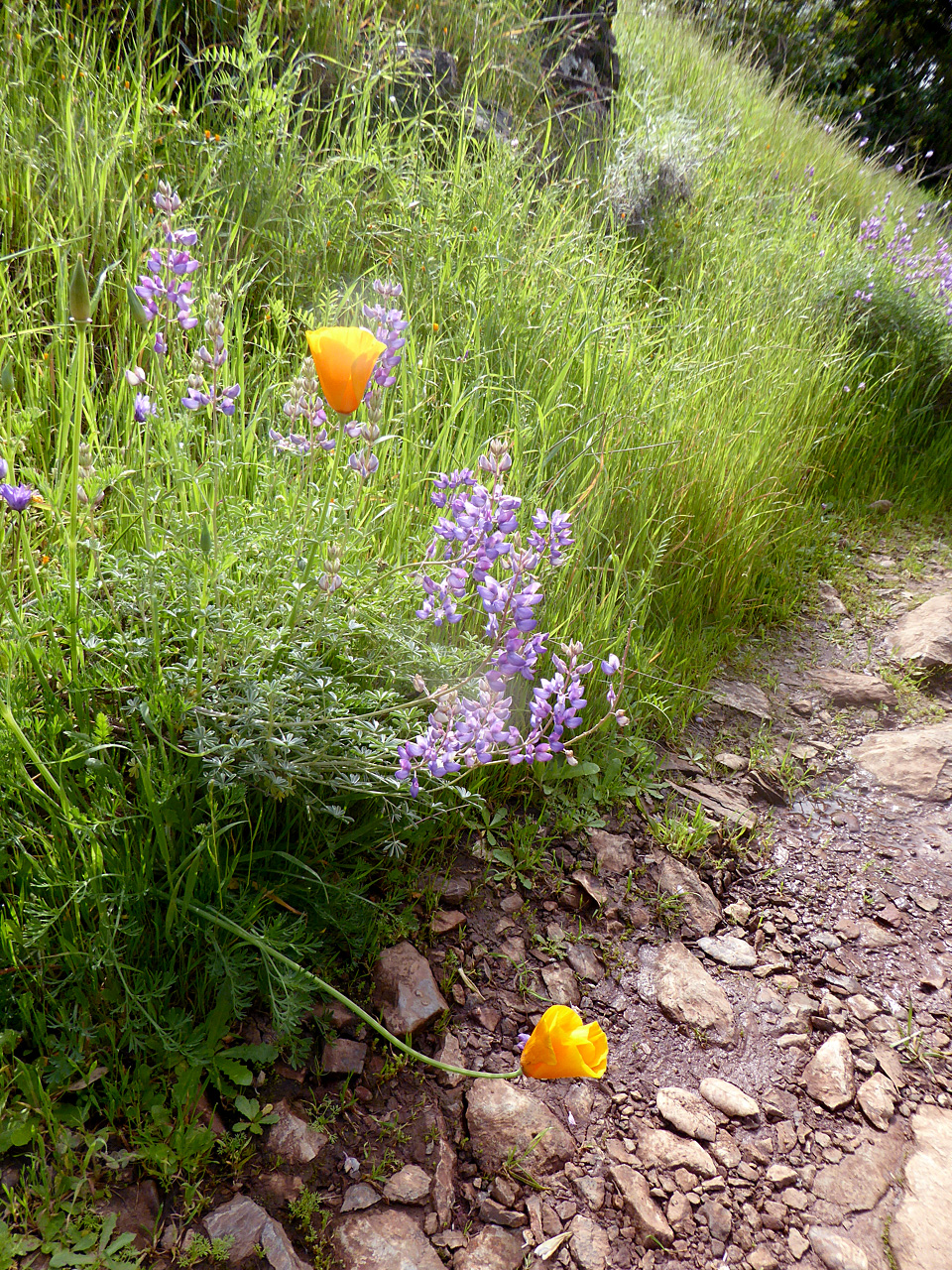
P1000924If you like flowers, then now is the time to hike the Overlook and Montini trails, as they are going nuts. From California poppies, to Lupine, to you name it, they are out in great profusion. The picture to the right was taken just a few days ago on the Overlook Trail, where you can see both Lupine and Poppies hanging over the trail.

There are many other flower varieties out at this time, and others on their way. Spring is in full flower, and it is awesome.

However, keep in mind that other plants are going crazy right now, and among them is poison oak. Although we recently cut it back, it is still growing and we will likely need to cut it back again soon. Also, since the grass is growing like mad and often over-hanging the trail, keep an eye out for ticks. They like to climb up onto the tips of grasses where wildlife (and we count) are walking by so they can hitch a ride.

For tips on what to do if you are bitten, see this earlier post where I describe my own experience.

But by and large, it’s all good out there on the trail, and experiencing our wildflower bloom is well worth any slight risks.

Watch Out for Ticks!

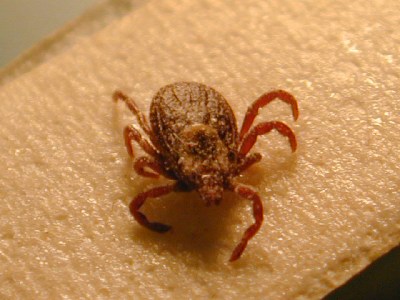
2562198878_e548ea735c_zYesterday, likely due to my work in cutting back poison oak on the trails, I found a tick on me. Freaked out by the possibility of contracting Lyme disease, I quickly found a pair of tweezers and pulled the tick out, trying carefully to grab it from the head rather than squeezing the body. It was difficult, as it was quite tiny. The bite spot is still red and sore. But the important piece of information is this: save the tick, so it can be tested for Lyme Disease.

But as this Press Democrat article points out (helpfully published the day I found the tick), the actual incidence of Lyme disease in Sonoma County is not high, despite the fact that we have had the most reported cases in California in recent years.

To prevent tick bites, the Sonoma County Department of Health Services recommends:

  • Walk in the center of trails.
  • Use repellents that contain 20 to 30 percent DEET on exposed skin and clothing for protection that lasts up to several hours. Treat clothing and gear (boots, socks, pants, tents, etc.) with products containing 0.5 percent permethrin.
  • Bathe or shower as soon as possible after coming indoors, preferably within two hours.
  • Conduct a full-body tick check; parents should check children under arms, in and around ears, inside belly button, behind knees, between legs, around waist, especially in hair.
  • Examine gear and pets, which can bring home ticks that will then attach to a person.
  • Tumble clothes in a dryer on high heat for up to an hour to kill remaining ticks.

Remember that ticks that carry Lyme disease can be very small — about the size of a poppy seed. The biggest danger comes when the tick bite goes undetected and the disease is allowed to fester without antibiotics to fight it. Long-term effects are possible in these cases.

Therefore, it’s wise to know what the symptoms of Lyme disease are so if you have any of these you can contact your doctor immediately (from the Mayo Clinic):

“These signs and symptoms may occur within a month after you’ve been infected:

  • Rash. From 3 to 30 days after an infected tick bite, an expanding red area might appear that sometimes clears in the center, forming a bull’s-eye pattern. The rash (erythema migrans) expands slowly over days and can spread to 12 inches (30 centimeters) across. It is typically not itchy or painful.Erythema migrans is one of the hallmarks of Lyme disease. Some people develop this rash at more than one place on their bodies.
  • Flu-like symptoms. Fever, chills, fatigue, body aches and a headache may accompany the rash.”

If these symptoms are not spotted or recognized, later signs may appear in the following weeks and months. See the Mayo Clinic web site for more information.

So stay safe out there, and be vigilant!

Photo by wahoowins, Creative Commons License CC BY-ND 2.0

Poison Oak Mitigation

poisonoakWe are once again in the season when poison oak (Toxicodendron diversilobumattempts to run rampant on the trail, threatening hikers with itchy rashes that can spread over one’s entire body (believe me, I’ve been there). So now is also the time when we stewards work to mitigate this threat. In the past, we have sprayed the edge of the tray to kill it off, but recently we have been taking a more ecologically friendly approach by simply clipping it back.

This is potentially dangerous work, but with appropriate precautions one can do it without harm. Last year I got one small spot of itchy irritation that I was able to manage until it subsided. This year (knock on wood) so far I’ve been itch-free.

As I’ve been doing this over the last week I’ve received a lot of complimentary feedback from grateful hikers who know how annoying such a rash can be. This helps make the labor worthwhile, as you know from even just several hours of work you can make a real difference.