The End of the 8-Month 2020 Thistle Removal Season

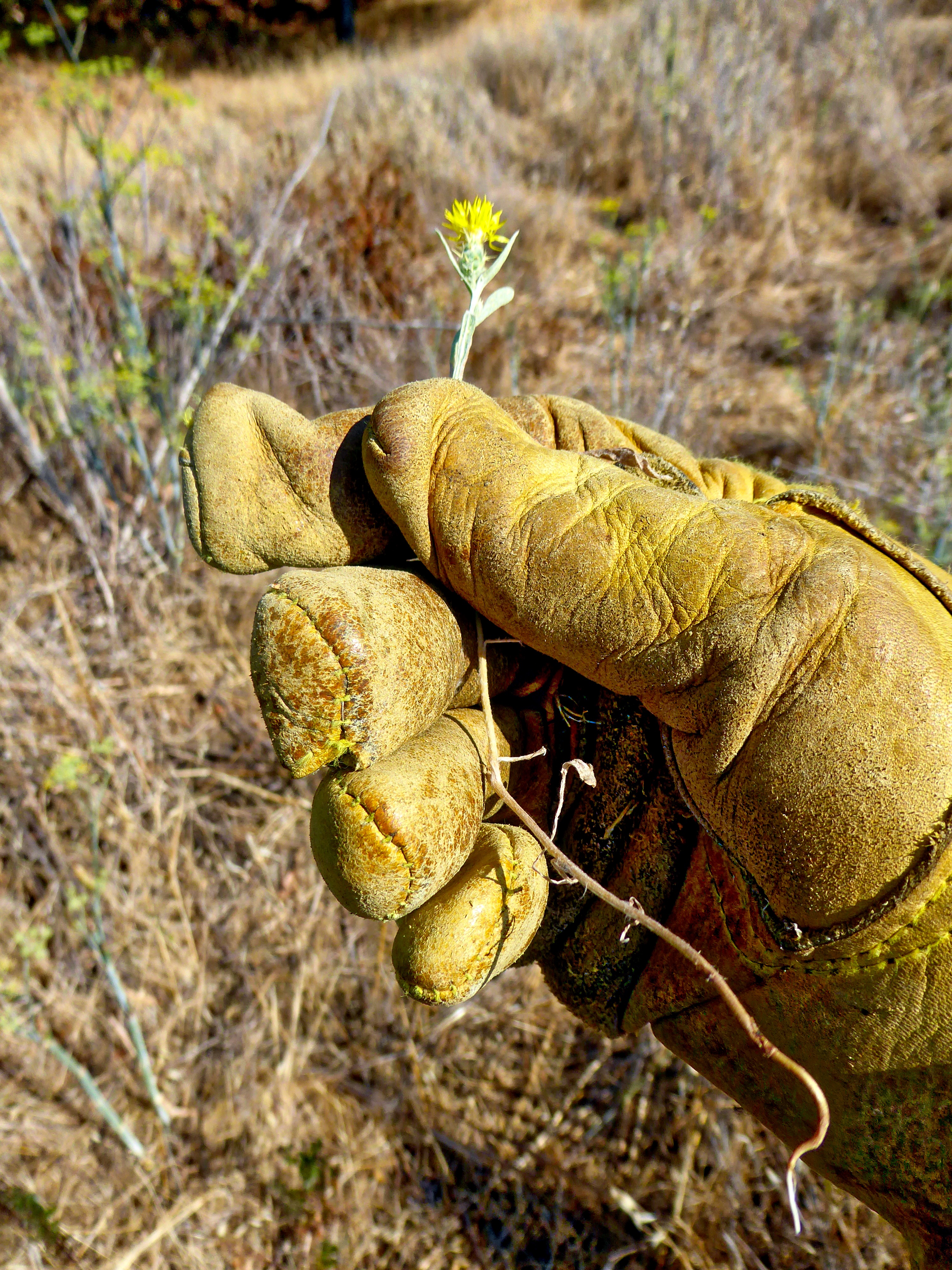
Thistle’s worst nightmare: my right hand. Thistle’s second worst nightmare? My left.

I’m calling it. Recently I finished clearing one of the last two meadows left with Yellow Star thistle (along Norrbom Road), and since it is drying out and becoming difficult to remove completely, I’m giving it up for this year. We started in mid-January. That means I’ve spent over 8 months going out nearly every day for an hour each day to clear first Italian thistle, then Yellow Star, except for the few “vacations” we’ve had in this time of shelter in place (to be clear, I was going out to pull thistle even during the shutdown of public properties, as I had permission to do so).

The good news is that we are winning. I’ve never cleared this particular meadow before, which means that other sites had been cleared so that now I can turn my attention to the two remaining meadows that still have Yellow Star thistle. Only one of them remains uncleared this season. I fully expect that within three years we will be able to state that there is no Yellow Star thistle to be found from Schocken Hill in the east (Sonoma Overlook Trail’s eastern border) to 4th St. East (the Montini Preserve’s western border). If you have recently visited other public lands in this valley perhaps you can appreciate the import of that statement.

Italian thistle remains a different matter, especially on the Montini Preserve, where it remains prevalent. We had our hands full simply pushing it back from the trail this year. Also, Italian thistle seems to be coming in where we have been clearing Yellow Star thistle, so we need to be vigilant in those areas. The essential problem is that Italian thistle will grow anywhere, whereas Yellow Star thistle prefers open meadows, which limits its coverage.

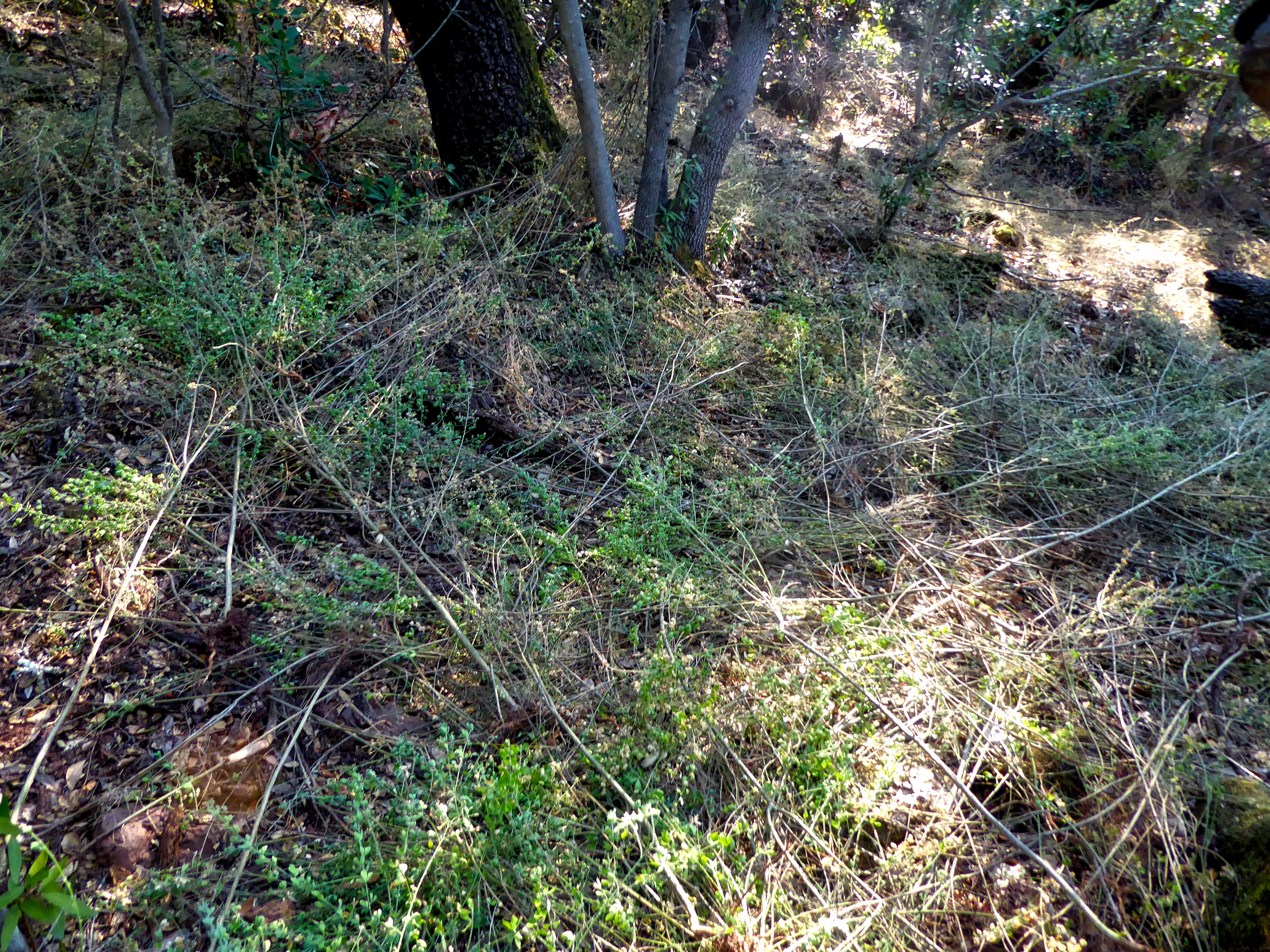
As I close out the thistle season, I will move to Scotch broom. I even bought a special tool to help pull the largest, most established broom plants. There is one rather bad patch of it on the Sonoma Overlook Trail property, but that seems to be about all of it except for the adjoining Sonoma Cemetery. The issue is that it adjoins the Overlook Trail property, so it should also be removed to protect the trail property.

One other species deserves mention, as there has been a patch of Bellardia strung out along the very top of the Overlook Trail that Richard Dale, Executive Director of the Sonoma Ecology Center, cleared out this year. These are by no means all of the invasive species, but they are some of the most problematic, and certainly those that present an existential threat to these properties if left unchecked.

Later I will provide a final report on the 2020 invasive species removal season, but I thought that the end of “thistle season,” which has so far comprised the bulk of our efforts, was worth noting.

New Permanent Trail Signs

Lynn with one of the new signs.

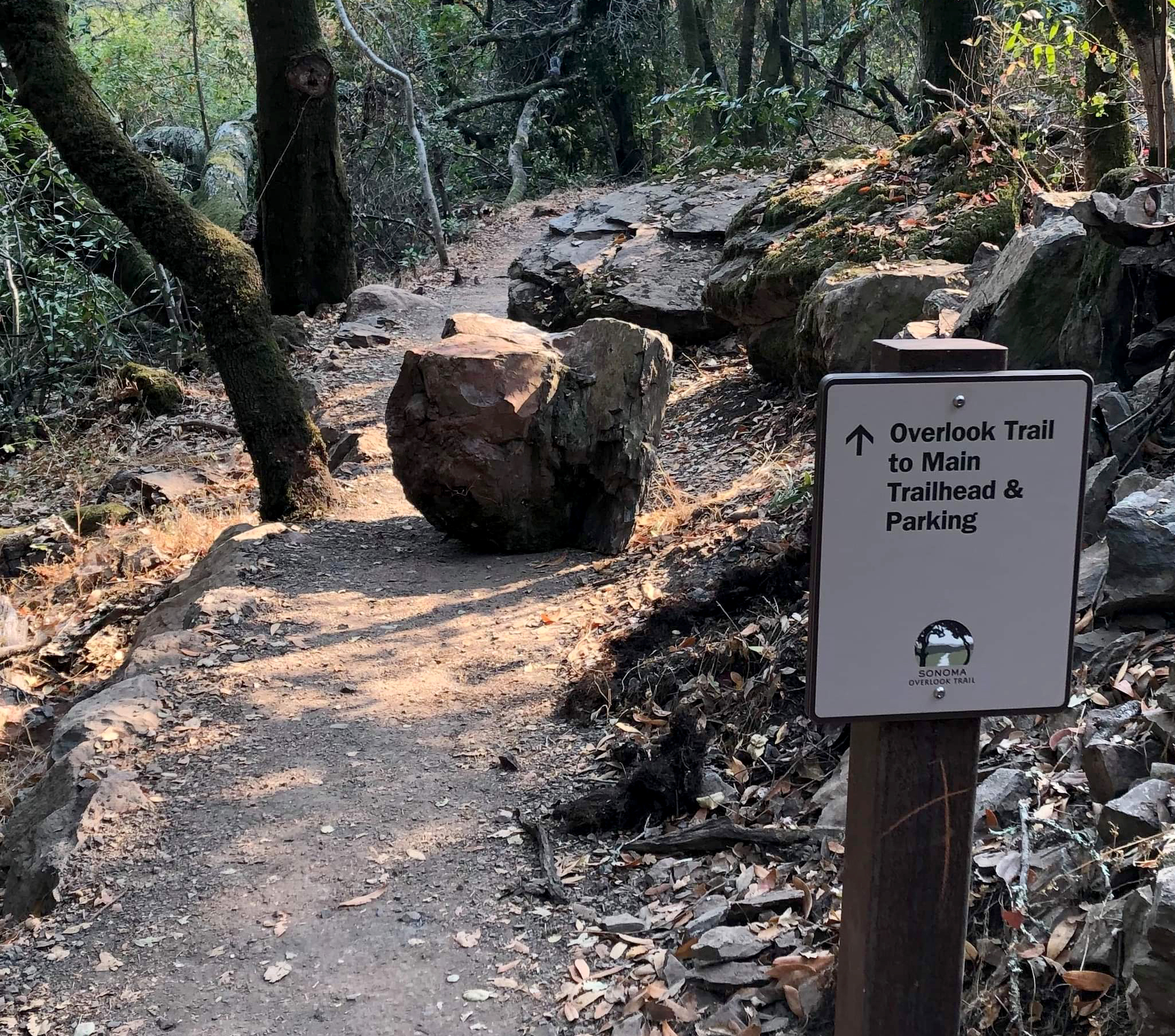
Today Lynn Clary and I installed several of the new permanent trail signs on the Sonoma Overlook Trail, and tomorrow we will install the rest. This is the result of a few years of collective work led by Lynn Clary, from designing the signs and the wording, to creating drafts to put on the trail for testing and getting feedback, to working with a designer and production company, to having the signs produced after a COVID-19 delay, to working with our design company to create a new logo for the trail, and finally getting the signs produced, delivered, and installed. We hope you like them. We do.

We take sign design seriously, and we spent quite a bit of time laboring over every word and symbol. Is it clear, we would ask ourselves? Would it cause confusion? Did each word add something, or was it superfluous? Should the signs have the City of Sonoma seal or just the trail logo? Everything was questioned along the way.

Lynn Clary deserves the bulk of the credit for this accomplishment. He began the process, carried it forward, and has now finished it, despite leaving the Stewards group a while ago. His love for, and commitment to, the trail remains, and we frequently meet on the trail as we both spend a lot of time there.

We hope you do too, and that you find the signs helpful, or at the very least not confusing.

A New Hikers Gallery Display

Today I changed the display of our “Hikers Gallery,” which we try to do every now and then. I put up a display to advertise our new trail movie, The Sonoma Overlook Trail and Montini Preserve. I also created a Moo card advertising the movie, putting some of them in a small plastic dispenser at the main trailheads and at the Hikers Gallery.

My hope is that by showing the diversity of animal life, plant life, and trail moods, that hikers will be inspired to return again and again, and to bring family and friends. It can take years of hiking to see some of the insects and wildlife we can depict in a movie such as this, so the movie can condense those years into four minutes. We can also show dramatic moments that are rare, like when the creek on the Overlook Trail is high and the waterfall on the Montini is raging across the trail.

In the end, I hope our hikers enjoy the movie as much as I did making it, and will be inspired to hike the trail for as many years as it took to accumulate the photos that comprise it.

The Last Gasp

Long about now, I get a little frenzied, as I know that the “thistle season” is drawing to a close. To be specific, as we slouch toward August, our chance to pull invasive thistle begins to wane, as it begins to go to seed and pulling can lead to seed dispersal, which we definitely don’t want. By now the Italian thistle has long since dried out, making it a dubious target, although potentially still fair game if you’re careful. But by this time our focus has shifted to the Yellow Star thistle (YST), which is blooming, and will continue into August. And there is still plenty to get, although on the main part of both the Overlook and Montini properties we are looking pretty good.

The place that isn’t so great for YST is along Norrbom Road — specifically, the water tank properties. That is where I’ve been focusing my efforts in recent weeks. Primarily, I’ve worked on two goals:

  1. Reducing the physical extent (drawing in the boundaries), and
  2. Reducing the seed load (pulling the large, most productive plants that are most likely to spread seed).

I’ve essentially cleared it along the road from the Overlook parking lot turnoff to the Rattlesnake Cutoff crossing, but north of there still needs a lot of work. This is essentially from the road to the fence. Beyond the fence is another story. There is still so much left to do there. I’m thinking of organizing a workday, which if you know me you know how desperate I’ve become. Organizing an event is one of my least favorite things to do.

A lot of what I’ve been pulling has been very small (see the picture). I know it’s because any thistle coming in this late in the season has a physical awareness that it needs to bloom right away, and not try to grow big. Nonetheless, I can’t help thinking about the Nazis, sending in their youth in a last gasp of trying to save the Third Reich from inevitable defeat. I like to think that the defeat of invasive thistle on these two properties is just as certain. The thing is, it isn’t certain until it is, and we are still a long way away from that.


For Love of the Trail

steward – to manage or look after

Before: out of place.

The Sonoma Overlook Trail is managed by a team of volunteer stewards (about 14 of us at this point) who perform a wide variety of duties related to managing the trails as well as the property as a whole, on behalf of the City of Sonoma, and in partnership with the Sonoma Ecology Center. We meet quarterly, and presently we take turns each quarter serving as Chair of the group.

After: not perfect, but it will have to do for now.

Here are just some of the jobs we perform:

  • Fundraising (to provide the funds to do trail maintenance, re-routing, etc.)
  • Hosting public hikes and events
  • Picking up trash
  • Removing or destroying invasive species
  • Kiosk maintenance and displays
  • Trail signs
  • Trail maintenance
  • Removing downed limbs and trees infringing on the trail when possible with a handsaw, or reporting to City staff when a chainsaw is required
  • Blocking and reseeding “rogue” (unmaintained) trails

Today, “trail maintenance” meant resetting a stair stone that had slid out of placement (see pictures). Day to day you don’t always know what you may be called upon to do. But what we do, we do for love of the trail.