Butterflies are Free

swallow2“I only ask to be free. The butterflies are free.” – Donald Gershe, Butterflies Are Free

As a child of the 70s (I turned 18 in 1975) perhaps I can be forgiven for taking my blog title from the Goldie Hawn movie of 1972, based on a play by Donald Gershe. But hey, butterflies are free. In some ways they epitomize freedom, as they flit and flitter from flower to flower in a seemingly random fashion. No one, and I mean no one tells a butterfly what to do.

However, you won’t find me jealous for the life of a butterfly. Depending on the species, the adult butterfly lives anywhere from a week to no more than a year. Given that, I think I’m just fine with where I sit in the circle of life. But as part of that I can certainly admire the beauty and apparent freedom of the many butterflies that grace our trails. Chief among them, in my opinion, given their size and color, are the Swallowtails (Papilionidae). They come in a number of varieties, and I’ve captured photos of at least two different kinds in recent days.
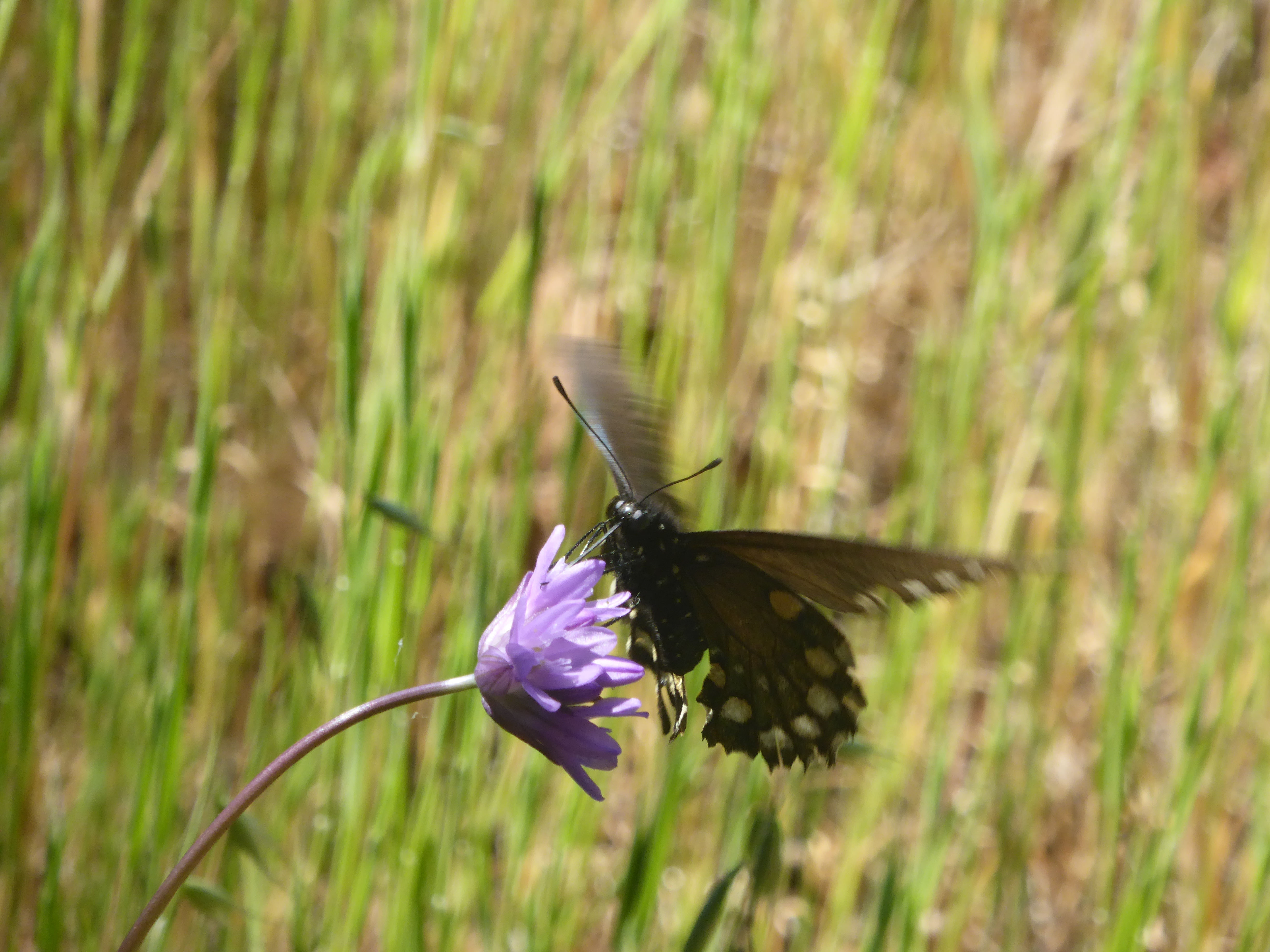
swallow4The Western Tiger Swallowtail (pictured above) is eye-catching with it’s yellow-and-black patterning. But there is also the black-and-yellow patterning called (naturally enough) the Black SwallowtailAny way you look at it, we have a plethora of butterflies in a variety of colors and sizes (as well as moths and other interesting insects such as dragonflies) on our Sonoma Valley trails. Keep a sharp eye out and you may see something you haven’t seen before.

ButterllyBlueDicksMeanwhile, butterflies may be free, but in the end we are even more free. We can observe these amazing creatures year after year, generation after generation. Perhaps we can’t flit from one flower to another on a whim, but we are blessed in many other ways.
Lizards Everwhere!

lizard2

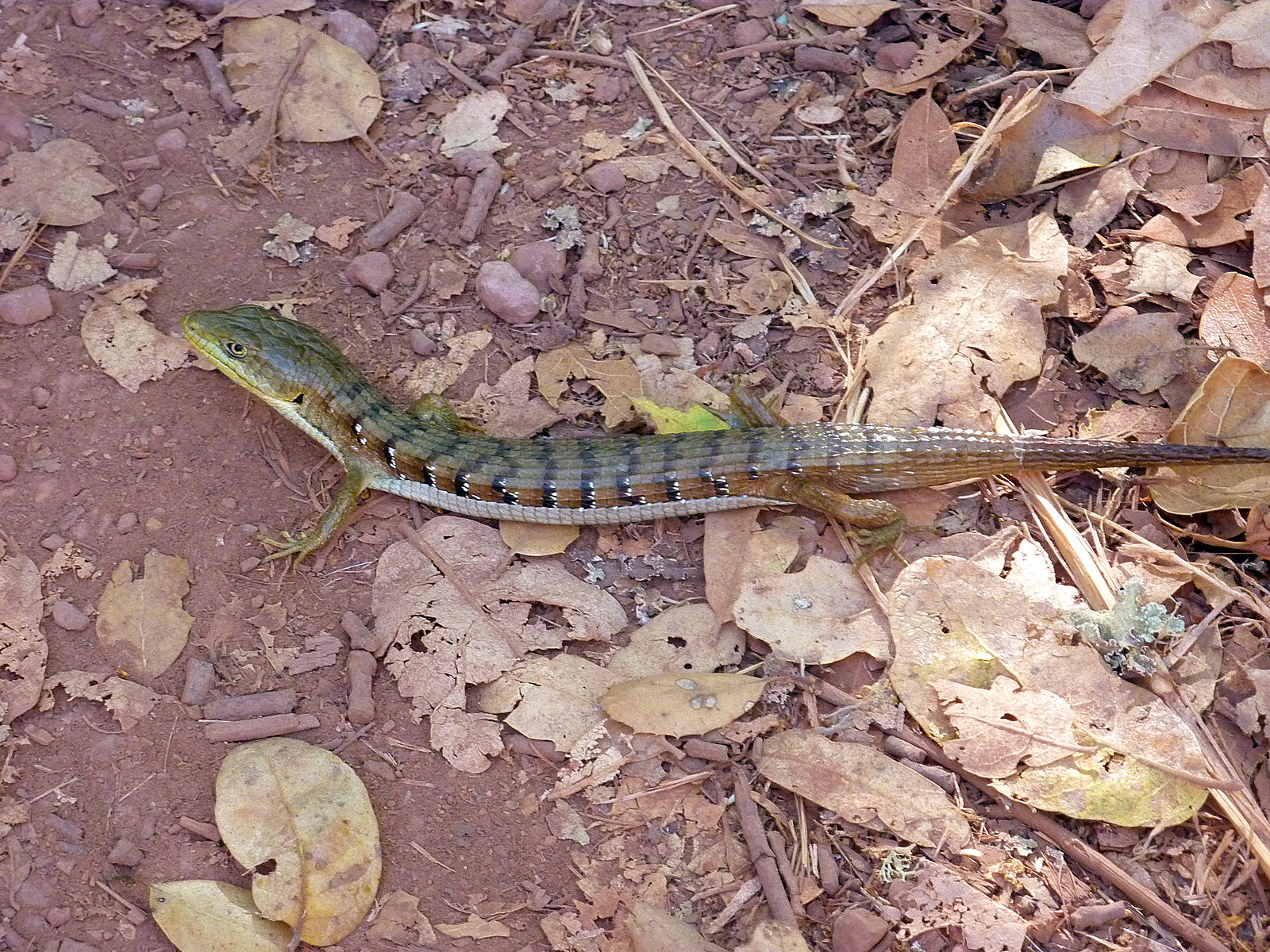
An Alligator Lizard.

Wild flowers are not the only things now gracing the hills above Sonoma that a network of trails traverse. Lizards of a number of different varieties are out in profusion as well. Many times on the trail I’ve thought I would surely step on one, but they zip down the trail or off into the underbrush with a speed that is astonishing given how low to the ground they are.

The wide variety of lizards always has me checking to see if I’ve seen that type before, and recently I’ve been rewarded with seeing some quite beautiful types. The California Alligator Lizard is certainly one of the largest you will see on the trail, and also one of the most colorful with it’s stripes of alternating colors.

lizardBut there are many other varieties as well. A very useful web site for identifying lizards is the CaliforniaHerps.com, which provides a visual index to try to spot the one you saw on the trail.

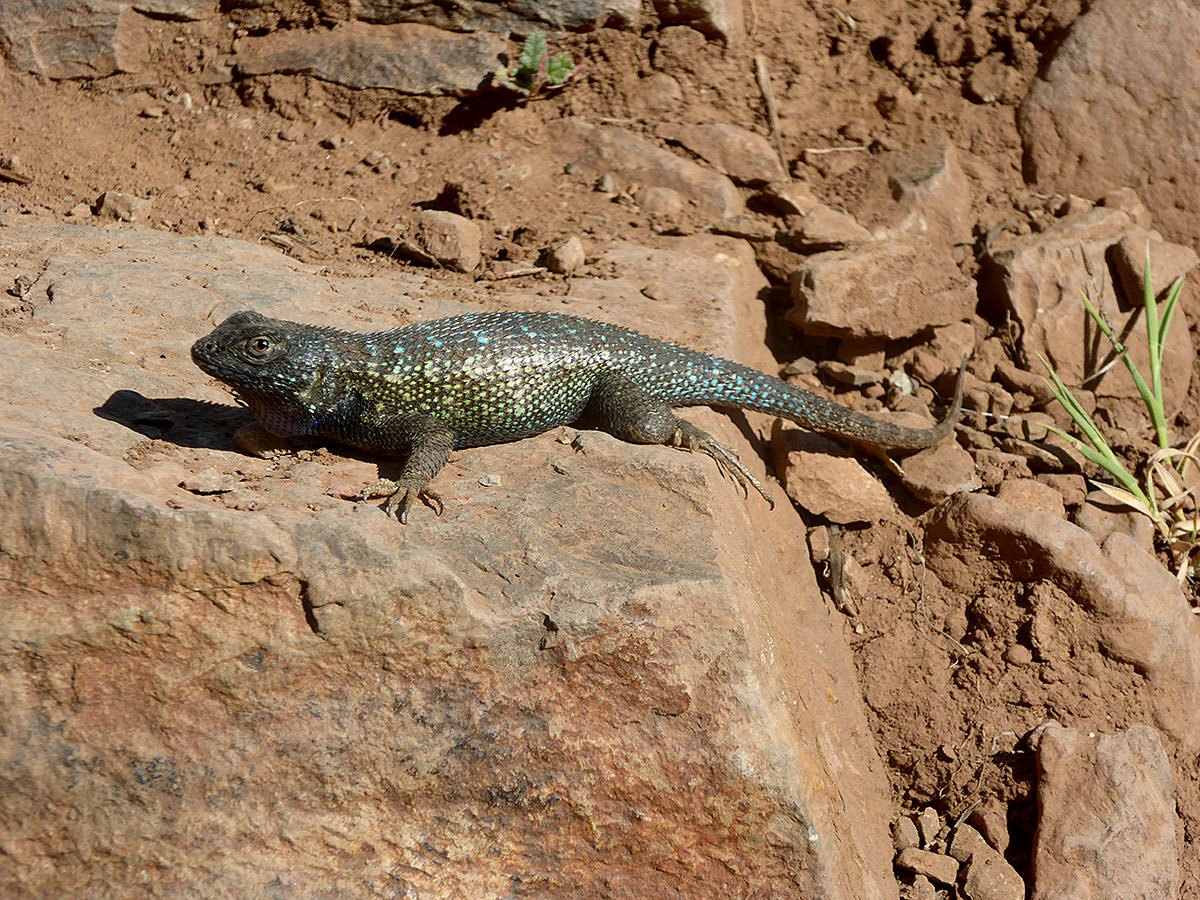
Since lizards are cold-blooded and must regulate their body temperature by careful but frequent sun exposure, you can sometimes see them sunning themselves on a rock (pictured at left) or on the trail. If you have a camera with a long enough optical zoom (say 20-30x), you can sometimes get in close with the camera without scaring the little guy off. This is important, as they are easily scared by us giant humans thundering down the trail.

lizardRecently I saw a multi-colored lizard smack in the middle of the trail just below the Overlook Trail meadow (pictured at right). I’m not very good at identifying lizards, but I think this fellow is one of the types of Fence Lizard.

But whatever the types, there are clearly at least half-a-dozen or more different species of lizard that can be found on the Sonoma Overlook Trail and Montini Open Space Preserve, and that’s just fine by me. Most days you’ll find me hiking the trail with an eye scoping the ground, partly to avoid rattlesnakes, but also to avoid stepping on these little guys. Sure, they’re quick, but I still worry.

Be Careful Out There!

rattle2Wildflowers are not the only thing that are in season this March; rattlesnakes are also now coming out of hibernation. I ran into this fat and sassy specimen (pictured) last week on the Montini Preserve, right on the trail.

I was heading East on the Holstein Hill Trail, and right after passing through the meadow above the water tanks, the trail enters into the trees again and quickly angles to the left. It was at that angle where this angry snake was sitting and ready to strike.

Of course sightings like this are rare, particularly if you stick to the trail. I count myself lucky if I see one or two rattlers in an entire year, and I’m on the trails almost every day.

Also, they don’t want to mess with you and more than you want to mess with them. So if you encounter a rattler, just back off and let the snake slither off the trail before proceeding. Or go back the way you came, which is what I did that day since I was “rattled” (sorry!) after my encounter with a snake so large and ready to strike.

What really scared me was that I had just been thinking about breaking into a jog around that time, as that is a fairly flat stretch of trail, and if I might have been on the snake before it could warn me. So runners need to pay particular attention to the trail ahead!

Should the worst have happened, I would have been better prepared if I had read the information that the California Department of Fish and Wildlife has on both avoiding snake bites and what to do if the worst happens. Big thanks to my fellow Steward Lisa Summers for the link.

Stay safe out there!