The Remains of the Day

When hiking out in the wild it’s inevitable that you run into the remains of deceased (and probably eaten) wildlife. Some hikers may be sad to see these signs, but I take it as an indication that the ecosystem is working as it should. In a world of carnivores there is simply going to be carnage.

But at the same time, I pause and admire the feathers, or bones, or hair that remains behind and see beauty in what is left. I’m afforded a much closer view than I usually get, since squirrels scamper away as I approach and birds take flight. It’s a chance to admire the colors and textures of skin, hair, feathers, and fur.

A rare occurrence is to find an animal intact (see photo of a Shrew Mole), and at those times I feel particularly blessed with an opportunity to study it. More frequently, I find the animal mutilated (see photo of the snake) or largely gone (see photo of what was left behind of a squirrel).

But I find even the fragments fascinating in their own way, and grateful for the opportunity for close-up inspection.

When you are out on the trail, keep an eye out for these sights, and count yourself blessed should you come across a relatively intact wild animal. And if there are only remains, you will know that they fed a predator and are part of a cycle that includes not just a life but also a death that nothing living on this planet escapes.

The Other Dogs

coyoteIf you’re a reader of this blog you likely know that dogs are not allowed on the Montini and Overlook properties. However, there is one type of canine that is definitely allowed, Canis latrans, or coyotes. I happened to spot one today out in the meadow below the Holstein Hill trail on the Montini Preserve (see photo).

Even if you don’t see a coyote you can often hear them. The other day I was hiking on the Montini Preserve and sirens started going off below me in the town of Sonoma. They were met by howls from above me by a coyote responding to the sirens. They also bark (see the video below of a coyote barking on the Montini Preserve).

Coyotes are abundant throughout North America, and they thrive in the kinds of mixed meadows and woodlands we have here in Sonoma Valley. They eat small game such as rabbits, rodents, fish and frogs, and deer. They can also consume snakes, insects, and even fruit or grass (but most of their diet consists of mammals). Near humans, they have been known to eat garbage and pet food.

Canis familiaris, the domestic dog, is descended from the coyote. So you could say that we owe coyotes quite a bit.

Keep your eyes peeled the next time you’re out on the trail, and maybe you’ll be lucky enough to spot one (or hear one).

The California State Bird on the Montini Trail

The California Quail is the State Bird, and can often be sighted in natural areas of much of the state. In the Overlook and Montini properties, the largest brood can be found right along Fourth Street, at the entrance to the Montini property, in the blackberry bushes along the fence. That is where I grabbed this picture the other day. You can frequently see a rather large flock flittering around that spot. For whatever reason, they seem to be sighted more rarely in the heart of the Overlook and Montini properties. Perhaps their location close-in to civilization protects them from predators. But since they prefer dense shrubbery for cover, it’s hard to find anything denser in the area than those blackberry bushes.

In any case, I always enjoy seeing them, as they are so cute and colorful. Their top-knot is, frankly, hilarious and yet somehow suitable. If you want to try to figure out the gender, males tend to have longer topknots than females. The males are always trying to impress with length. Go figure.

To identify them by their calls, you may want to check out their variety of vocalizations.

They seem to share with wild turkeys the propensity to walk unless forced to fly. I find that endearing for some reason.

Keep your eyes peeled for the quail, particularly when you enter the trail system at the Fourth Street trailhead. I’m fairly certain you will spot them.


Being Thankful for the Trails

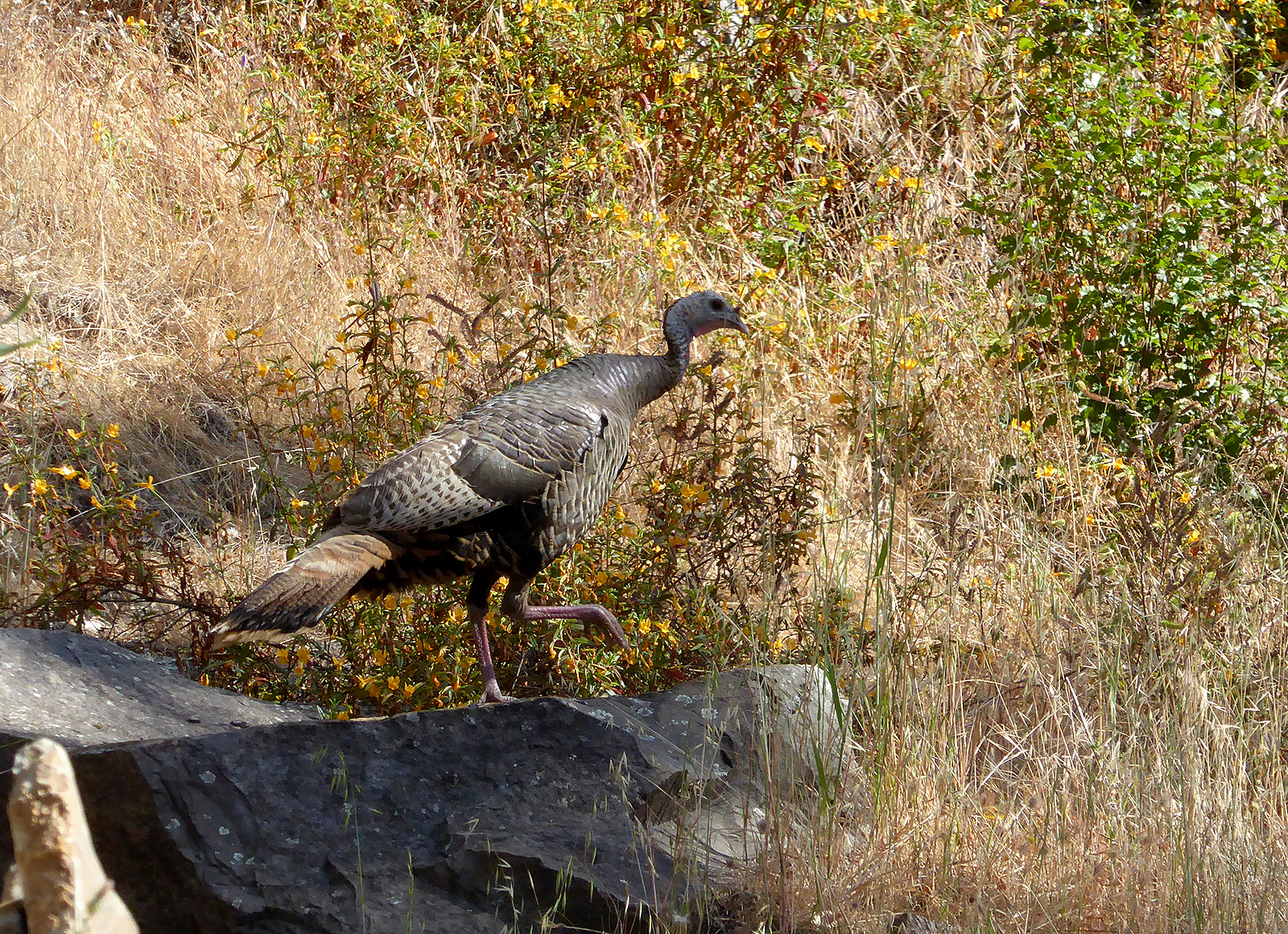
An adult wild turkey in the Red Quarry, blissfully oblivious of what most people in the US are doing today.

An adult wild turkey in the Red Quarry, blissfully oblivious of what most people in the US are doing today.

On this, Thanksgiving Day, it’s appropriate to consider what one treasures. For me, the Overlook Trail and the Montini Preserve are high on the list. I started hiking the Overlook 5-6 years ago, on virtually a daily basis. When the Montini Preserve was opened, I lengthened my hike by starting there, making my way to the Overlook and then back. For quite a while now this has been my daily exercise, a four mile hike with around a 400 foot elevation gain. This replaces what is for many people their indoor “spin class” or gym time.

So in the spirit of the holiday, these are just some of the things I’m thankful for that have come into my life through hiking these trails:

  • My health. Breaking a sweat for over an hour is always a good thing, especially when performed multiple times each week.
  • My mental health. Unlike a number of people I see on the trail, I don’t have earbuds in my ear piping in music. This lets my mind wander and process a lot of things as well as foster new ideas. I’ve had a number of ideas on hikes that have led to real results once I’ve left the trail. Also, there is new evidence that exercise prevents or decreases depression.
  • The views. I love seeing long distances. Perhaps this explains my love of the Grand Canyon and treehouses. There are some great views from the trails.
  • The wildlifeYou pretty much always see wildlife on the trail, whether it is the ubiquitous birds and squirrels, the frequently-spotted deer, or the more rarely spotted snakes (yes, including rattlesnakes). Of course let’s not forget insects.
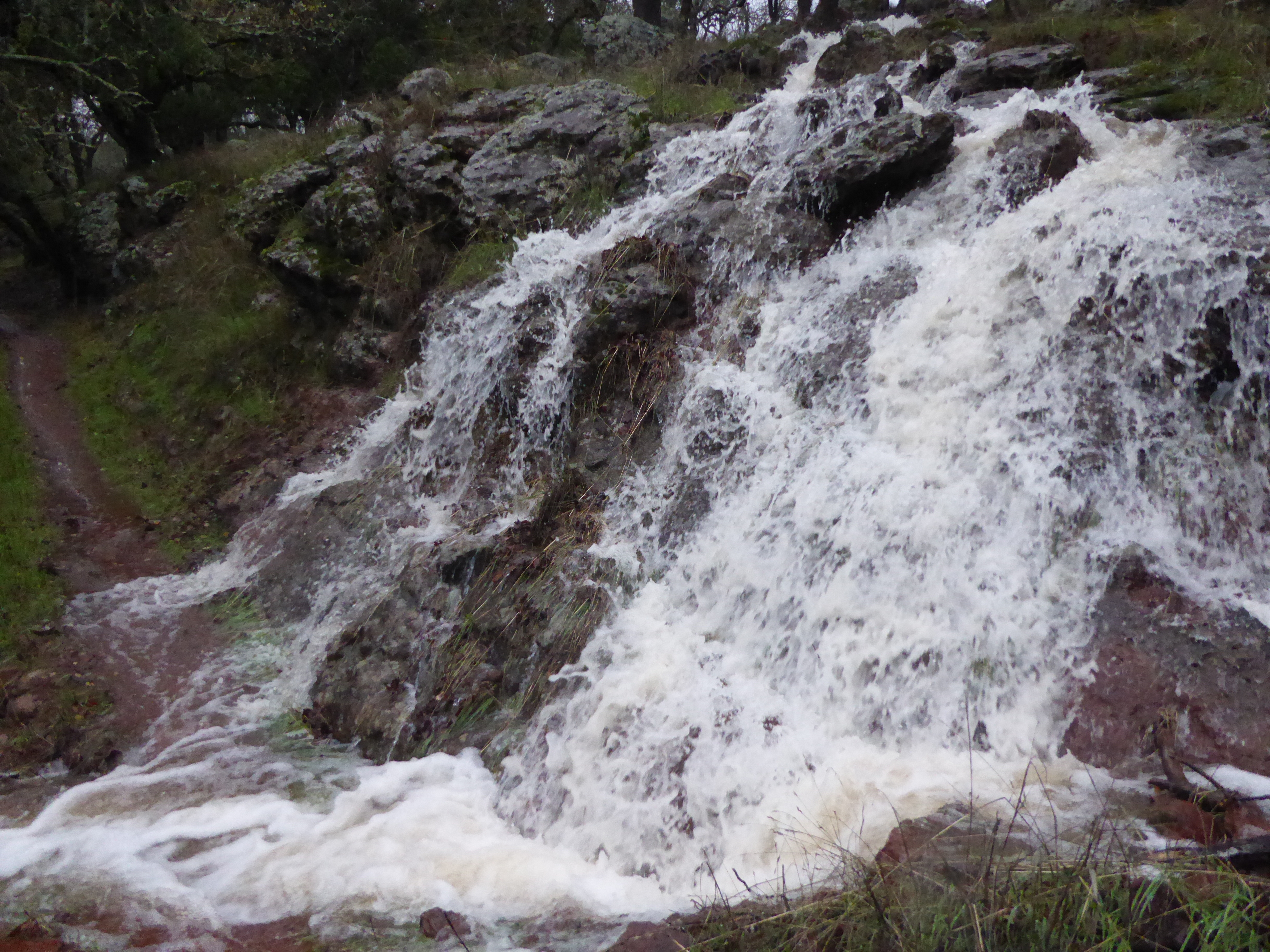
  • The sense of adventure. My favorite times on the trail are actually when a storm is raging. I love when the creeks rise so high that they are a challenge to cross, and when there is a waterfall that crosses the Holstein Hill trail. It seems raw and exciting. Plus you often see more wildlife (like a flock of turkeys running in the rain) and fewer people.
  • The friends I’ve madeBy walking the trail so much, and running into volunteer trail Stewards and other regulars on the trail, I discovered a new source of good people to have in my life whom I appreciate.
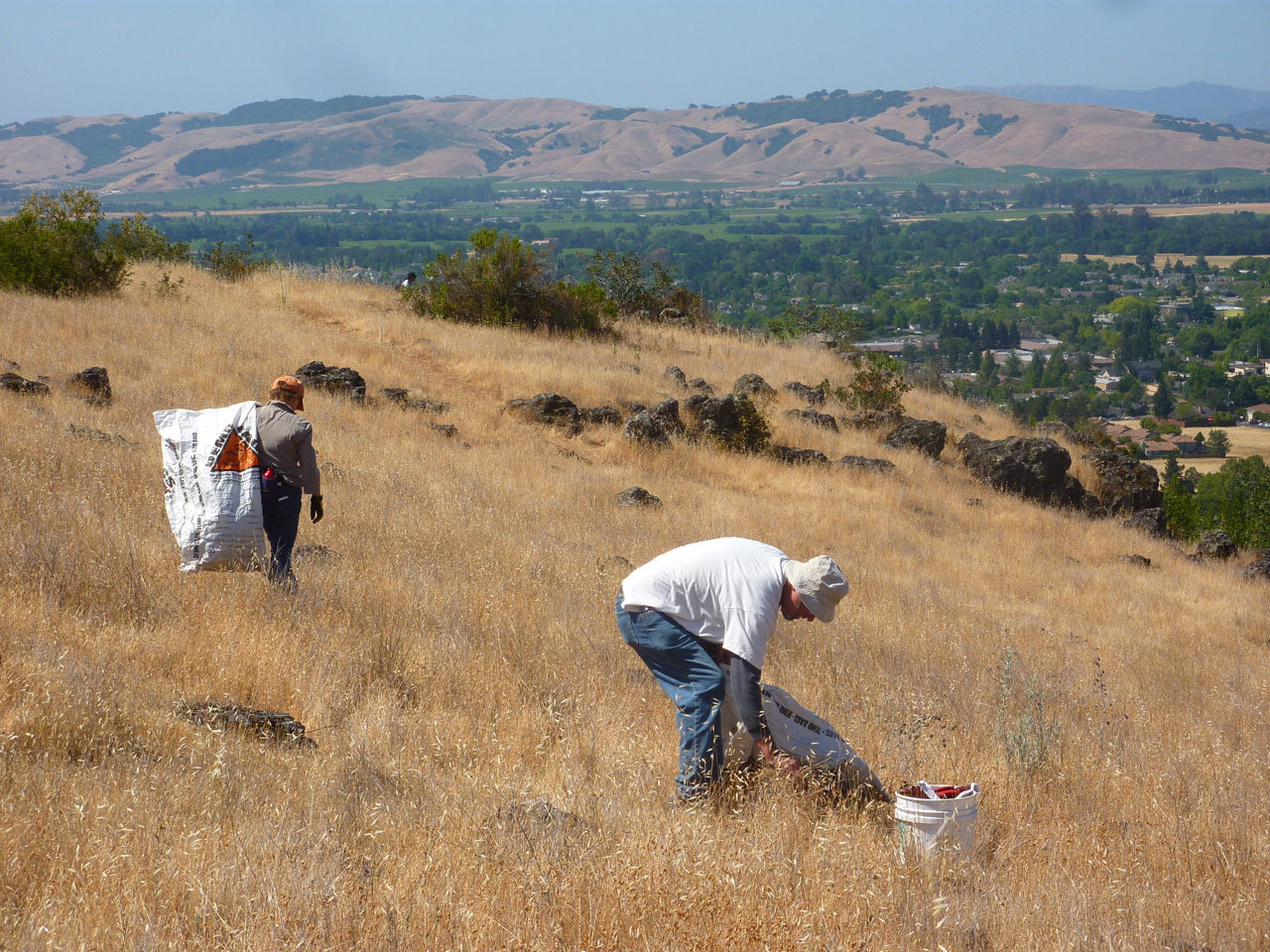
  • The chance to do good. Whether it is picking up trash on a daily basis, or pulling invasive weeds in the Spring-Summer, there are multiple ways you can make a difference on these precious properties. Knowing that your work is both making an impact and is appreciated (as I’m often told by visitors on the trail), is a gift indeed.

The trails in the hills above Sonoma are truly a treasure. Many people I’ve met have traveled some distance to enjoy them. So those of us who live nearby are well and truly blessed. I am thankful indeed, on this Thanksgiving.

Who? Who?

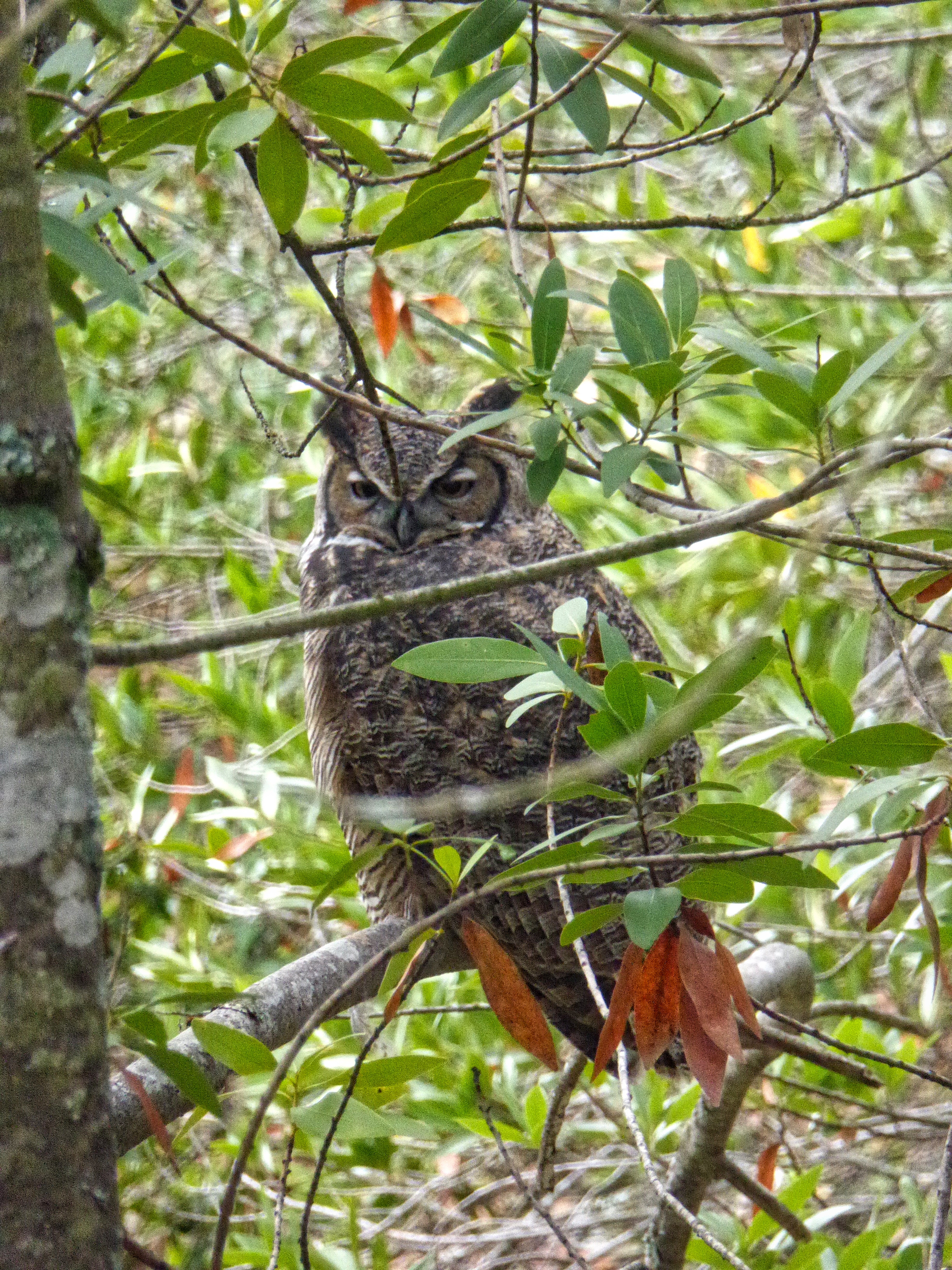
p1010385_hdrA Great Horned Owl, that’s who. At least some hikers spotted one on the Montini Preserve this week. He or she was perched in a large Bay Laurel tree just below the trail near the Red Quarry entrance (see picture).

Owls are common in the forests and meadows of the Overlook and Montini properties, although sightings are not frequent.

The Cornell Lab of Ornithology has this to say, in part, about the Great Horned Owl:

“Great Horned Owls have the most diverse diet of all North American raptors. Their prey range in size from tiny rodents and scorpions to hares, skunks, geese, and raptors. They eat mostly mammals and birds—especially rabbits, hares, mice, and American Coots, but also many other species including voles, moles, shrews, rats, gophers, chipmunks, squirrels, woodchucks, marmots, prairie dogs, bats, skunks, house cats, porcupines, ducks, loons, mergansers, grebes, rails, owls, hawks, crows, ravens, doves, and starlings. They supplement their diet with reptiles, insects, fish, invertebrates, and sometimes carrion. Although they are usually nocturnal hunters, Great Horned Owls sometimes hunt in broad daylight. After spotting their prey from a perch, they pursue it on the wing over woodland edges, meadows, wetlands, open water, or other habitats. They may walk along the ground to stalk small prey around bushes or other obstacles.”

Feel free to find out more about this beautiful bird.