Experience Sonoma History on a Walk through Sonoma Mountain Cemetery
Saturday, October 29 Times: 10:00 OR 12:30 pm SOLD OUT
Sonoma Overlook Trail Stewards invite you to join us on a lively, informative walk through our historic cemetery with our own amateur historian Fred Allebach.
Meet ranchers and ranch hands, real estate tycoons, farmers and farriers, carpenters and stone masons, quarrymen, grocers, butchers, bakers, maybe a candlestick maker, and many more!
This fundraising event is limited to 25 participants per hike. Your $35 donation includes the walking tour, cookies and cider. All proceeds go directly to support Sonoma Overlook Trail. The Overlook is funded solely by private donations.
Walking the Overlook and Montini trails is a treasure hunt these days, with an artist’s palette of wildflowers making themselves seen early this year. Grab one of our newly updated Wildflower brochures at the kiosk, and take a gander at the new Wildlife Panel as well to get an overview of all of the flora and fauna.
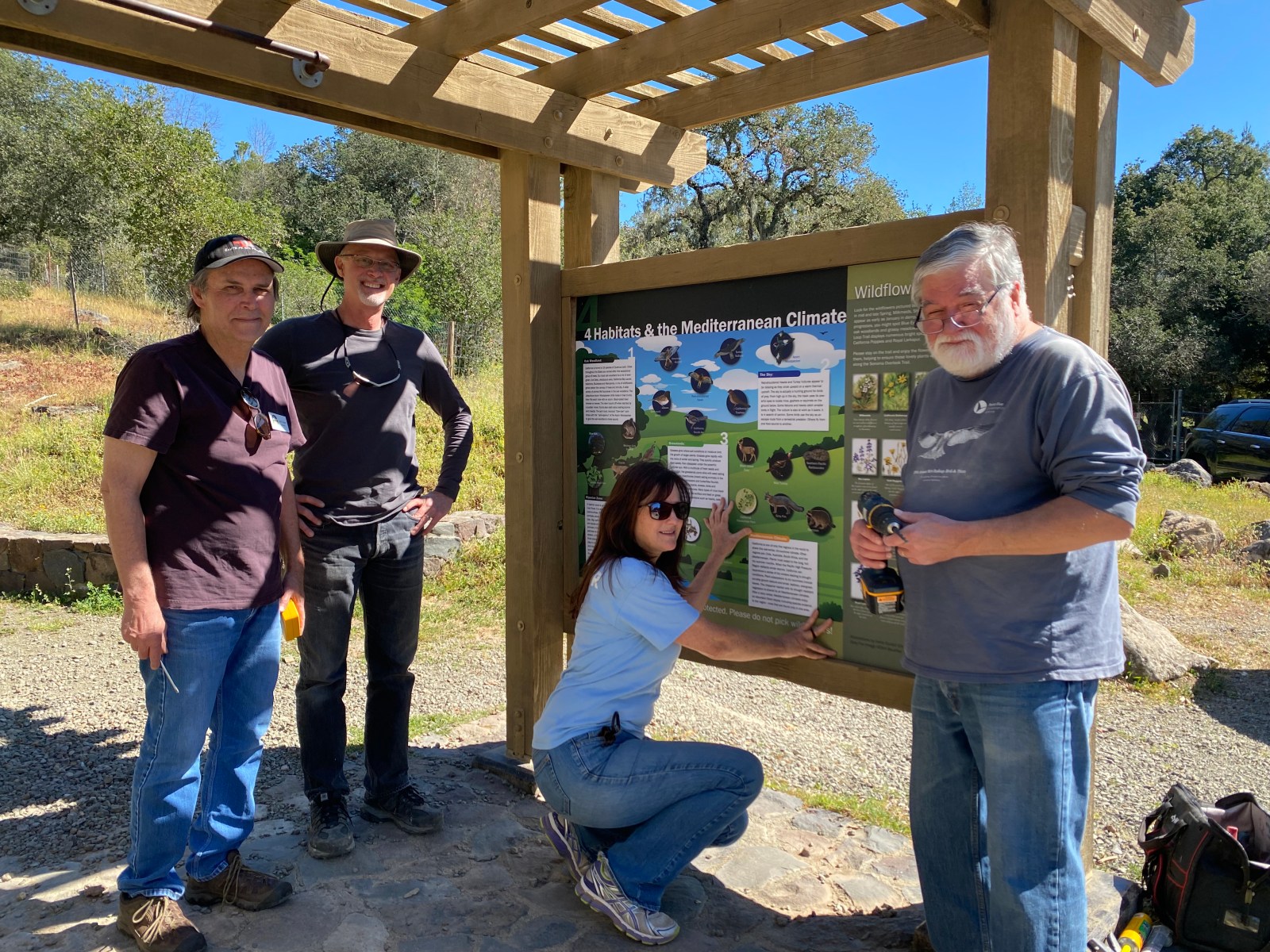
“On March 9th, a beautiful new Nature Panel was installed in the Kiosk at the main trailhead of the Overlook Trail. Funded solely by donations from Trail Stewards, the new panel features all of the up-to-date common names of many of the wonderful birds, mammals, reptiles and plants that help make the Trail such a delightful place. To assist even the casual hiker with identification, several of the most frequently seen and most lovely wildflowers are depicted in greater detail in a special expanded section. Superb original artwork by Irene Guidici Ehret is now also joined by artist Don Boucher’s stunning portrait of the native Gray Fox. The Overlook Trail Stewards that assisted in the installation of the panel included Michael Studebaker, Kurt Teuber and Dan Noreen.”
Determine risk: Spring and early summer are high-risk for ticks because ticks are in an earlier stage of their development, called “nymphs.” Nymphs often carry heavier loads of disease-causing pathogens, and are smaller and harder to spot. Tall grass and brush are higher-risk, too, because ticks can easily climb on to hikers.
Wear long and wear light! Wear long-sleeve shirts and long pants of a light color. Lighter colors seem to attract fewer ticks and make the ones that do end up on you easier to spot. Lightweight nylon or polyester garments are almost as cool as shorts and protect from the sun as a bonus!
Seal the cracks. Tuck your shirt into your pants and tuck your pants into your socks. Gaiters can add an additional level of protection and keep small rocks and dirt out of your shoes too.
Repel invaders! Consider treating your clothing with a persistent repellent chemical called permethrin. This substance, applied to clothing, repels ticks and biting insects for up to 2 weeks. Some clothing comes already coated with this deterrent. Apply an additional repellent to all exposed skin.
Wash your hiking clothes. As soon as you get off the trail, wash your hiking clothes and dry them in a hot dryer for an hour. The heat will kill any ticks.
Tick check. Showering within two hours of leaving the trail will help wash off any ticks which haven’t latched on. Using a hand-held or full length mirror, take this time to check yourself for ticks, especially checking armpits, hair, ears and behind the ears, belly button, behind the knees, and groin. Be sure to also thoroughly check your children and pets.
Remove any ticks. If you do happen to find a tick on yourself, do not use the old trick of poking the tick with a hot match head until it comes out. Do use tweezers and grab the tick as close to the skin as possible and slowly pull it out. If you can’t grab the head in the first go, make sure to pull it out before washing the bite with a disinfectant. View the CDC’s easy-to-follow tick removal instructions and pictures.
Stay vigilant. If you develop a fever, rash, muscle and/or joint aches, flu-like symptoms or become ill, be sure to mention to your doctor possible tick exposure. Lyme disease is very serious and can cause permanent damage in bones and the nervous system. Tick bites that develop a bulls-eye ring are infected and should be treated immediately.





 Sonoma Overlook Trail • Montini Open Space Preserve