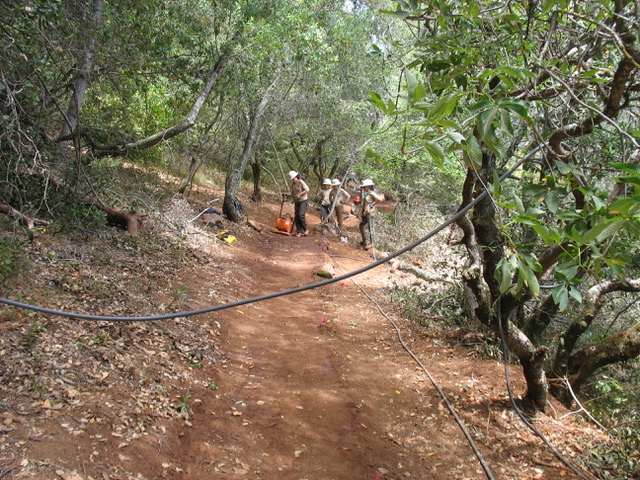
On June 17th The Sonoma Overlook Trail will be closed for a re-routing and rehabilitation project. More information is on the City of Sonoma’s web site, including alternative places to hike (the Montini Trails chief among them).
Category Archives: Trail Maintenance
The Good News and the Bad
 Anyone reading this blog is likely aware of the wildfires that broke out over a week ago and are still burning parts of Sonoma, Napa, and Mendocino counties. Our hearts go out to all of those affected — many substantially. Also, all of the first responders, from both near and far, have our everlasting gratitude for what they’ve done to save our communities.
One thing they did was to bulldoze firebreaks in the hills, to set up lines that could be defended and stop the fire in the hills before it came down to burn our neighborhoods and towns.
Today I went out on the Montini Preserve and the Sonoma Overlook Trail to see how they had fared. Neither property had been touched by fire. But firebreaks were carved on both properties, with the Montini Preserve not nearly as impacted. The firebreak on the Montini essentially followed the existing dirt road up the hill, and thus only crossed one trail. That is likely easily fixed with some shovel work.
The Overlook did not escape damage so easily. Bulldozers crossed the trails probably 15-20 times, and in places left substantial damage. Several spots will need to be completely rebuilt (see picture of a portion of Rattlesnake Cutoff).
Because of this, we are closing the Overlook until we can get the trails repaired, and in the meantime we are directing hikers to the Montini Preserve. Please bear with us as we work to recover the trails so many of us love.
The Importance of Trail Stewards
 Today I was reminded why it’s important to have people dedicated to hiking our trails and doing all of the various jobs required to keep them well cared for and safe to use. Hiking along the Rattlesnake Cuttoff Trail, from the Montini property to the Overlook, I was surprised to see a tree across the trail (see pic). I was surprised, as I didn’t recall any storm or high winds recently. But there it was anyway. I immediately took a picture and sent it off to the Chair of our stewards group, Joanna Kemper, who will work with the City of Sonoma to have it removed.
On my way back, I pulled out my handy Leatherman knife, which has a fairly good saw blade, and hacked off enough branches so at least the trail could be used until the City could come in with their chainsaw (see pic). This is, of course, just one of many jobs that we volunteer stewards perform.
 For example, Fred Allebach is very active in various physical trail maintenance activities such as cutting drainage channels to make sure water flows off the trail as soon as possible. Lynn Clary has been known to hike his battery-powered Sawzall saw up the trail to take care of an overhanging limb. We likely all pick up trash when we see it.
Speaking of which, what do you think is the most-encountered piece of trash? Beer cans? Nope. Coffee cups? Close, but no cigar. It’s facial tissues. Yep, the hands-down favorite discarded item of trail hikers. And just think of it — I get to pick it up and put it in my pocket. So…yeah. Please don’t throw things on the trail. Just don’t.
We do other things too, such as raising money to do trail work that we can’t do ourselves, soliciting donations for building benches, pulling invasive non-native plant species, cutting back poison oak, and leading school trips. But it’s a labor of love, as we all love the trails and the properties they traverse. And we know that many others do too.
Signs of Spring
 Spring is definitely in full swing. Wildflowers such as lupine and California poppies are in profusion, as are the butterflies that frequent the also prevalent Blue dicks (like the Swallowtail pictured).
The trail is mostly no longer muddy (until the next rain, at least), so now is a great time to get out and enjoy the warmth and the wildlife. Just keep your eyes peeled for rattlesnakes, as they have already been sighted on the trail. Other wildlife to look for include squirrels, deer, lizards, and wide variety of birds, from Red-Tailed Hawks to Red-Shafted Flickers to Great Horned Owls (all of which have been sighted from the trails).
Another sign of spring is, well, a sign. We just replaced the sign at the top of the trail that describes a little of the history of the area and names some of the surrounding sights viewable from the upper meadow. On the Overlook 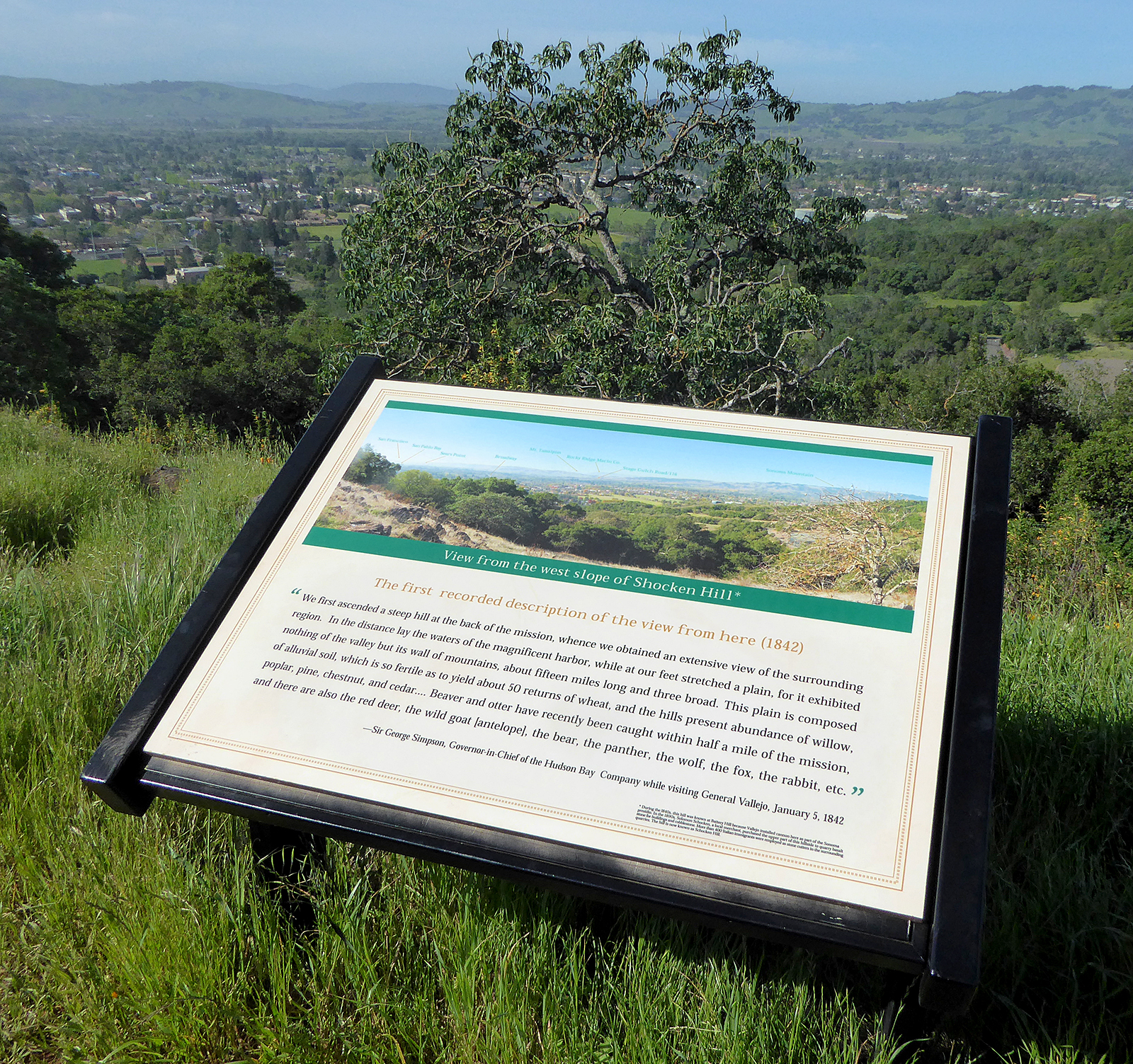 Trail, costs such as these are borne by the volunteer Stewards of the Overlook Trail group, which
collaborates with the Sonoma Ecology Center that serves as our fiscal agent. But anything that costs money to maintain or upgrade the trail and property requires us to raise money through events, donations, etc. If you feel so moved, please click on our “Donate Now!” link in the righthand column.
In any case, enjoy all of the sights of spring and stay safe out there!
Overlook Trail Rehabilitation Project
As regular users of the 17-year-old Overlook Trail know, a number of segments are showing quite a bit of wear and tear, the result of high use and erosion.
When it first opened, the trail had about 5,000 annual visits and now logs more than 50,000. All of those footsteps and running-steps deliver a pounding and eventually “dish” the trail. In some places, trail layout has disrupted the natural pattern of storm water flow, causing it to surge down the path instead of sheeting across and over it. The result is that the thin soil layer, characteristic of the hillside, has been scoured down to volcanic bedrock, creating dicey footing and trip hazards.
All trails need regular, cyclical maintenance, but these issues are more substantial. Sonoma Overlook Trail Stewards, an all-volunteer group that monitors the trail and performs routine maintenance, asked noted California trail expert Don Beers, who designed the adjacent Montini trail a few years ago, to assess Overlook’s condition and advise how to improve its sustainability.
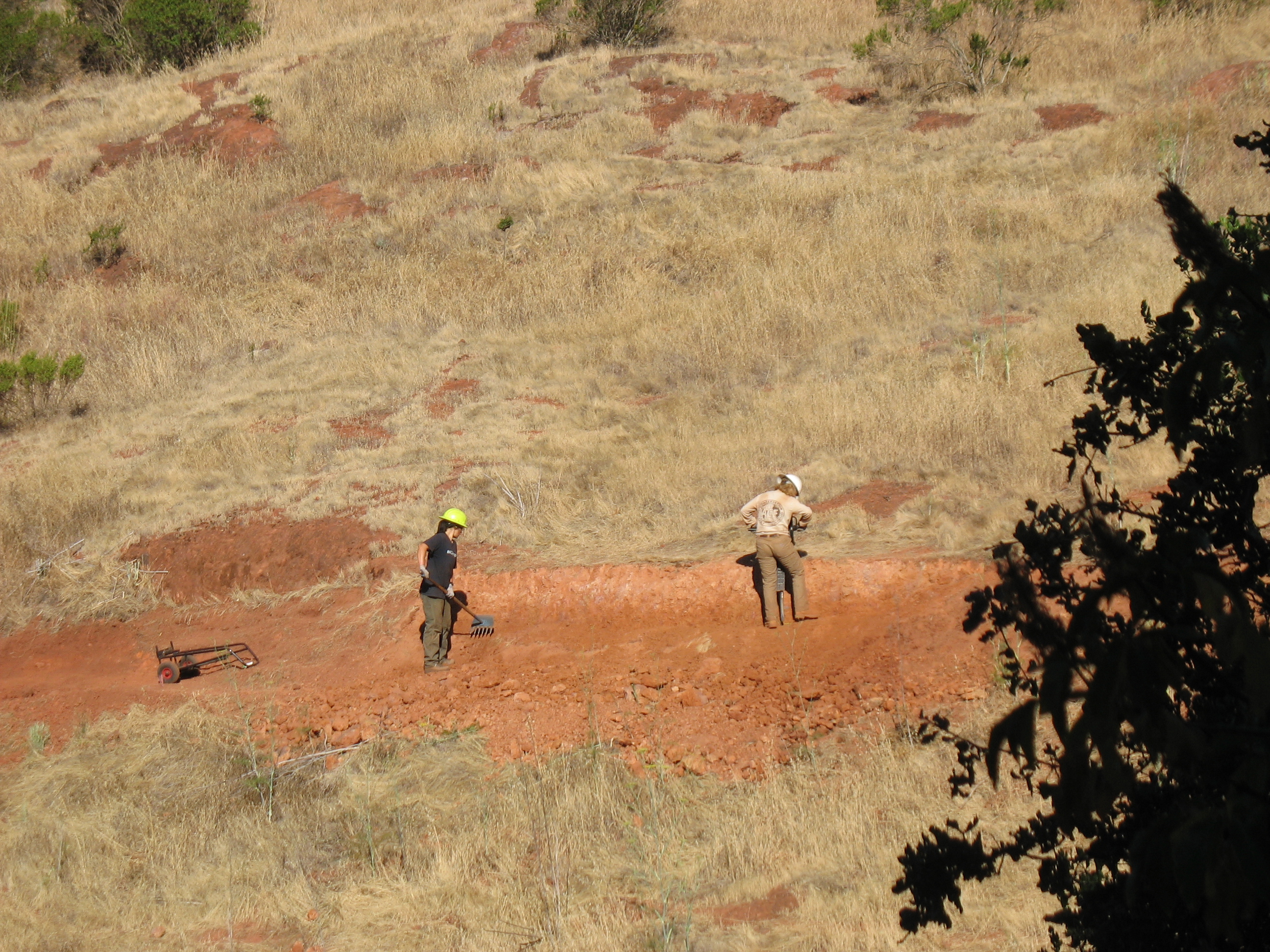
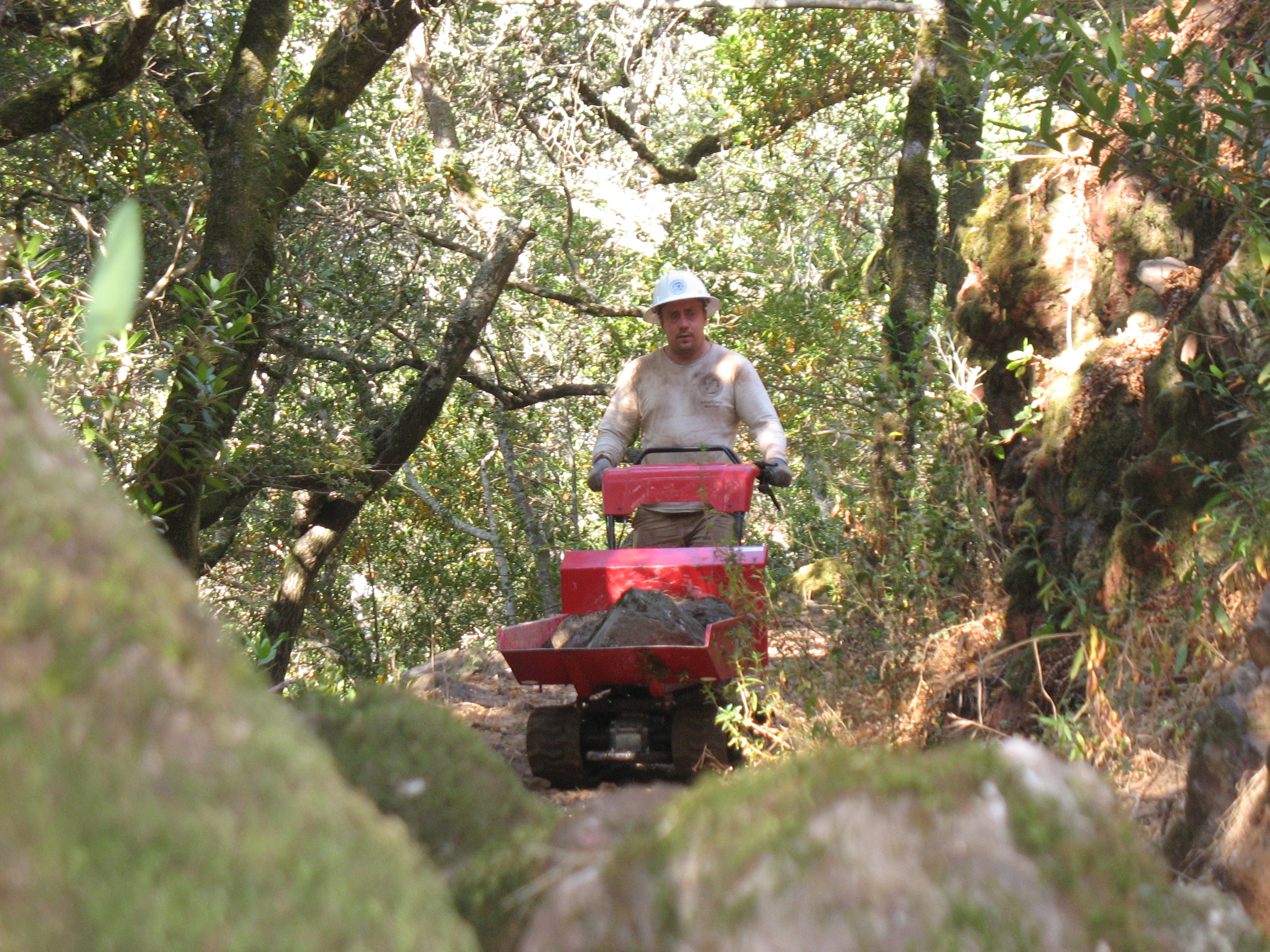
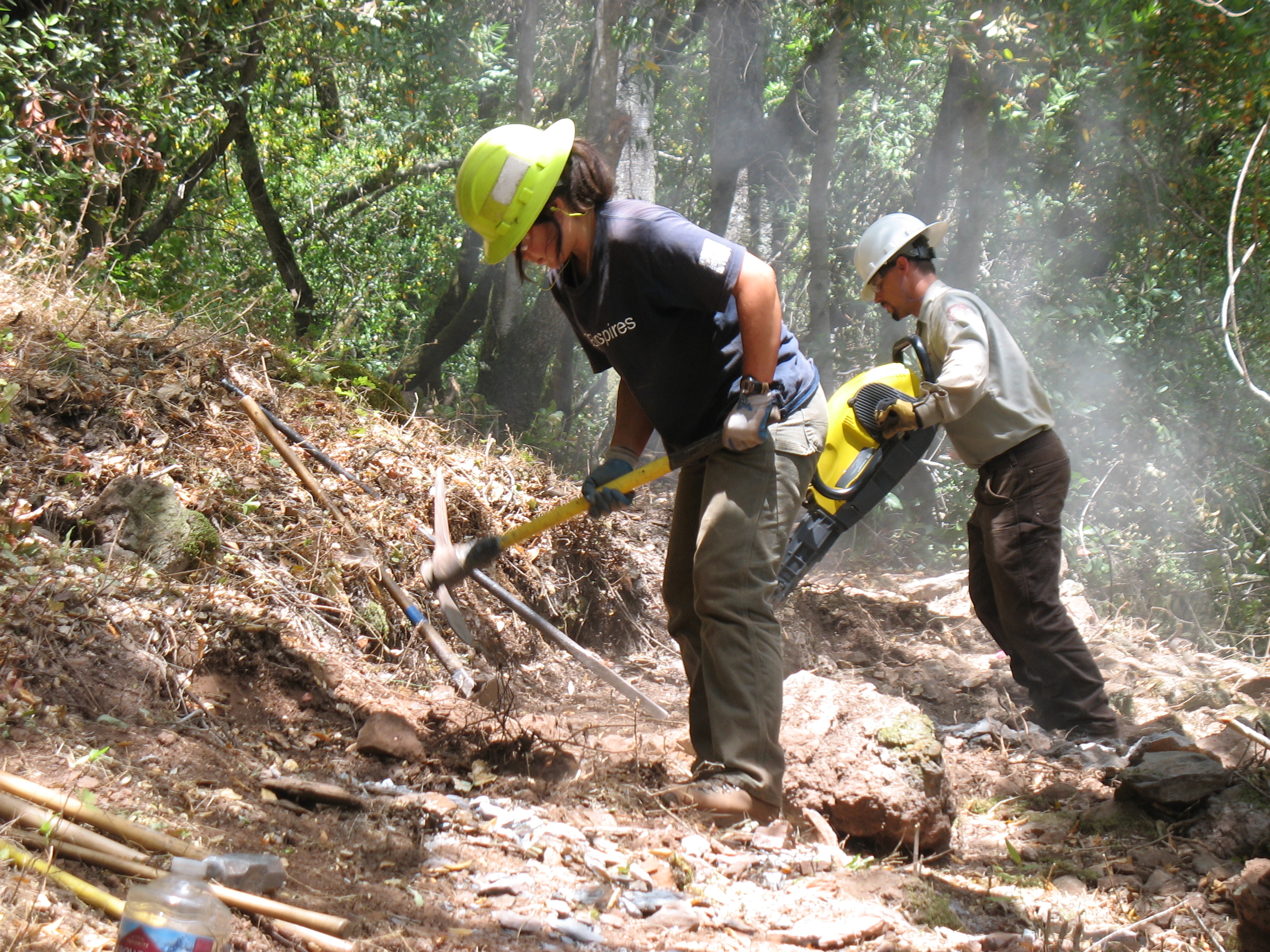
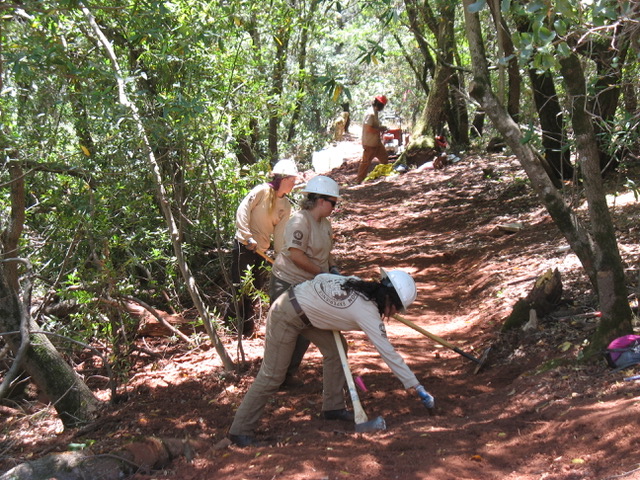
Mr. Beers spent several days on site in 2016 and recommended some rehabilitation and restoration measures and re-routing around the most problematic areas. Stewards decided to tackle the work in phases, beginning with the lower route, that occurred in Summer and Fall of 2018.
The project took many weeks and involved:
- Rehabilitation of the trail entrance: When setting out from the First Street West entrance, users immediately encounter an exposed incline, which has badly eroded and created poor footing. Given the terrain, and the fact that access is sandwiched between Norrbom Road and the Cemetery, the most sustainable and safest solution is to install stone steps. The Kiwanis Club of Sonoma Plaza have generously agreed to help fund this work.
- Reroute of a portion of the lower trail to avoid a badly degraded, rocky segment with switchbacks and abrupt elevation changes. The new segment follows land contours in terrain that can better support a trail that gets lots of use and that will provide more sure footing. The old segment was restored back to a natural condition.
- Rehabilitation of the rest of the trail to improve tread, encourage natural sheet flow during rain events, and transition grade changes in a more sustainable and safer way.
The Sonoma Overlook Trail maintenance, restoration and educational programs are funded by individuals, local civic groups and businesses at no cost to the City of Sonoma.
Please help support your trail by making a contribution today. See the “Donate” button in the upper right.
Here are some pictures of the project (click on the thumbnail to see the full version):