Winter Birds on Sonoma Overlook Trail

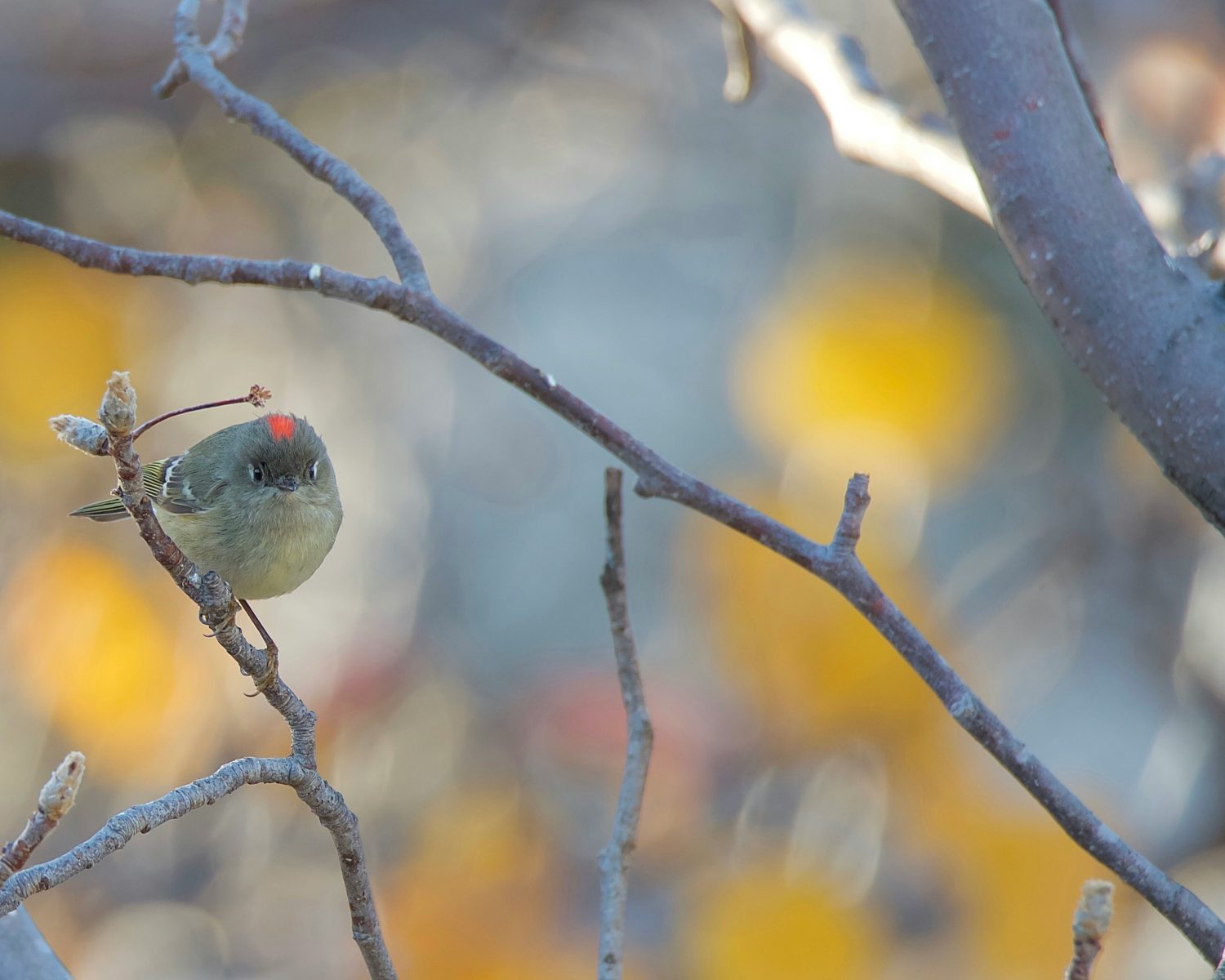
ruby-crowned kinglet

Ruby-crowned kinglet

Winter on Sonoma Overlook Trail brings a quiet beauty, and with it a lively cast of birds that thrive in the cooler, wetter season. As deciduous trees lose their leaves, birds become easier to spot, flitting through oak woodlands, chaparral, and open grasslands.

Who’s over there? Such a restless little bird! A Bewick’s wren, barely five inches long, keeps darting about, looking for tasty insects. Scritch, scraaatch…SQUEAK! And what is that? A male Anna’s hummingbird with its raspy call. When it makes a sharp dive, air passing over its tail feathers creates the loud squeak. Its crown and throat are brilliant, iridescent red. Look for this fellow at the ends of bare branches. How is that woodpecker walking vertically up a tree? It has two toes facing forward, and two facing backwards to keep it from falling backwards. This little “ladder-backed” woodpecker, a Nuttall’s, is just seven inches long. It forages for insects as it circles tree trunks and branches.

Dark-eyed junco

Dark-eyed junco

Resident birds remain active year-round, relying on familiar territories to survive the colder months. Dark-eyed juncos and California towhees hop among the leaf litter at the trail’s edge, while Ruby-crowned kinglets and Oak titmice flit among leafless branches, searching for insects.

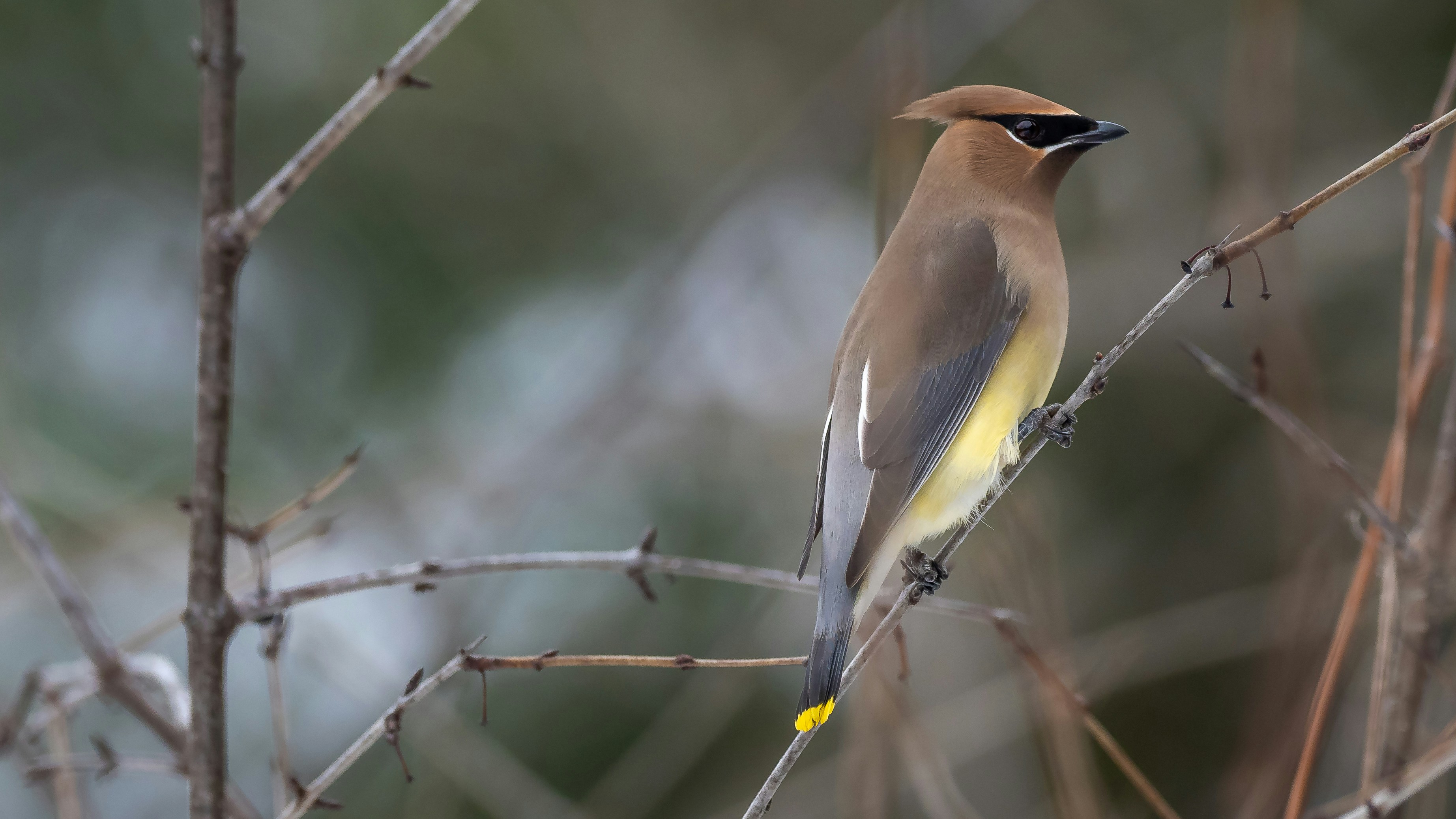
A Toyon shrub, also known as California Holly, full of red berries is an ideal stop for a flock of Cedar waxwings. When other fruit is scarce, the Toyon feeds these beautiful birds. As one nears the Upper Loop, the open skyline reveals Red-tailed hawks and Turkey vultures soaring over our rolling hills. Turkey vultures are nature’s garbage collectors–they eat carrion so it doesn’t sit around too long.

Cedar waxwing

Cedar waxwing

Winter birds play a vital role in Sonoma’s ecosystems, dispersing seeds and controlling insects. They also bring joy to winter hikers.

by Jaqueline Steuer, Sonoma Overlook Trail Steward
Photos: Unsplash

Grateful

A rafter of wild turkeys relaxing on Montini Open Space Preserve last evening, fate working in their favor another year.

Happy Thanksgiving to you all; we hope to see you on the trail during this very lush, thriving time on Montini and the Overlook!

Sssnakes….

California Night Snake

California Night Snake

It’s that time again: spring!  Nature has been staging post-winter awakenings around here for weeks now, and due to what was another healthy rainy season, there is an abundance of plant life, which fuels a myriad of other life.  Wildflowers, fawns, bees, lizards, and…snakes!

This little friend popped up in a pile of gravel on a trail work day last weekend.  He/she is a California night snake (Hypsiglena torquata nuchalata), one of the rarest snakes in Sonoma County and although mildly venomous, known to be harmless to humans.  California night snakes are nocturnal and are generally about 7 inches long at birth; this one was likely at its first molt.  When coiled, it could have fit on a nickel.  Their diet includes insects, lizards and other snakes.

Continue reading

Hummmmmmmmm

You may have noticed, on your treks up the Overlook Trail, that we have some fuzzy friends living in the base of a multi-trunk tree on the left just beyond the main trail/Rattlesnake Cutoff Trail junction.  These European honey bees, also known as Western honey bees (Apis mellifera), are the most common kind of honey bee and are a generally docile sort with a placid temperament, only stinging when threatened.

Like all honey bees, European honey bees are extremely social, creating colonies of up to tens of thousands of bees, sometimes as high as 40,000 to 80,000.  A hollow tree is an ideal habitat.  The bees build intricate wax structures within to house food and their cooperatively raised brood.  Colonial activities are organized via complex communication between individuals, untilizing both pheromones and the waggle dance!

So, enjoy the buzz as you go by and leave them bee.  Considering that bees worldwide are seriously threatened by pests, diseases and pesticides, we count ourselves lucky to host these little friends.

Read more at iNaturalist.

The Cyclone and the Damage Done

Santa Rosa received more rain in three days than ever before in recorded weather history, and it seems likely that we had as much or more here in Sonoma. Given that, perhaps it should be surprising that we still have a trail. But I have a hard time not grieving for the havoc that the storm created.

I should point out that the hillside that the Overlook Trail traverses is essentially all rock. I’m reminded of this any time I try to dig up soil to put on the trail. My shovel is more likely to clang into stones than it is to sink into soil. This results in very little rain soaking into the ground—instead, it runs off. What water does sink into the soil only does for short distances, and it soon flows onto the trail which serves as a convenient exit from the rocky hillside.

And exit it did—in many locations and with great volume. On one section in particular, the water then plunged down the trail, blew through a couple small drains and scoured the trail for about 100 feet (see video below of one small section). This will take a lot of work and many wagonloads of aggregate to fix.

But yes, we already have a strong start to our winter rains. I just wish it would come in smaller increments, or over longer periods. Wish us luck.