Seasonal Creeks

12377639_10153144331341786_3674935992491065197_oSeasonal creeks are by definition creeks that only have water during the rainy season. In California, the rainy season can potentially stretch from early Fall into late Spring, although variations in weather patterns can of course add nuance to that schedule. However, for truly seasonal creeks it usually takes a fair bit of rain to form the runoff required to start them up.

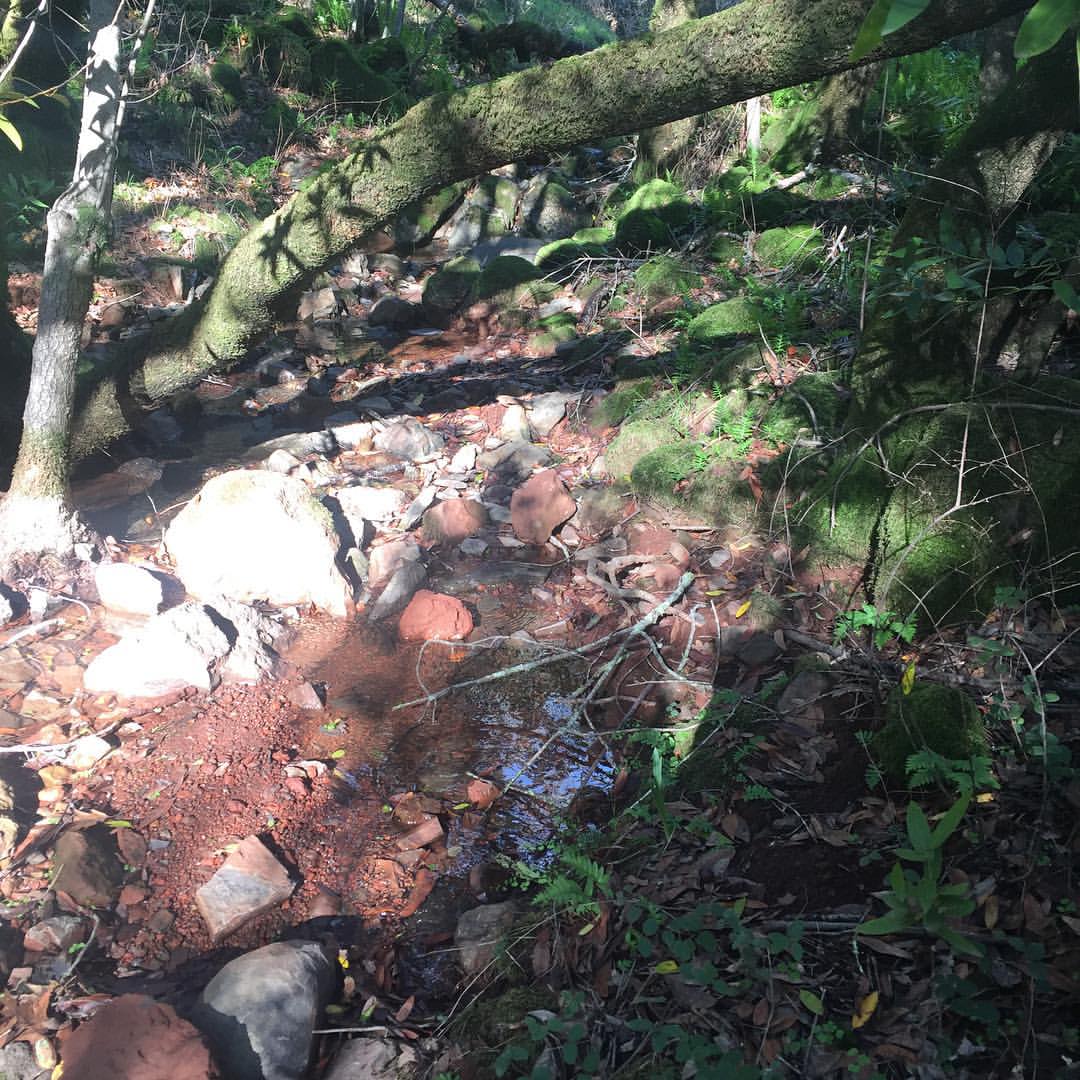
So although we’ve had rain just about every week for the last month or so, it was only with the latest storm that we began to see the seasonal creeks on the Overlook Trail and the Montini Preserve begin to run. Specifically, the creek that runs through what I call “Fern Glen” and across the Overlook part of the Rattlesnake Cutoff trail, has begun to run (see pic).

This is good news, as it means that our storage reservoirs will also begin to fill. And having been in a multi-year drought, this is definitely good news. However, runoff by itself isn’t necessarily good. We should trap as much of that as we can into the aquifer, where those who draw from water wells can take advantage of it. To a large degree, this means slowing down the runoff and making it soak into the ground instead of running directly to the bay.

Personally, I think we have a ways to go before we can say that we are doing the best we can at water capture in this valley. Until we figure out how best to harness our seasonal creeks to maximize underground water storage, we perhaps deserve the droughts that we will likely increasingly get.

Teamwork on the Trail

IMG_2609

Teens and adult volunteers worked together.

You might think that the life of a volunteer trail steward is all glitz and glamor, and no one would fault you for thinking so. But no…it’s actually a life of picking up trash, reminding hikers of the rules, kicking loose rocks and branches off the trail, reporting trees down, and of course maintaining the property in as fine a condition as we possibly can.

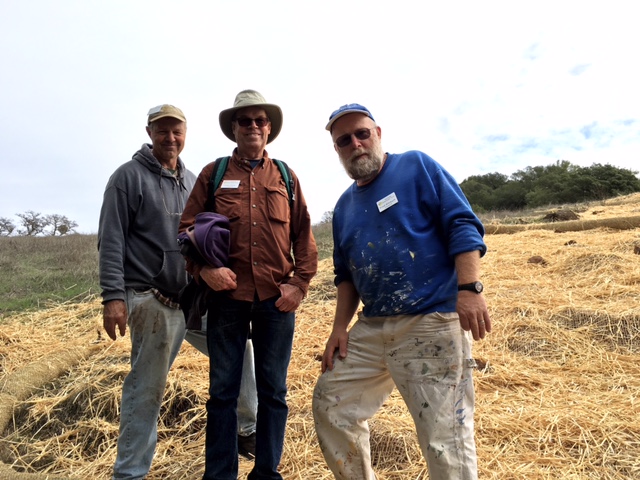
It was this last responsibility that brought out a crew of 10 stewards and Sonoma Valley Teen Services members this past Saturday to reseed and cover with straw and jute webbing a shortcut (also called “rogue”) trail. This trail is very steep and prone to erosion, as well as being a hazard for hikers who walk down it in sometimes very slippery conditions. After letting it go for a while we decided that we needed to close it off for both hiker safety as well as to better protect the condition of the property.

Under the direction of Steward Fred Allebach, stewards and teen volunteers hauled seed, straw, rolls of burlap webbing, and other materials to the Upper Meadow Loop. They scraped the soil to prepare it for the seed, laid down the seed, covered it with straw, then webbing, then more straw.  Thankfully the rain held off until the next day. The soaking should give the seed a good start toward germinating.

We are very grateful to have a partner like Sonoma Valley Teen Services with which to work with on this project, as well as the individual teens who participated. If you would like to support the work of Sonoma Valley Teen Services, see their support page.

If you would like to support the work of the Sonoma Overlook Trail Stewards, donations are tax deductible and can be sent to “Sonoma Overlook Trail Fund,” c/o Linda Felt, 18782 Deer Park Drive, Sonoma CA  95476.

FullSizeRender (5)

Steward John Donnelly tacking down the webbing, with the town of Sonoma below.

Stewards Rich Gibson, Lynn Clary, and Fred Allebach after a good day's work.

Stewards Rich Gibson, Lynn Clary, and Fred Allebach after a good day’s work.

The Season of the Buckeye

buckeye2This is the time of year when the California Buckeye (Aesculus californica) earns its name. Named for the rather large seed pod they drop that resembles the eye of a deer, they are now easily found on the trail.

When they shed their covering they reveal a rich brown colored seed pod (see pic). Pacific Horticulture has this to say about the pods: “Though thoroughly inedible (unless leached of their toxins, as the Native Californians did), there is something irresistible about this seed, looking as if it had been carved, lacquered, and polished; few can resist picking up one or more, often pocketing them to be brought home for a show-and-tell with family or friends.”

Get them while they’re hot.

Rain, Rain, Don’t Go Away

rainpoolsWe’ve been lucky so far this Fall, with rain coming almost on a weekly basis. It has been enough to both finally end one of the worst fire seasons on record as well as foster the eager growth of new grass.

I love hiking the trails in the rain. There tends to be fewer people and more animals. One day in the pouring rain I saw a large flock of wild turkeys — the most I had ever seen.

Out on the trail today although I didn’t see many wild creatures I saw a few hardy people and water beginning to pool and start to run off the trail. After returning home, it poured even harder. If it keeps up we my have water running in the creeks by this evening.

We certainly need this moisture, but we need so much more to escape this period of drought that it’s hard to imagine getting enough in one rainy season. So let’s all hope that the rain doesn’t go away and that it soaks the ground, fills our reservoirs, and ends our latest drought.

The Mistletoe Tree

mistletoeThere is a tree on the Overlook Trail that I’ve dubbed “The Mistletoe Tree”. This is because it harbors several clumps of the parasitic plant, and at elevations where it would be easy enough to pluck a sprig to hold above one’s loved ones for a kiss.

Wikipedia says that “It is associated with Western Christmas as a decoration, under which lovers are expected to kiss. The reasons for this are less than clear.”

But then who needs a reason?

Being parasitic, mistletoe penetrates the host tree to steal water and nutrients. Mistletoe typically does not to lead to the demise of the host, except in extreme infestations, but large clumps may lead to the loss of a limb. The University of California has more information on mistletoe as well as how to control it, but here on the Overlook we let nature take its course as much as we can.